



The Surprising Link Between Hangovers and Work Productivity for 40s and 50s Professionals
The Surprising Link Between Hangovers and Work Productivity
A recent survey conducted by Sizenshokken, a company based in Bungo-Takada, Oita, highlights a concerning trend: nearly nine out of ten doctors recommend regular liver care due to its significant correlation with work productivity. The study focused on male and female employees in their 40s and 50s who drink alcohol at least once a week, as well as internal medicine and gastroenterology physicians.
As people age, the way their bodies handle alcohol often changes. Many professionals find that they experience a sense of sluggishness and reduced concentration after drinking, leading to noticeable dips in work efficiency and decision-making abilities. This raises the important question: how exactly does drinking affect productivity at work, and what can be done to mitigate its effects?
Survey Overview
Sizenshokken's survey ran from March 10 to March 11, 2026, via the PRIZMA platform, targeting 1,009 respondents—506 employees with a drinking habit and 503 medical professionals. The aim was to shed light on the interplay between alcohol consumption and work efficiency, particularly among middle-aged professionals who often feel the impact of their drinking habits.
Conclusions from the Survey
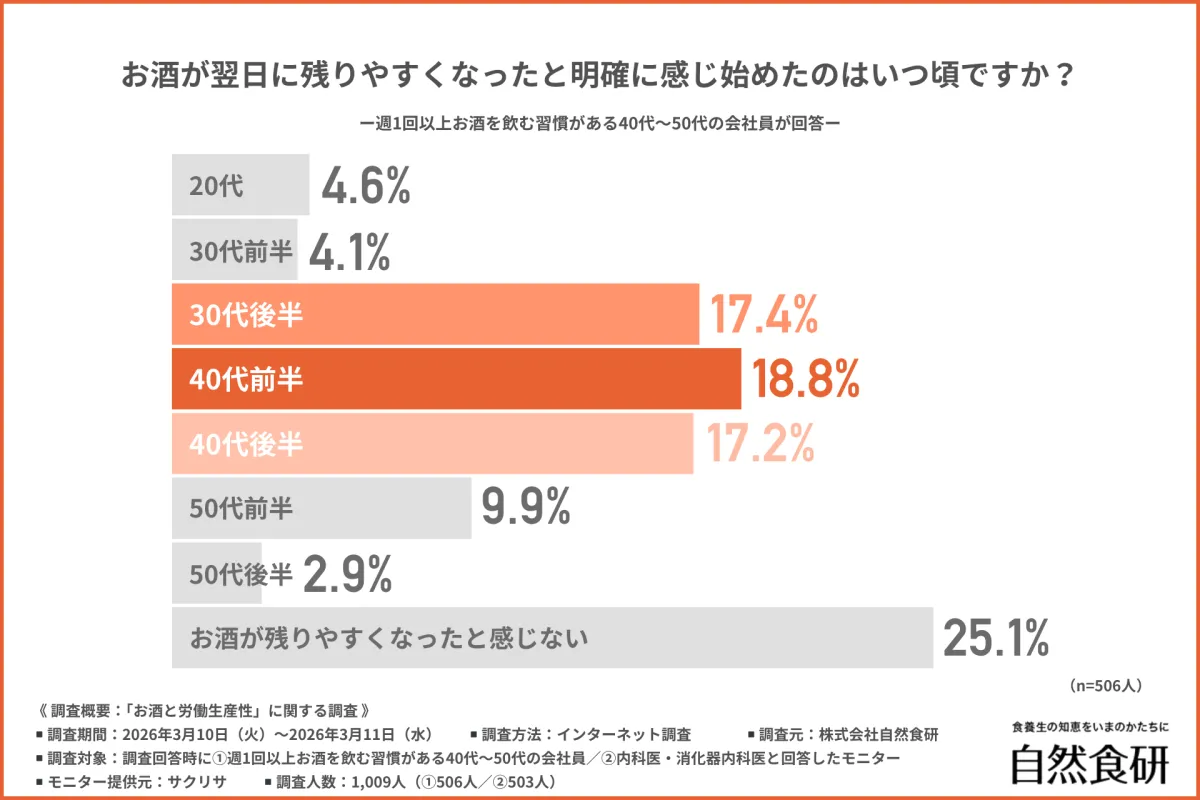
Interestingly, when asked about the onset of noticeable hangovers, 25.1% of respondents claimed they did not feel any change, while 18.8% noted this began in their early 40s and 17.4% observed it in their late 30s. This suggests that the ages of 30 and 40 mark a pivotal time when the effects of alcohol become more pronounced, and individuals start to experience greater difficulty in recovering post-drinking.
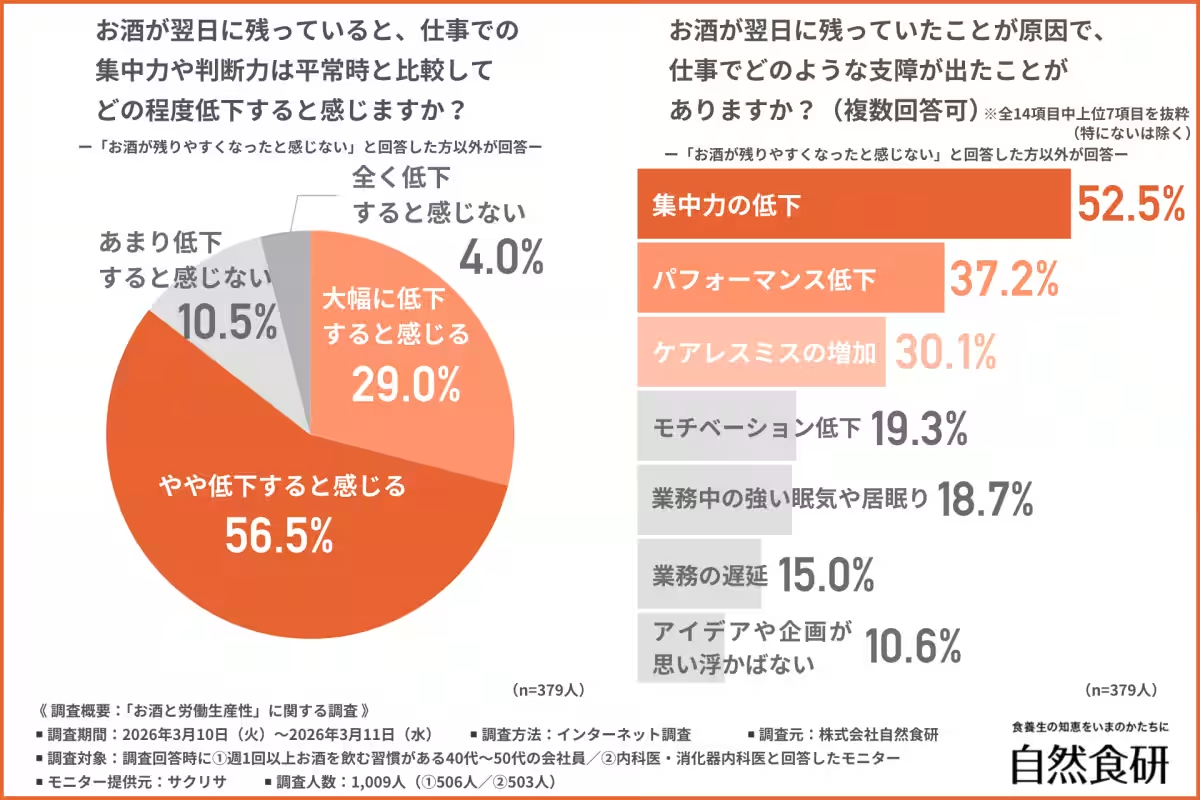
When questioned about how hangovers affect work output, around 90% admitted to feeling a significant decline in focus and decision-making skills. Specifically, 29.0% felt their performance dropped considerably, while 56.5% noted a slight decrease. This indicates that hangovers are not a mere inconvenience but a major contributor to decreased productivity.
The Impacts of Reduced Productivity
Upon probing deeper, it became clear that effects include lower concentration (52.5%), decreased overall performance (37.2%), and an increase in careless mistakes (30.1%). The increased prevalence of mistakes can not only hinder an individual's performance but may also negatively impact team productivity and morale overall.
Strategies for Coping
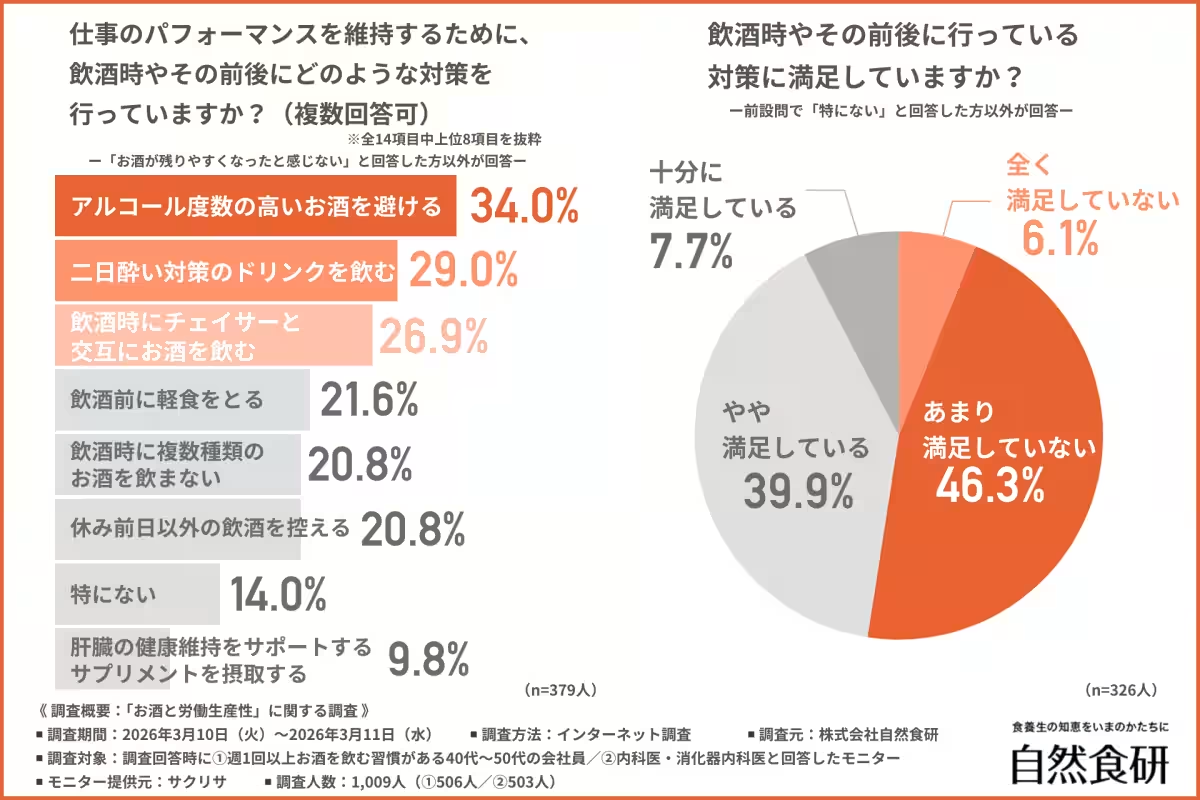
In an effort to maintain productivity, respondents shared their strategies for coping with hangovers. About 34% avoided high-alcohol drinks, while 29% utilized hangover prevention drinks. Others reported alternating with non-alcoholic mixers, suggesting a prevalent need to adapt drinking habits proactively.
Despite these strategies, nearly half of the participants expressed dissatisfaction with the effectiveness of their approaches. This dissatisfaction implies room for improvement and the necessity of exploring more substantial solutions to manage alcohol intake and its effects.
Medical Insights
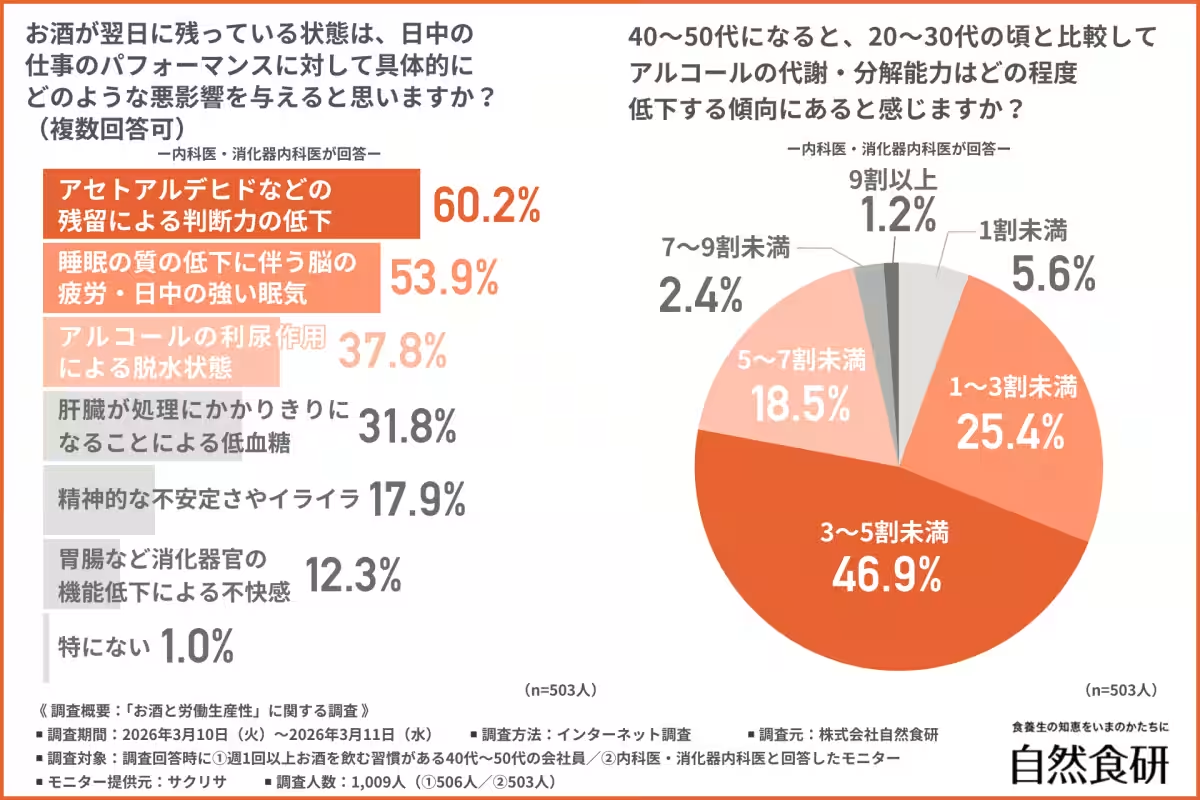
When asked about the medical impacts of hangovers on work performance, 60.2% of physicians pointed to impaired judgment caused by residual acetaldehyde, while 53.9% noted decreased sleep quality leading to daytime fatigue. Additionally, 37.8% cited dehydration as a significant concern. This substantial awareness reflects a growing recognition of alcohol's physiological toll.
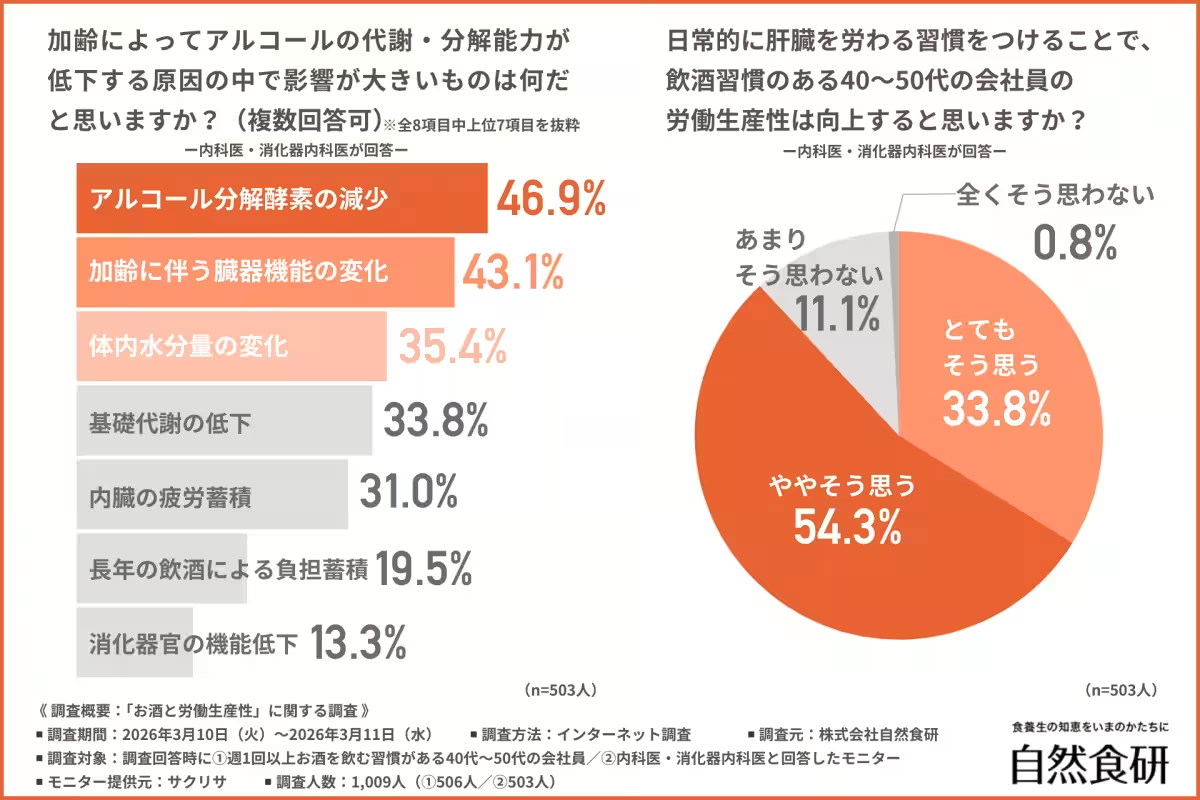
Medical professionals suggest that from 40 to 50 years old, individuals may notice a 30% to 50% decline in alcohol metabolism capabilities, primarily due to the reduction of alcohol-degrading enzymes and overall aging of organs. Such physiological changes mean that a body more accustomed to handling alcohol at a younger age struggles significantly later in life.
Recommendations for Improvement
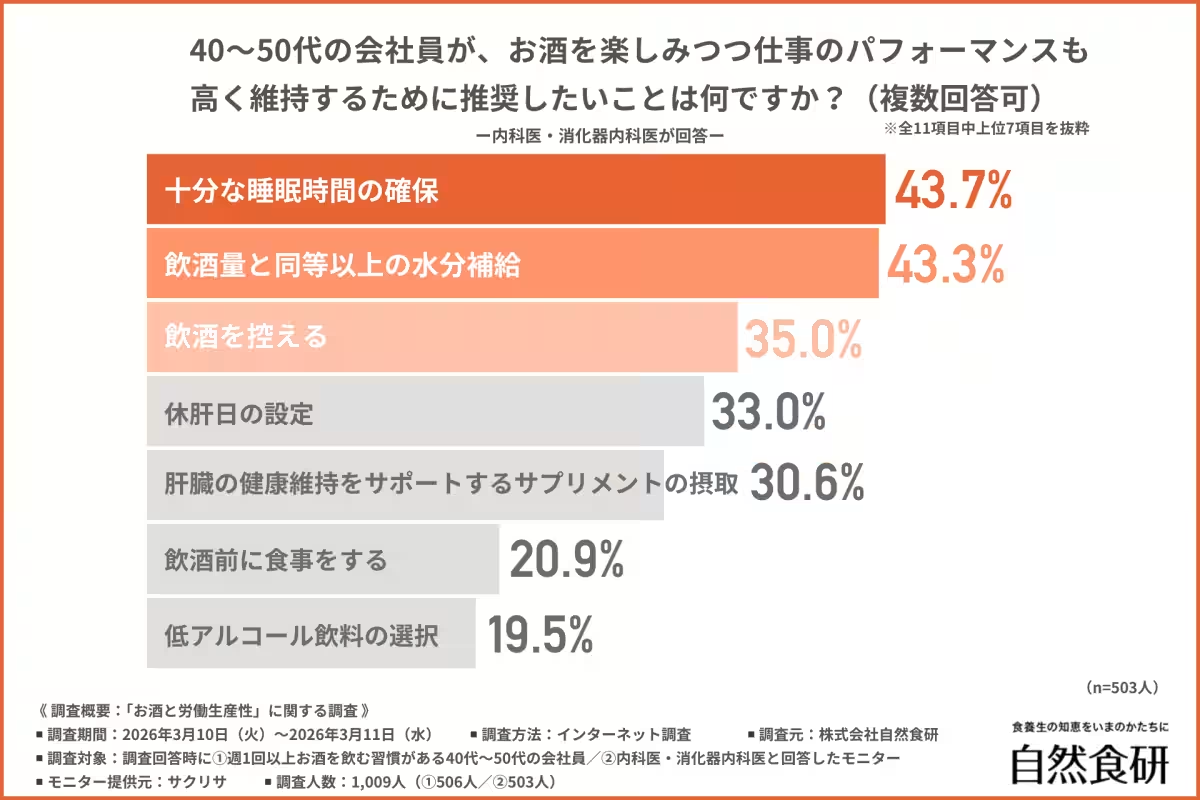
In addressing daily liver care, almost 90% of physicians advocate for its importance in enhancing work performance. Measures include ensuring adequate sleep—43.7% of doctors recommend it—as well as sufficient hydration, suggesting that simple lifestyle adjustments can help mitigate the negative effects of alcohol consumption. Naturally, this underscores the value of preventative measures and the need for routine liver health check-ins.
As professionals in their 40s and 50s navigate changing drinking customs, it is imperative to reassess alcohol consumption habits to align with their evolving physiological needs. Suggestions include maintaining hydration levels equivalent to alcohol intake and absorbing essential nutrients through well-balanced diets or supplements. By making thoughtful adjustments to their drinking patterns and emphasizing liver health, these professionals can sustain productivity and performance in their careers.
- ---
About Sizenshokken
Sizenshokken specializes in health products informed by scientific research and practical needs. They created the 'Shijimi Habit,' a health supplement rich in amino acids, to support liver function and overall well-being. This product offers a convenient solution for those seeking to enjoy their drinking while minimizing hangover effects.
For more information, visit Sizenshokken's website.

Topics Health)
【About Using Articles】
You can freely use the title and article content by linking to the page where the article is posted.
※ Images cannot be used.
【About Links】
Links are free to use.