



Exploring Distinct Differences in Business Management Recognition Among Local and National SMEs
Exploring Distinct Differences in Business Management Recognition Among Local and National SMEs
In recent times, the concentration of population in urban areas and economic decline in rural regions has drawn attention to local revitalization efforts. This situation emphasizes the pivotal role of small and medium-sized enterprises (SMEs) in creating employment and invigorating regional economies.
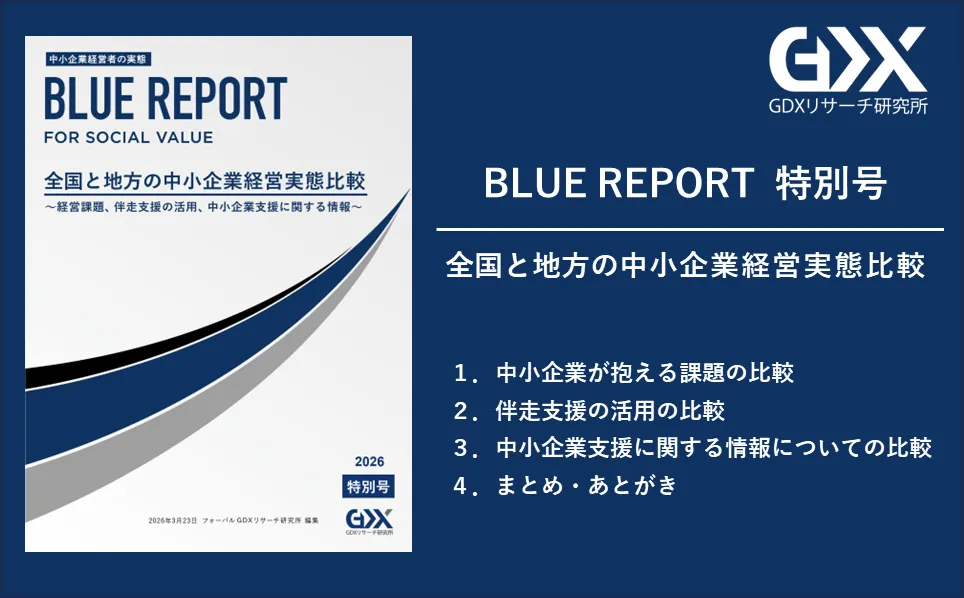
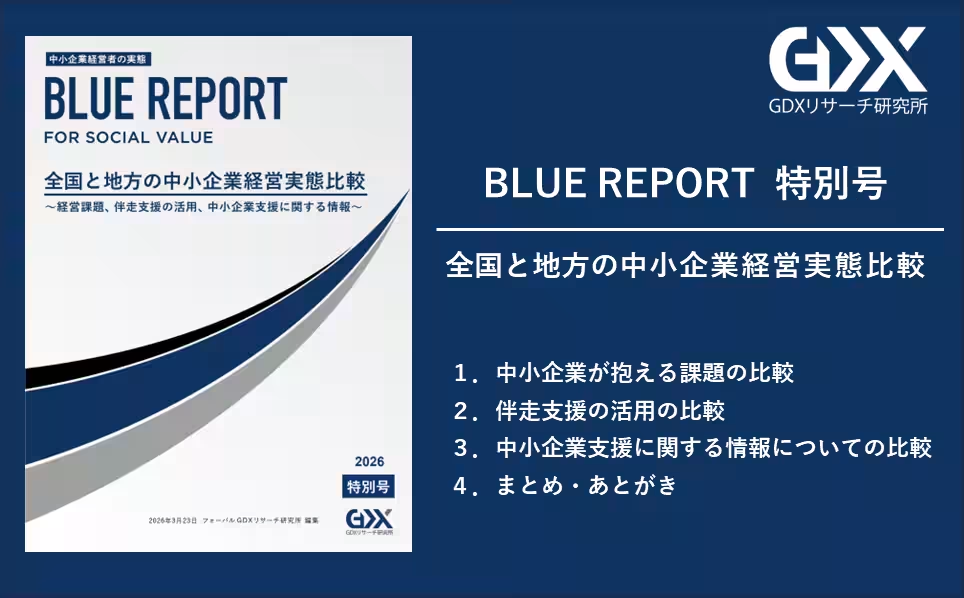
FORVAL, a next-generation management consulting group based in Shibuya, Tokyo, has partnered with the GDX Research Institute to investigate various support mechanisms available for SMEs. The findings will be presented in their special edition report, the "BLUE REPORT," scheduled for release on March 23, 2026. This report aims to understand the operational realities faced by local SMEs compared to their national counterparts.
Key Findings of the BLUE REPORT
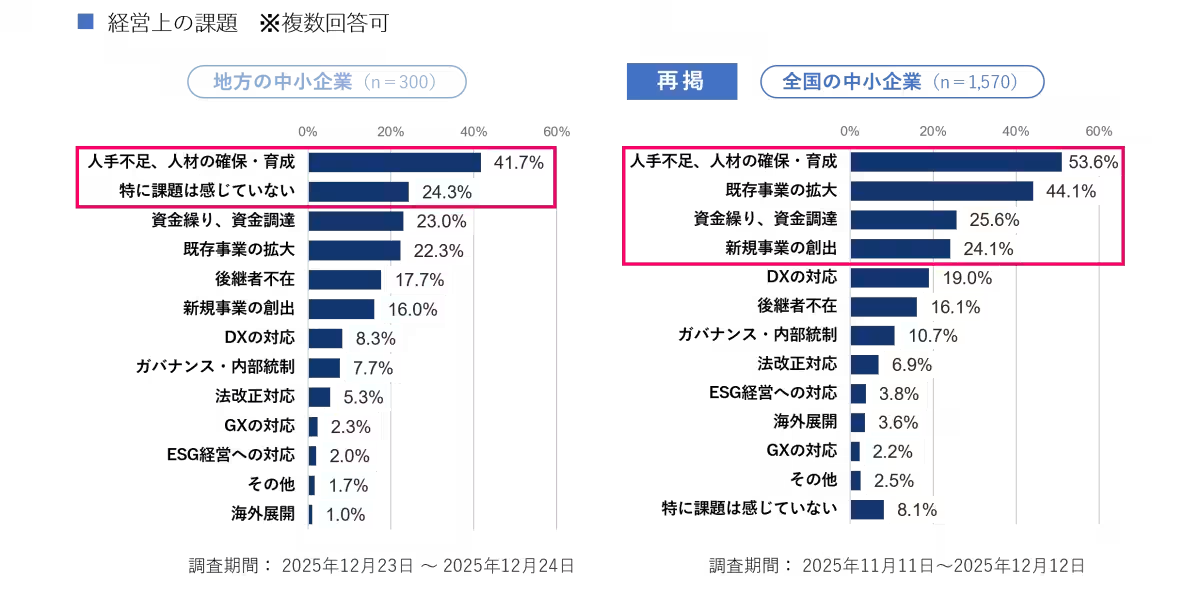
The report reveals stark contrasts in recognizing and addressing business challenges between local SMEs and their national counterparts. For example, both groups identified labor shortages and workforce development as significant issues, with local SMEs reporting this concern at 41.7% and national SMEs higher at 53.6%. The critical need for human resources remains a shared challenge across the board.
Utilization of Expert Support
Another intriguing finding from the report highlights disparities in the utilization of accompanying support from external experts. Only 32.6% of local SMEs reported having experience using such support services, compared to 57.2% at the national level. This gap indicates that local SMEs, overall, have less interaction with specialists who could assist in navigating business challenges.
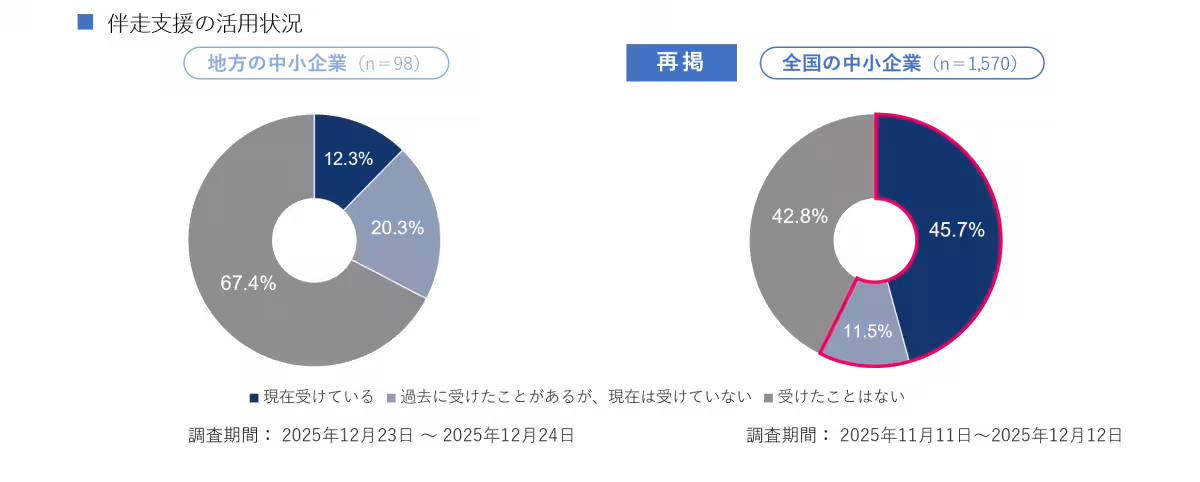
Moreover, among local SMEs, a substantial portion (67.4%) indicated they had never engaged in any form of external expert support. Recent data shows that only 12.3% were currently receiving help, while 20.3% had previously utilized such services but were no longer doing so. This suggests not only a lack of ongoing support but also a potential for improving awareness of available assistance.
Clarity of Support Information
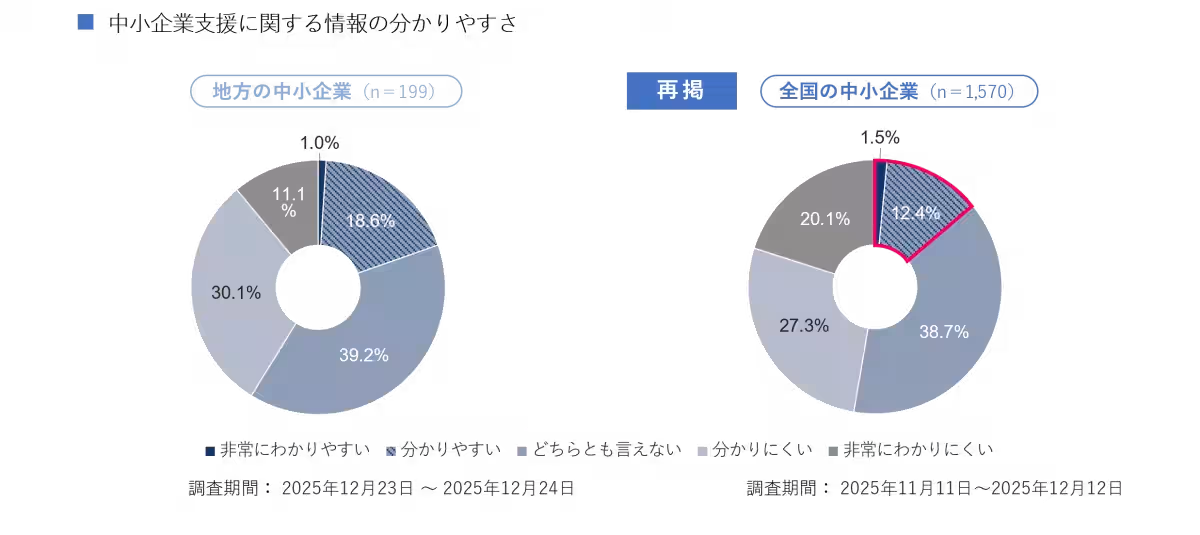
When questioned about the clarity of information regarding SME support (such as grants and subsidies), local SMEs reported just 19.6% found this information easy to understand—1% stated it was very clear, and 18.6% found it somewhat understandable. In contrast, national SMEs reported a slightly better comprehension rate, albeit still underwhelming, at 15%.
Interestingly, while both groups grapple with similar issues regarding human resource management, there is a startling 24.3% of local SMEs who indicated that they did not feel any specific business challenges, compared to only 8.1% among national SMEs. The latter statistic points to a potentially concerning under-recognition of existing issues within the local business landscape.
Conclusion
The implications of these findings are profound. Local SMEs are falling behind nationally in their understanding of business support systems and their recognition of important management challenges. Without a concerted effort to improve access to information and relevant support services, these enterprises may struggle to adapt to evolving market demands.
In conclusion, the disparities in recognition and utilization of support systems between local and national SMEs necessitate immediate attention. Enhancing their accessibility to information, as well as establishing robust mechanisms to connect them with appropriate business support, is crucial for fostering sustained growth and revitalization in local economies.
FORVAL’s commitment to fostering the growth of SMEs through digitization and sustainability will play a crucial role in bridging this gap, ensuring that all businesses, regardless of their locale, can thrive in an increasingly competitive market.

Topics Business Technology)
【About Using Articles】
You can freely use the title and article content by linking to the page where the article is posted.
※ Images cannot be used.
【About Links】
Links are free to use.