



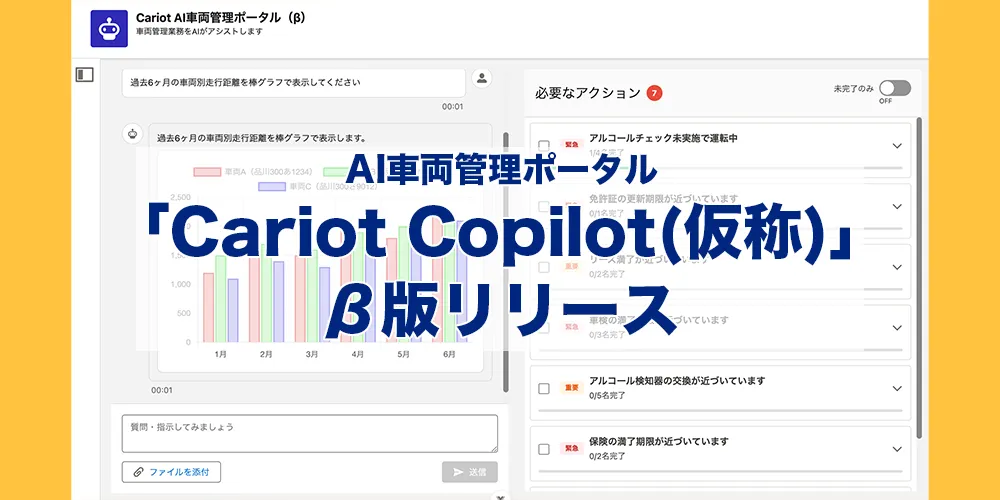
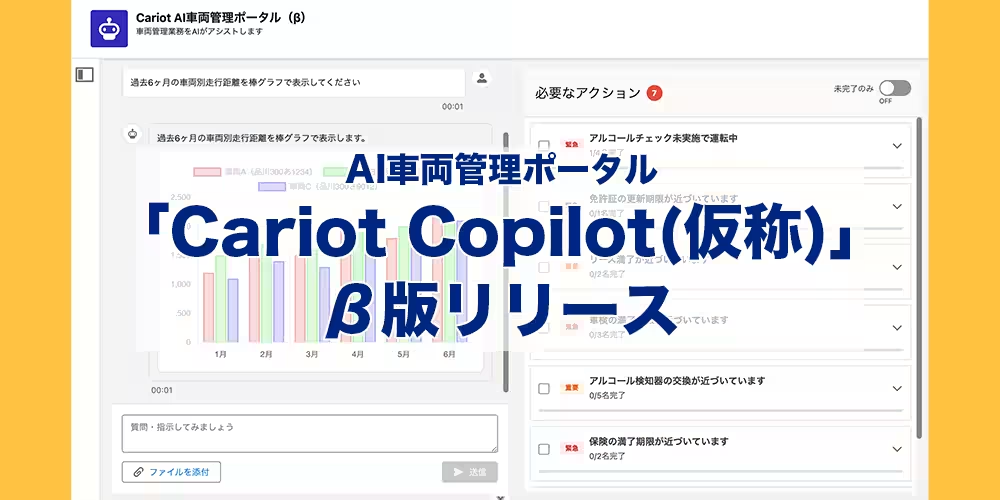
Cariot Launches Beta Version of AI Vehicle Management Portal Cariot Copilot
Cariot Unveils the Beta Version of Cariot Copilot
Cariot, a company based in Minato, Tokyo, has recently announced the launch of the beta version of its AI-driven vehicle management portal, Cariot Copilot. This initiative is part of their vision to bridge the gap between drivers and companies, specifically focusing on reforming work processes within the automotive sector. The release represents the initial step towards developing an AI agent capable of autonomously managing various vehicle-related tasks, enabling human workers to concentrate on higher-value activities.
Addressing the Challenges of Vehicle Management
Vehicle management encompasses a wide range of tasks, including vehicle dispatching, inspections, safety checks, fuel expense reimbursements, and more. All of these responsibilities can create significant workloads for management, often leading to inefficiency and increased stress. Cariot aims to eliminate these burdens by introducing a platform where an AI agent collaborates with human operators.
The ultimate goal is to create an environment where AI can handle routine processes, allowing humans to focus on decision-making and strategic tasks. The Cariot Copilot will be capable of interpreting straightforward commands given in Japanese, presenting data in an understandable manner.
Key Features of Cariot Copilot
The Cariot Copilot operates without the need for specialized skills or knowledge, such as SQL language. Users can simply ask questions like, "When is the vehicle's inspection next month?" or "Show me cars that are experiencing lower fuel efficiency."
The AI will securely retrieve and integrate data and display the results in an easy-to-understand format. This is designed to act like a concierge for vehicle management, simplifying the user experience.
Call for Test Users
In conjunction with the launch, Cariot is seeking companies willing to participate as test users for the Beta version. Feedback from these users will be pivotal in fine-tuning the platform. Cariot is interested in honest opinions on what could enhance usability and areas for improvement.
Interested companies should note the following criteria:
- - Companies must operate a fleet of at least five vehicles.
- - For new customers, a subscription to Cariot is necessary, initiating license fees.
- - Existing Cariot users can access the beta version for free during the testing phase, though there are specific conditions to be aware of.
- - Test users will be asked to participate in surveys and provide feedback to refine the system further.
Once users agree to these conditions and sign up, they may benefit from incentives regarding pricing and limitations upon the official release.
For further information, please reach out and indicate your interest in becoming a test user for Cariot Copilot by commenting, "I want to be a Cariot Copilot test user.”
Understanding Cariot
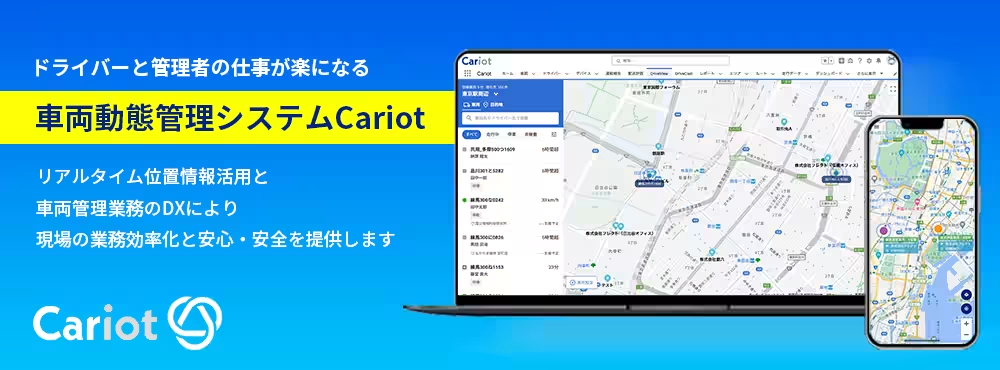
The Cariot service is a cloud-based vehicle management solution that enables real-time data acquisition, visualization, and utilization straightforwardly. By simply attaching a device or activating a mobile app, users can monitor their vehicles efficiently. This platform seeks to tackle various challenges related to vehicle management, including enhancing safe driving practices, automating driving reports, and facilitating smooth alcohol checks, thus providing comprehensive digital oversight over fleets.
Cariot is already in use by over 350 businesses, from sales to delivery and field service sectors, championing work reform for all stakeholders involved with vehicle operations.
For inquiries or detailed discussions about the Cariot service, feel free to reach out via their official website.
Company Overview
Cariot is a subsidiary of Soracom and Flect, and its headquarters is located in the YMG Shimbashi Building in Tokyo. The organization is dedicated to advancing the workplace transformations within automotive management, presenting innovative technological solutions for seamless integration and operation.
The company strives to continuously evolve its services, ensuring that all parties involved, from drivers to managers, benefit from improved workflows and enhanced operational practices.
Topics Consumer Technology)
【About Using Articles】
You can freely use the title and article content by linking to the page where the article is posted.
※ Images cannot be used.
【About Links】
Links are free to use.