



Revolutionary Study Unveils Royal Jelly's Role in Combating Locomotive Syndrome
Understanding Royal Jelly's Benefits in Combating Locomotive Syndrome
Introduction
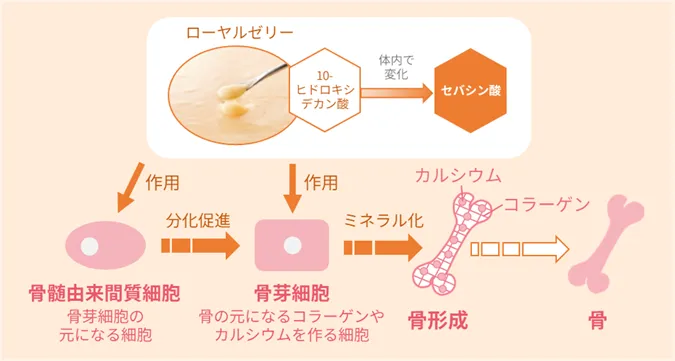
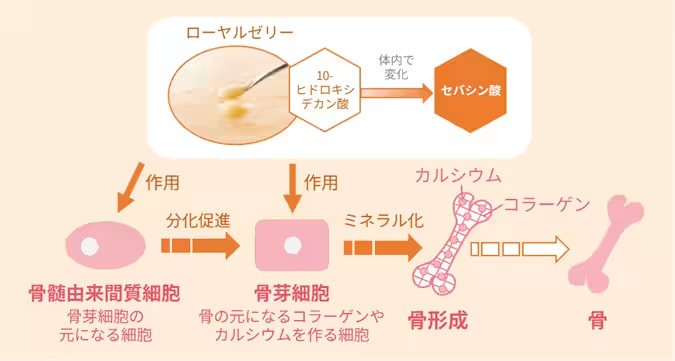
Royal jelly, a remarkable substance produced by bees, is gaining attention for its potential health benefits, particularly in preventing locomotive syndrome. A recent study conducted by Yamada Bee Farm’s Health Science Research Institute in collaboration with Professor Shoichiro Kokubo from Kyushu Dental University has opened new avenues in this area. The study reveals how sepacitic acid, a metabolite of 10-Hydroxydecanoic acid— a key component of royal jelly—enhances bone formation by stimulating gene expression in osteoblasts and mesenchymal stem cells.
Background of the Study
Locomotive syndrome, prevalent among the elderly in Japan, results from a decline in muscle and bone strength, significantly affecting mobility and quality of life. The balance between bone resorption by osteoclasts and bone formation by osteoblasts is crucial for maintaining bone health. When bone resorption outstrips formation, osteoporosis ensues, affecting approximately 15.9 million Japanese adults, with one in three women in their 70s affected. This has necessitated urgent strategies for prevention and improvement.
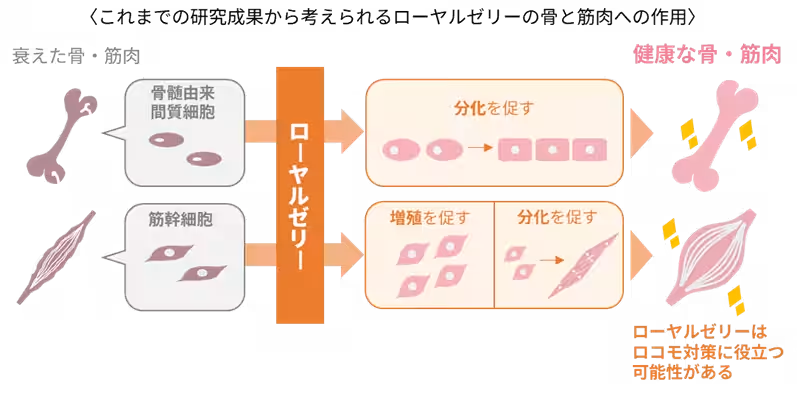
Royal jelly has previously shown the ability to promote the proliferation and differentiation of muscle stem cells, which is essential in understanding its role in preventing locomotive syndrome. This study aims to elucidate how sever acid, metabolized from decanoic acid, impacts bone formation.
Methodology and Findings
1. Promotion of Bone Formation
The research examined sepacitic acid's effects on osteoblasts and bone marrow-derived mesenchymal stem cells cultivated for five days. They evaluated alkaline phosphatase (ALP) activity, a marker for bone formation. Results indicated significant enhancement in ALP activity, demonstrating that sepacitic acid promotes bone formation in both cell types.
2. Enhancement of Osteoblast Differentiation
Upon introducing sepacitic acid to the cultured cells for three days, researchers observed marked increases in gene expression tied to bone differentiation, notably Runx2, Osx, Col1a1, Alp, Ocn, and Bsp, evidencing that sepacitic acid encourages the differentiation of osteoblasts and mesenchymal stem cells.
3. Activation of Calcification
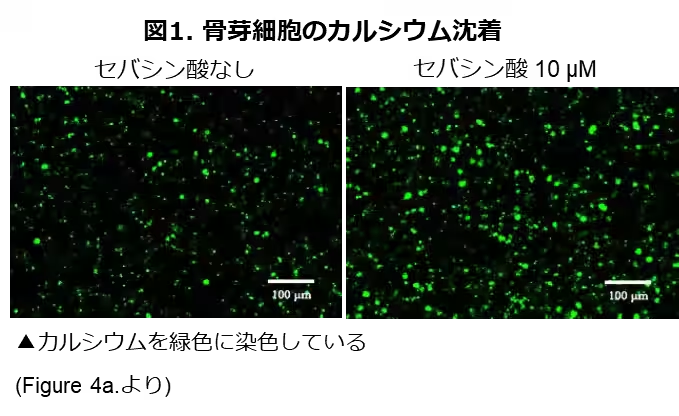
By culturing osteoblasts with sepacitic acid for ten days, the study also revealed increased calcium deposition, indicating that sepacitic acid significantly enhances the calcification of osteoblast cells. This confirms the compound's positive effect on bone mineralization.
Conclusion and Future Prospects
This groundbreaking study illustrates that sepacitic acid, derived from royal jelly's key component decanoic acid, significantly boosts bone formation through enhancing bone cells' differentiation and calcification. As royal jelly continues to show promise in the fields of muscle stem cell proliferation and general health maintenance, the potential for it to combat locomotive syndrome grows.
Future research aims to explore the usefulness of royal jelly alongside other bee products such as propolis and bee larvae, with a focus on developing preventive health products. This innovative approach, coined “Apitherapy,” seeks to enhance individual health spans and offer broader societal benefits.
Publication Information
The findings of this study have been published in the academic journal "Bioscience, Biotechnology, and Biochemistry." The paper is titled "Sebacic acid promotes osteoblast differentiation" by Thira Rojasawasthien et al., underlining the significant advancements in our understanding of how natural compounds can aid in maintaining bone health as we age.

Topics Health)
【About Using Articles】
You can freely use the title and article content by linking to the page where the article is posted.
※ Images cannot be used.
【About Links】
Links are free to use.