



Overcoming Perceptions: The Role of AI in Demand Forecasting for Manufacturing
AI Demand Forecasting in Manufacturing: Breaking Down Misconceptions
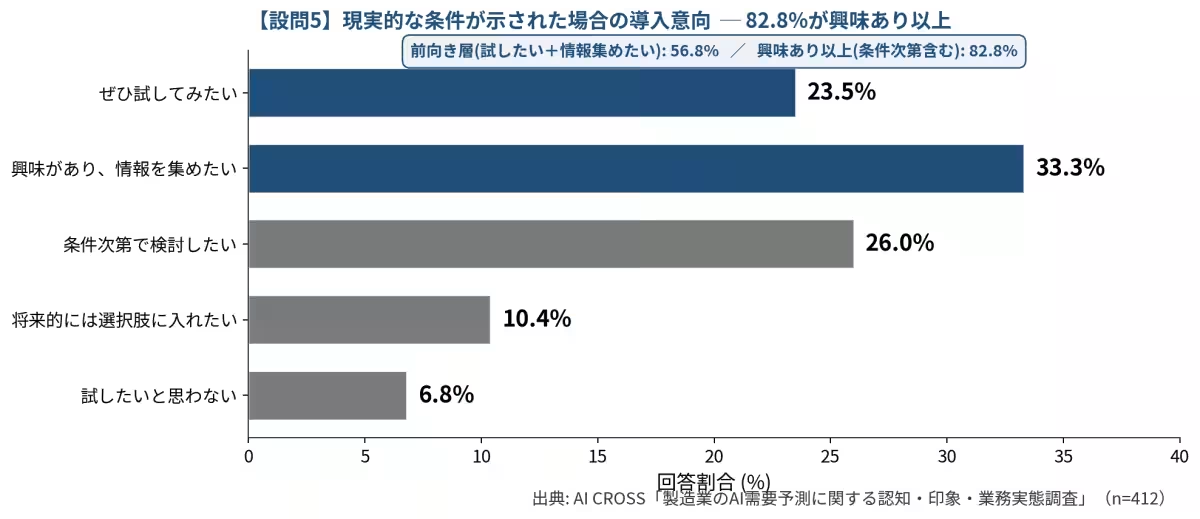
In the ever-evolving landscape of manufacturing, the integration of AI into demand forecasting and inventory management is emerging as a pivotal step toward digital transformation. A recent survey commissioned by AI CROSS Co., Ltd., conducted with 412 professionals from the manufacturing sector across Japan, unveiled significant insights into the prevailing attitudes towards AI demand forecasting, revealing five main barriers of perception that limit its widespread adoption. Despite these challenges, the data suggests that 82.8% of respondents would express interest in AI demand forecasting under realistic conditions.
The Context: Digitalization Lag in Manufacturing
According to the Ministry of Economy, Trade and Industry's 2025 White Paper on Manufacturing, Japan's manufacturing industry faces notable challenges in digital adaptation, with only 35.2% of processes related to order management, inventory, and procurement employing digital solutions. This stands in stark contrast to higher digital engagement in office operations (43.9%) and production management (43.7%). Such disparity indicates a significant lag where approximately 65% of companies are still reliant on non-digital methods for order and inventory management, leading to inefficiencies and a reliance on individual expertise.
The survey, titled "Awareness, Perceptions, and Practical Conditions for AI Demand Forecasting in Manufacturing," sought to quantify the recognition and impressions manufacturing professionals have concerning AI demand forecasting. Understanding these perceptions is essential as the sector prepares for the next stage in its digital journey, with AI poised to revolutionize demand forecasting, inventory management, and order planning.
Survey Findings: A Mixed Bag of Awareness and Skepticism
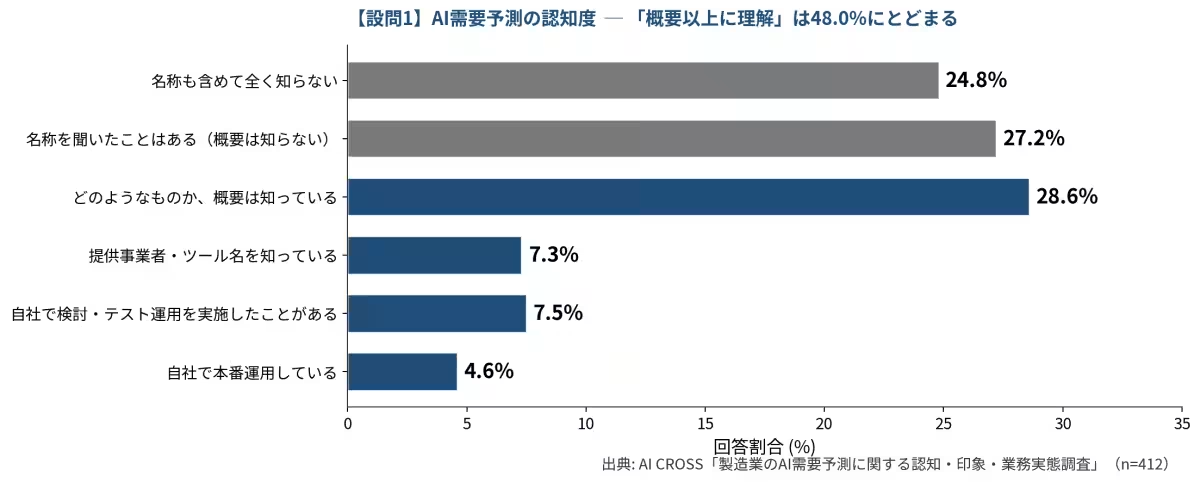
When asked about their level of awareness regarding AI demand forecasting, over half (52.0%) of respondents admitted to being unaware of it or only having heard of its name but lacking an understanding of the underlying concepts. Conversely, only 48.0% recognized the basics or had experience with implementation.
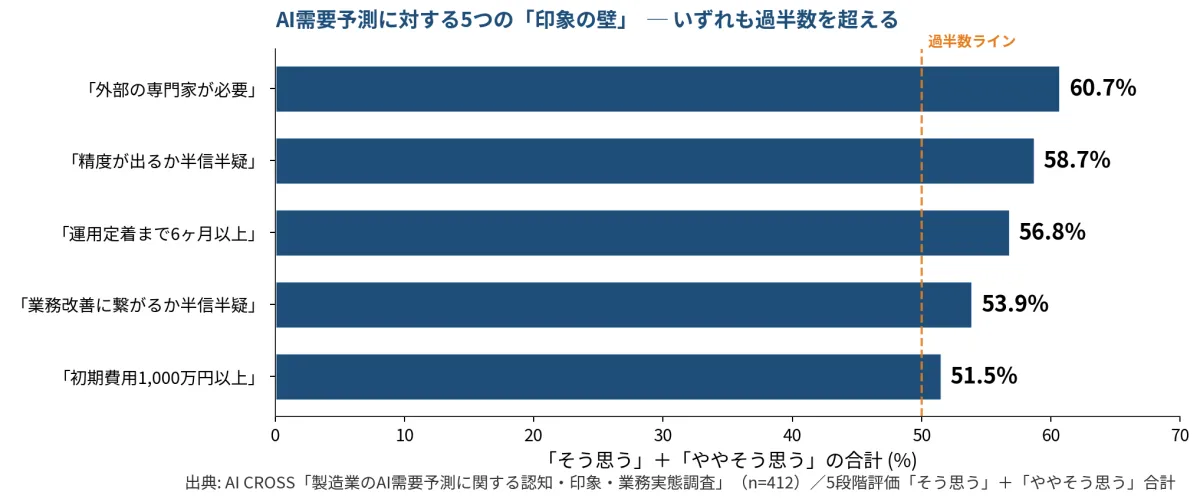
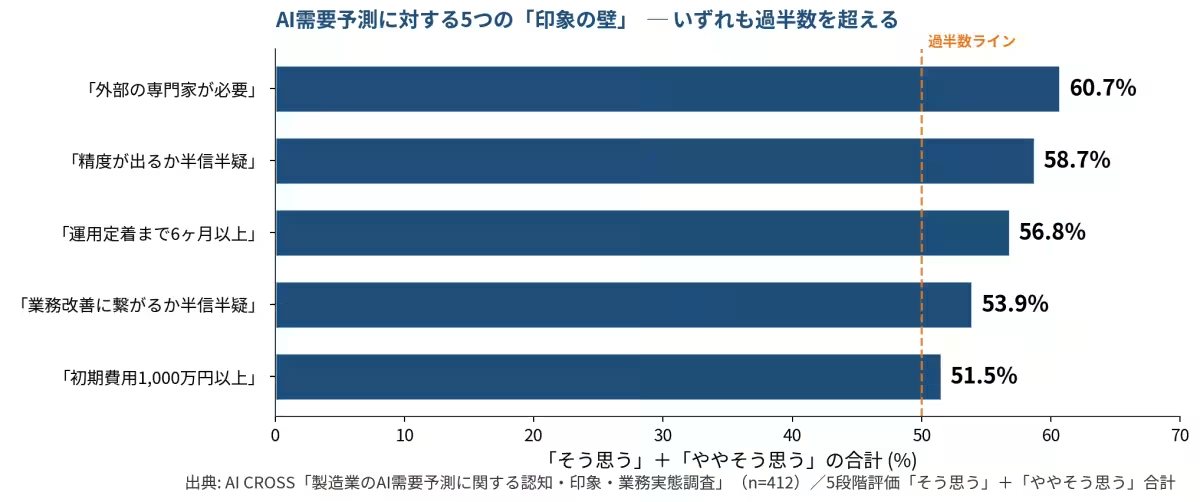
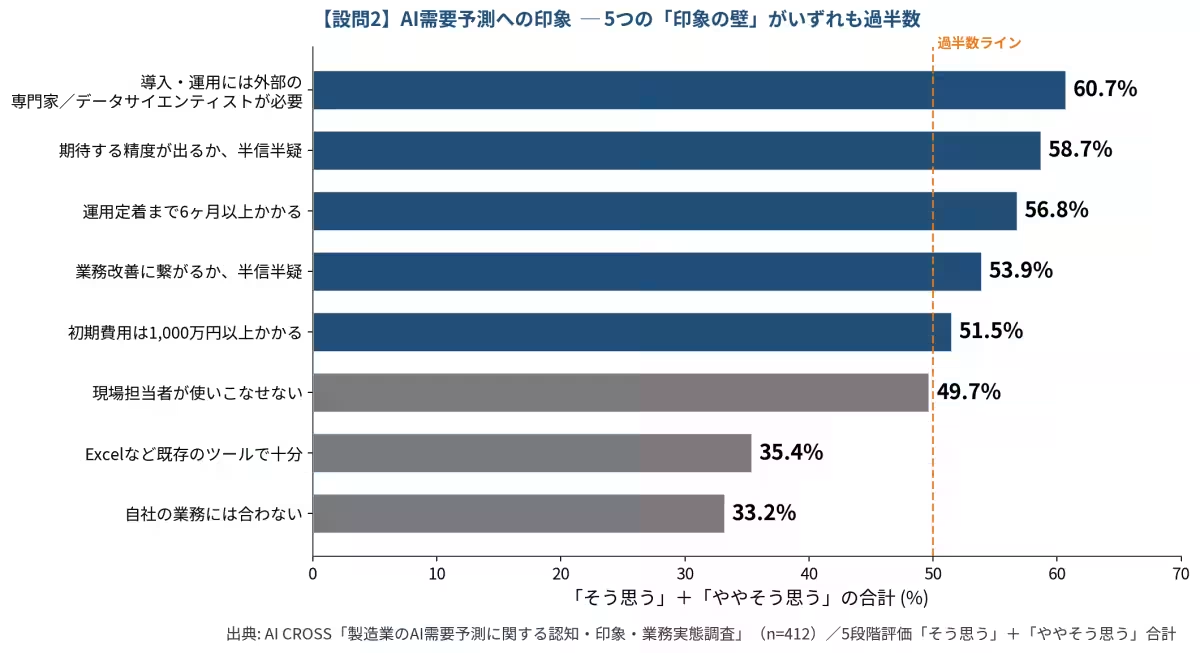
Moreover, the five perception barriers identified in the survey included: the necessity of external experts or data scientists (60.7%), doubts about achieving expected accuracy (58.7%), concerns that implementation would take over six months (56.8%), uncertainty about operational improvements (53.9%), and high initial costs of over 10 million yen (51.5%). This data highlights a broad skepticism not only towards the practical aspects of AI deployment but also regarding its effectiveness in enhancing operational efficiency.
Time Implications: The Heavy Burden of Manual Processes
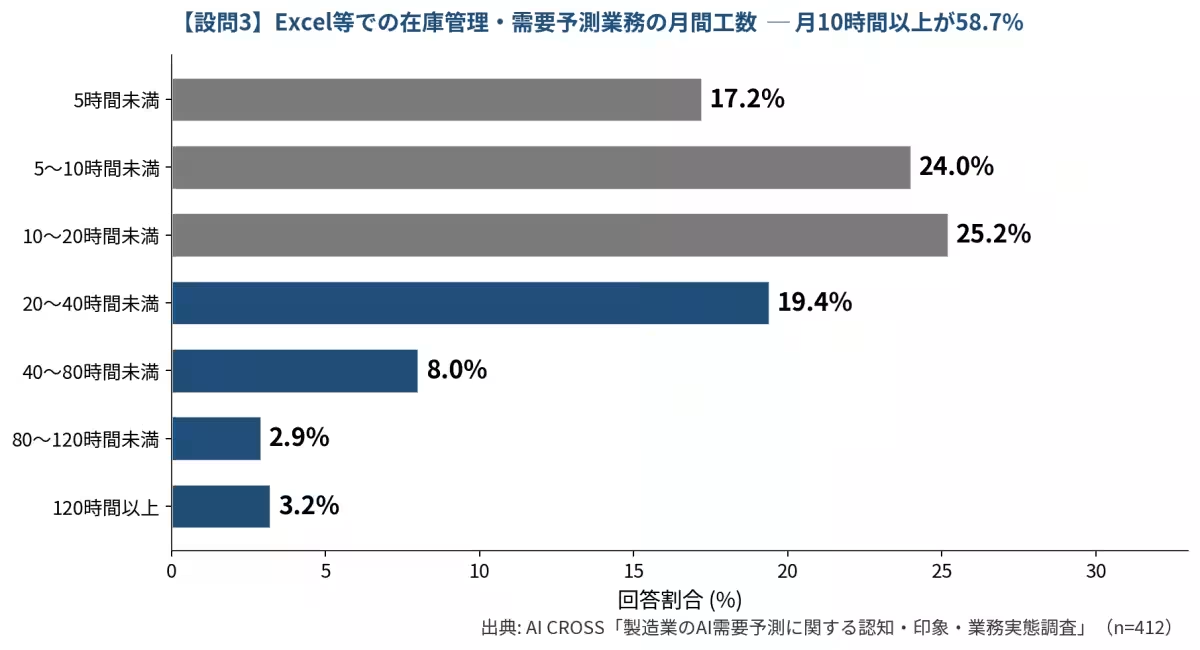
The survey further revealed that a significant portion of professionals—58.7%—spend over ten hours a month managing inventory and demand forecasting tasks using tools like Excel, with 14.1% dedicating more than forty hours. This illustrates the substantial time and resources being consumed by traditional methods, a factor that could be alleviated by the effective implementation of AI technologies.
Key Barriers to Adoption: Cost and Perceived Value
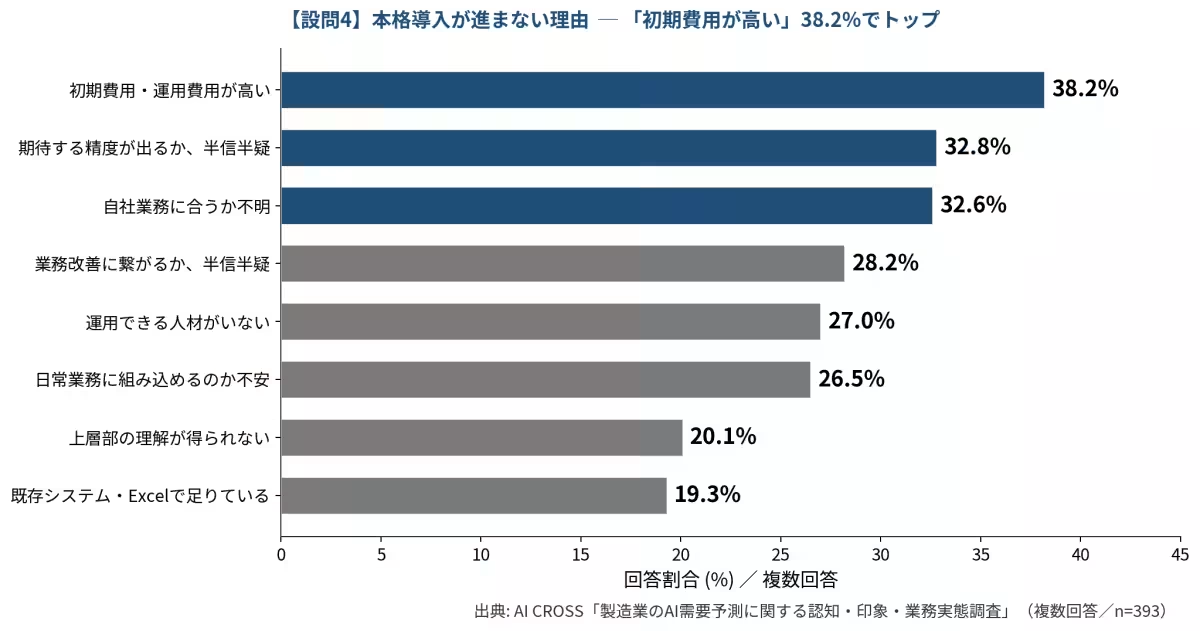
When questioning why some manufacturers have yet to embark on a serious deployment of AI demand forecasting, respondents highlighted several reasons: 38.2% cited high initial and operational costs, 32.8% expressed skepticism about achieving expected accuracies, and 28.2% were uncertain about whether AI would lead to operational improvements. These barriers closely mirror the earlier mentioned perception walls and indicate that cost remains a primary deterrent to embracing AI initiatives.
Opportunities for Engagement: Interest Driven by Realistic Conditions
Despite the prevailing skepticism, a significant portion of respondents (56.8%) indicated a willingness to explore AI demand forecasting if conditions are favorable. Specifically, 23.5% expressed a strong desire to try out AI solutions, while 33.3% showed interest in gathering more information. This signifies a noteworthy opportunity for growth in the sector, suggesting that when presented with manageable, productized solutions that align with their operational framework, manufacturers are more likely to engage with AI.
Addressing Perceptions: The Path to Adoption
The findings clearly indicate that overcoming the identified perception barriers is crucial for the widespread adoption of AI demand forecasting in manufacturing. Perceptions suggesting that AI solutions are prohibitively costly or require extensive expertise may no longer be valid as the market evolves toward ready-to-deploy solutions.
AI CROSS is committed to bridging this gap, providing tools like "Deep Predictor" that allow users to generate precise forecasts without requiring specialized knowledge. This service embodies a paradigm shift toward employing AI in practical, user-friendly manners that align with manufacturing operations.
Conclusion: A Strategic Approach Moving Forward
As manufacturers strive toward digital transformation, understanding and addressing these misconceptions surrounding AI will be vital. The insights from AI CROSS highlight a significant opportunity for growth, indicating that with the right tools and support, AI demand forecasting may soon become integral to operational success in the manufacturing sector. Continuously engaging with industry professionals to refine and simplify AI deployment will pave the way for a more innovative and efficient manufacturing landscape.


Topics Consumer Technology)
【About Using Articles】
You can freely use the title and article content by linking to the page where the article is posted.
※ Images cannot be used.
【About Links】
Links are free to use.