




2026 Trends in Japan's Inbound Travel Market: Insights from JTB Forecasts
Overview of the Inbound Travel Market
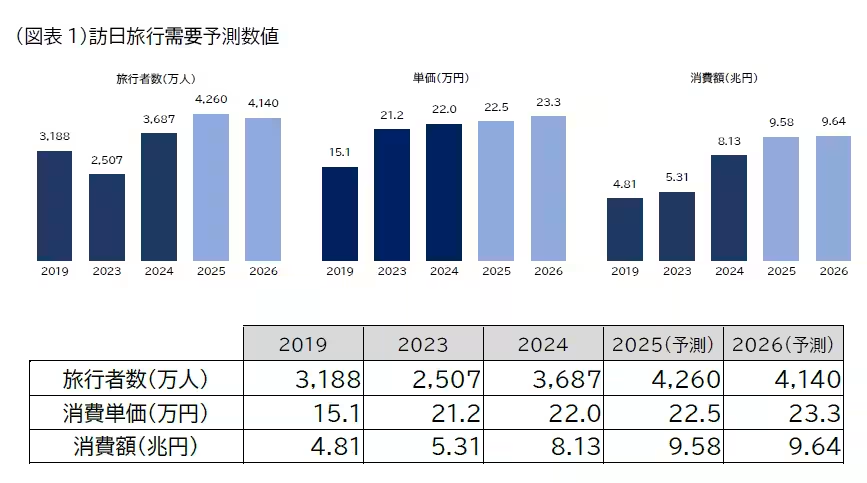
In a recent forecast, JTB has laid out its projections for Japan's inbound travel market in 2026. The anticipated number of foreign visitors to Japan is about 41.4 million, a slight drop of 2.8% compared to the previous year. Despite this decrease, total spending from these visitors is expected to rise to 9.64 trillion yen, reflecting a growth of about 0.6% year-on-year.
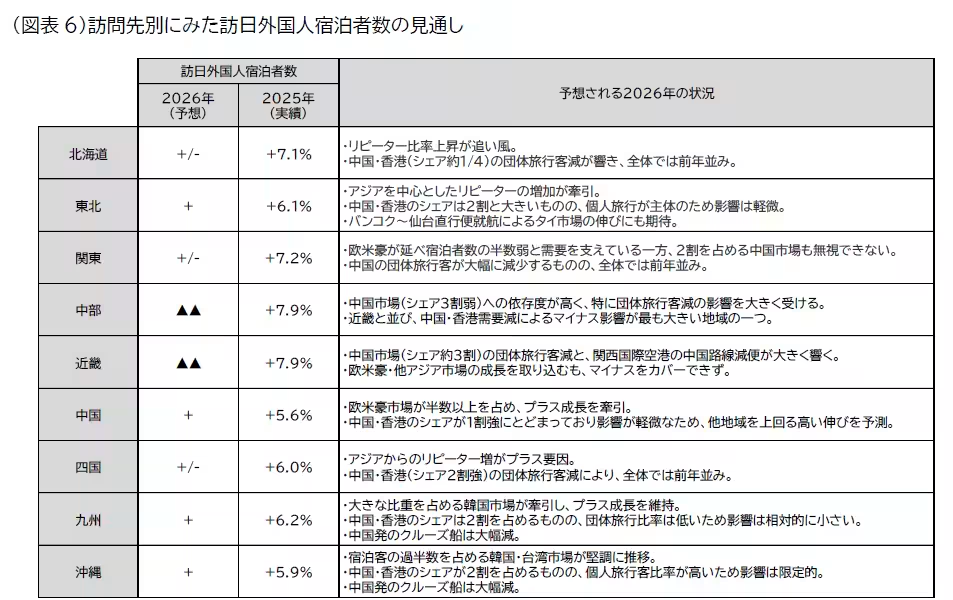
Several factors are contributing to these trends. Although the total number of visitors is projected to decline slightly due to decreased demand from China and Hong Kong, an increase in travelers from Western countries and Australia is expected to offset this with higher spending. Indeed, tourists from these regions tend to have longer stays, which boosts overall consumption even when their numbers don’t rise dramatically.
Factors Influencing Visitor Numbers
In the post-pandemic landscape, recent years have seen Japanese tourism rates experiencing upward trends, significantly aided by the depreciation of the yen and rising disposable income in various regions. The forecast indicates that while the demand from key markets such as China and Hong Kong is decreasing, growth will instead come from stronger economic recovery and travel interest in regions like South Korea, Taiwan, and various Western countries.
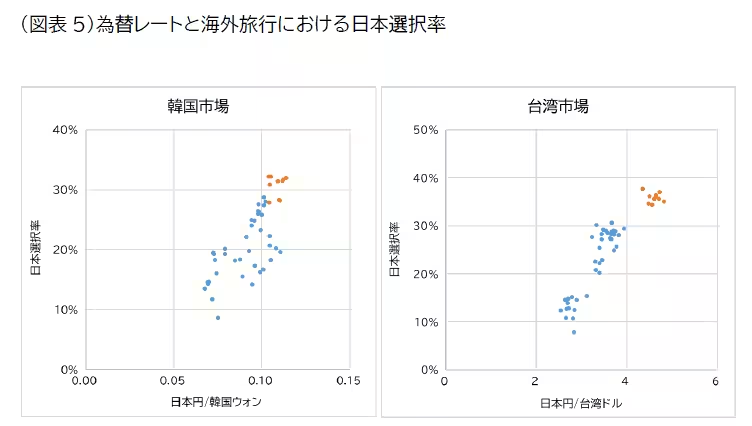
However, the rapid fluctuations in the exchange rate present concerns for potential travelers. The attractiveness of Japan as a travel destination for nearby countries like South Korea and Taiwan primarily hinges on the exchange rate dynamics. Should the yen strengthen, there may be a shift in travel preferences toward more affordable destinations in Southeast Asia.
Visitor Segmentation by Geography
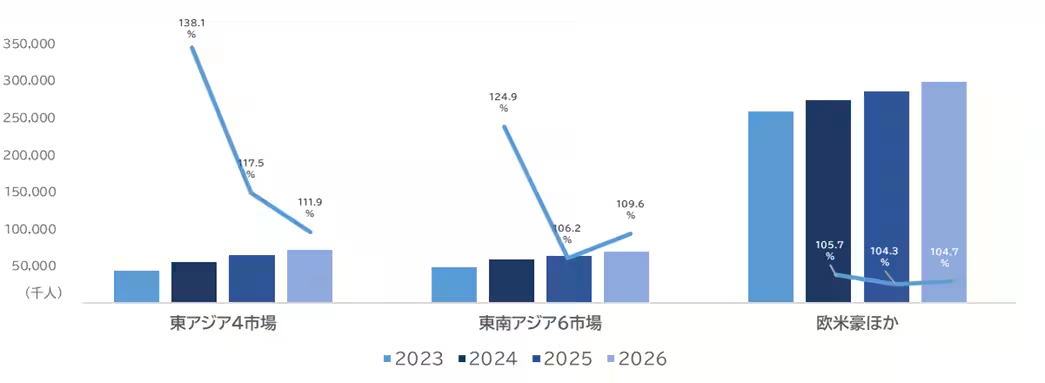
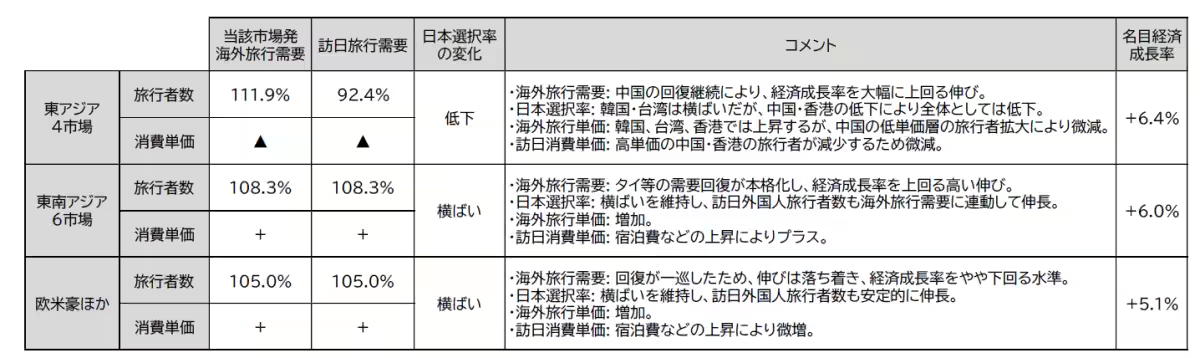
JTB highlights that, besides East Asian markets, other regions are expected to see an increase in visitors in line with broader economic growth. Predictably, the strongest growth is expected from the Chinese market, although visitor numbers to Japan from China are set to decline due to diverted travel demand toward Southeast Asia. This represents a significant shift in present-day tourism landscapes as China's borders have reopened later than others, resulting in pent-up demand.
In Southeast Asia, the market shows varied recovery rates. Countries like Malaysia and Thailand are recovering more slowly compared to nations such as Singapore, which saw a quicker rebound following the pandemic.
In contrast, travelers from Europe, North America, and Australia are likely to see their demand stabilize, leading to a growth rate slightly below the broader economic growth expectations in their markets.
The Influence of Western Visitors
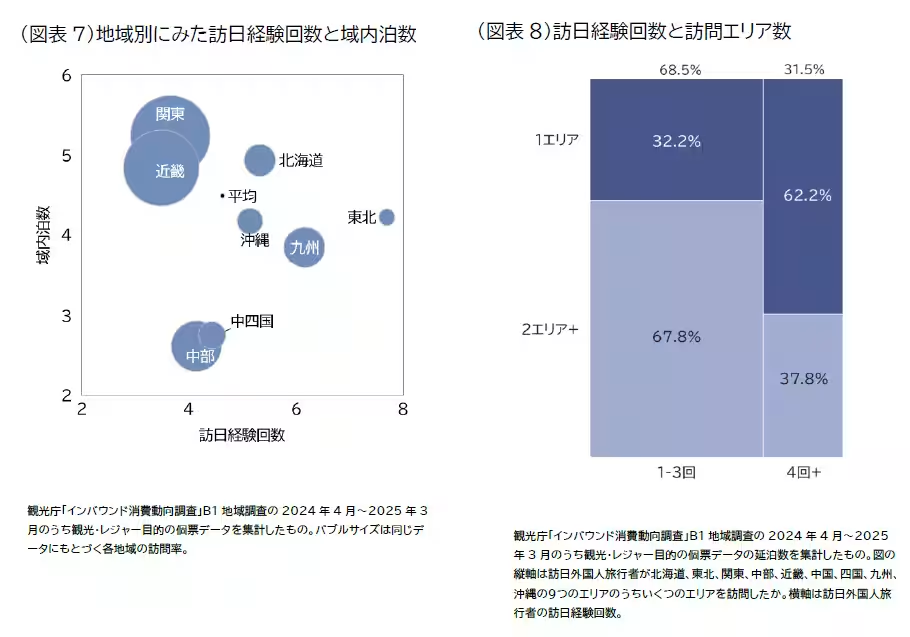
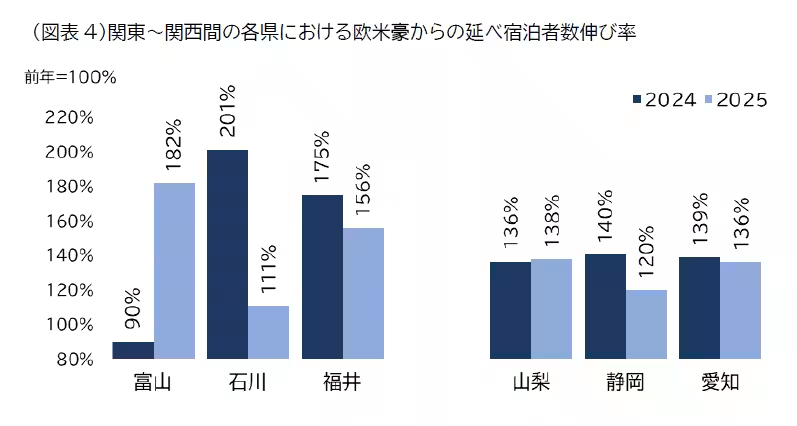
JTB notes that in 2026, tourists from Western countries are expected to become increasingly prominent in Japan. Data suggests that over a nine-month period in 2025, the number of accommodations booked by these visitors became comparable to traditional East Asian markets. Interestingly, these Western travelers typically spend twice as long in Japan compared to those from Asia, contributing significantly to extended accommodation numbers.
Furthermore, there’s been noticeable growth in regions outside the main tourist trail, influenced by transportation improvements, such as the extension of the Hokuriku Shinkansen. This allows for easier access to regions like Kanazawa, which boast rich cultural heritage and attracts high-spending tourists.
Emerging Trends in Visitor Behavior
As the profile of visitors shifts, spending habits are also evolving. Interestingly, travelers from the West tend to spend more on accommodations and dining within Japan, contrasted with Asian travelers who might prioritize shopping. The long stay durations contribute to their higher expenditure levels, making them a significant market for Japanese tourism businesses.
Concluding Insights
Overall, JTB's insights into the 2026 inbound travel market reflect a complex but optimistic outlook. While there are challenges primarily driven by exchange rates and changing visitor demographics, opportunities abound, particularly in terms of adapting and evolving strategies to appeal to Western markets. The trend towards personalized experiences and unique cultural engagements will be crucial as Japan seeks to maintain its allure as a top travel destination in a competitive global environment.
With events like the World Baseball Classic and the 20th Asia Games on the horizon, the chances for attracting diverse crowds remain high. Furthermore, JTB aims to promote innovative travel experiences and foster collaborations that enhance visitor engagement in Japan, laying down a robust framework for future growth.

Topics Travel)
【About Using Articles】
You can freely use the title and article content by linking to the page where the article is posted.
※ Images cannot be used.
【About Links】
Links are free to use.