



Tokuyama Advances Solar Panel Recycling Technology with NEDO Support for Sustainable Solutions
Introduction
Tokuyama Corporation, based in Chiyoda, Tokyo, is making significant strides in solar panel recycling technology. Recently, the company announced that its research and development project, focused on low-cost processing technology and silicon recycling, has been selected by the New Energy and Industrial Technology Development Organization (NEDO) for its 2025 fiscal year program. This initiative is part of a broader effort to tackle the impending issue of large-scale solar panel disposal projected to occur in the 2030s.
The Project Overview
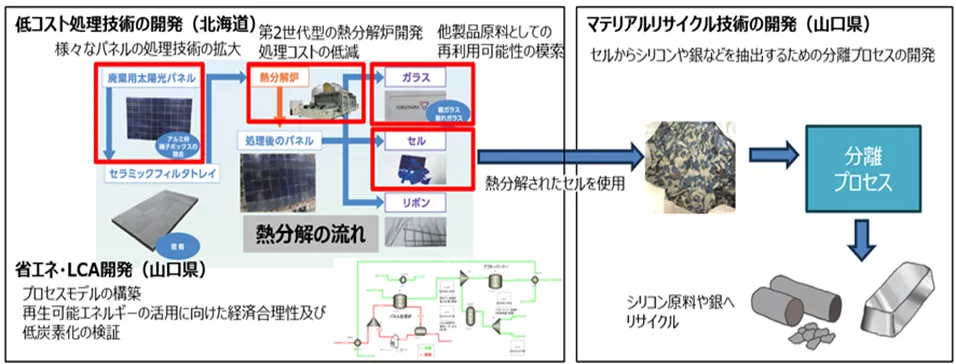
Tokuyama's project, titled "Development of Low-Cost Processing and Cell Separation Technology for Silicon Recycling Using Low-Temperature Thermal Decomposition Method," aims to enhance its established low-temperature thermal decomposition method, which has been in collaborative development with NEDO since 2019. By utilizing a unique catalyst, the company has successfully separated cover glass and cells from solar panels, paving the way for innovative recycling methods.
Over the next three years, Tokuyama plans to refine its processing techniques further. Key objectives include:
- - Enhancing the thermal efficiency and processing speed of the second-generation thermal decomposition furnace, scheduled for completion by 2024. This will significantly reduce energy costs and processing times compared to the first-generation furnace.
- - Establishing treatment conditions tailored to various types of solar panels, increasing versatility and efficiency in the recycling process.
- - Automating the module processing workflow to create a demonstration plant that achieves low-cost processing while enhancing operational efficiency.
Targeting a Circular Economy
The overarching goal of Tokuyama's project aligns with the pursuit of a circular economy, putting efforts toward achieving 100% resource recovery without landfill disposal. The company's commitment is to assist in constructing a sustainable society, ensuring the sophisticated recycling technology becomes a cornerstone of greenhouse gas reduction methods. This ambition comes as global awareness and regulations regarding electronic waste and sustainability continue to grow.
Material Recycling Technology Development
A significant focus of this project involves the development of material recycling processes, particularly the separation of silicon from solar cells—an area that has not been commercialized domestically until now. By utilizing the low-temperature thermal decomposition method, Tokuyama aims to devise a separation process to extract silicon and silver from solar cell segments. This innovation represents not just a technological enhancement but a critical step toward realizing new material recycling methodologies that could reshape how we handle solar panel waste.
Conclusion
With the selection of its project by NEDO, Tokuyama stands at the forefront of monumental change aimed at addressing environmental concerns arising from the increasing use of solar panels. The company's efforts to develop advanced recycling techniques and automate processing workflows highlights a commitment to sustainable practices, showing that resource efficiency and environmental responsibility can go hand in hand. As the solar energy sector continues to expand, initiatives like Tokuyama's will be crucial in ensuring that the environmental footprint of solar technology remains manageable and beneficial for future generations. By investing in innovation and collaboration with organizations like NEDO, Tokuyama is not just improving its business prospects but is actively contributing to the planet's sustainable future.
Topics Environment)

【About Using Articles】
You can freely use the title and article content by linking to the page where the article is posted.
※ Images cannot be used.
【About Links】
Links are free to use.