



Japan GX Research Institute Collaborates with PeoplePort for GHG Reduction Assessment of PC Recycling Service
Japan GX Research Institute & PeoplePort Collaboration
The Japan GX Research Institute, headquartered in Chuo-ku, Tokyo, has announced a partnership with PeoplePort Inc., the operator of the ethical computer initiative "ZERO PC" based in Yokohama, Kanagawa. This collaboration aims to quantitatively assess the greenhouse gas (GHG) reduction contributions offered by their new computer recycling service.
Background of the Collaboration
As companies are increasingly pressured to adopt decarbonization practices, understanding GHG emissions across procurement and manufacturing stages is crucial for reducing Scope 3 emissions. The manufacturing of IT equipment consumes significant energy during resource extraction and parts production, making it essential to minimize environmental impact as early as the procurement phase. Additionally, since April 2022, Japanese stock exchange listings have mandated disclosures regarding CO₂ emissions and reduction targets, heightening the need for more visible environmental reporting.
Since its inception in 2017, PeoplePort has led the computer recycling initiative, effectively contributing to the reduction of electronic waste by approximately 19 tons. Their strategy heavily relies on reusing recoverable parts, utilizing only a minimal amount of new components, and employing 100% renewable energy in their operations. This cycle-oriented manufacturing approach has achieved substantial reductions in environmental impact and waste, representing their commitment to a zero environmental impact model.
Overview of the Initiative
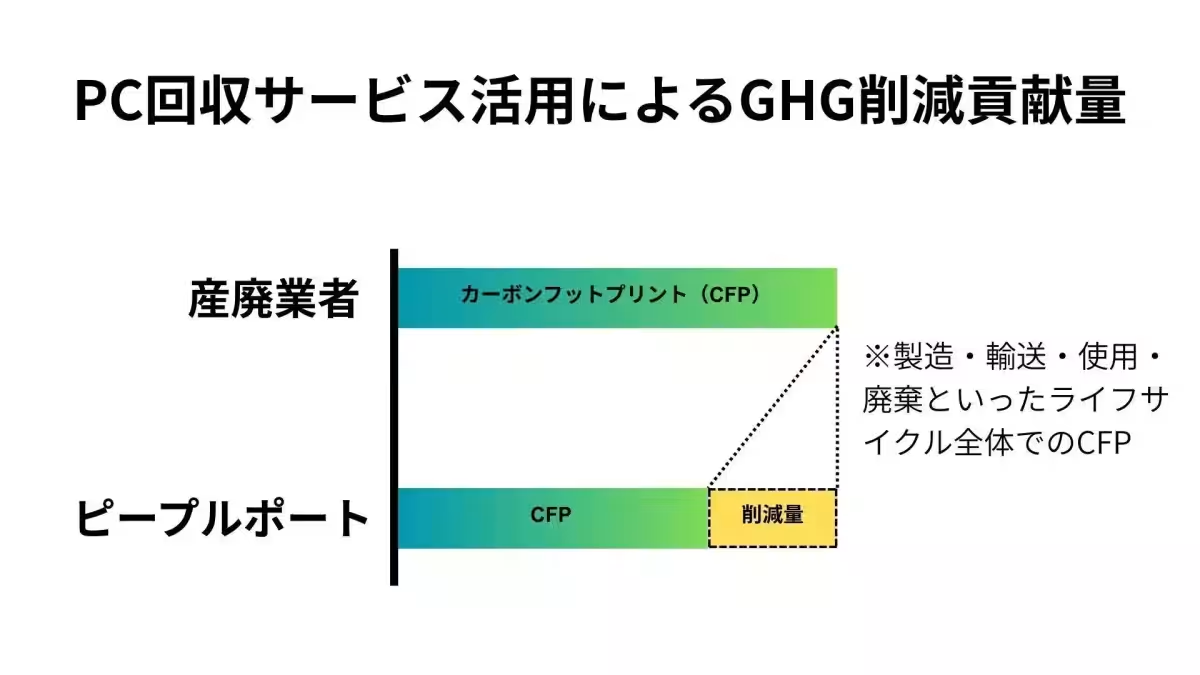
In this collaboration, the Japan GX Research Institute will utilize Life Cycle Assessment (LCA) methodologies to quantify the GHG emissions reduced by their recycling service. This will involve a comparative assessment, analyzing the impact of discarding computers as industrial waste versus relying on PeoplePort for recycling. The evaluation will adhere to international standards (ISO 14040/14044), ensuring the reliability of the data generated. This initiative leverages the Japan GX Research Institute’s expertise in carbon management to enhance the credibility of PeoplePort’s efforts.
The quantified GHG reduction data will be provided to companies participating in the recycling service through PeoplePort, allowing them to clearly understand their GHG emissions reductions from computer disposal. This data can be utilized in emissions inventories and ESG reports, making the previously obscure effects of shifting from waste to reuse more visible. Hence, businesses can more easily showcase their decarbonization achievements to stakeholders.
Future Prospects
Through this project, the Japan GX Research Institute and PeoplePort aim to construct a new GX support framework based on quantifiable GHG reductions. They plan to extend LCA assessments beyond ZERO PC to other IT devices and various products/services, striving to establish a “GX platform” that integrates resource recycling and decarbonization. They are also contemplating crediting the calculated reductions for corporate trading or offsetting use. To encourage broader participation in resource recycling, they are considering campaigns leveraging J-Credits in collaboration with the Japanese Carbon Credit Exchange, rewarding contributors with a chance to receive J-Credits through a lottery.
Comments from Stakeholders
Akihiro Aoyama, CEO of PeoplePort
"We have been devoted to the ZERO PC project since 2017, embodying our philosophy of 'Zero Environmental Impact, Zero Refugees.' We are thrilled to partner with Japan GX Research Institute, enabling us to present our CO₂ reduction data as credible evidence. This collaboration not only contributes to our clients’ decarbonization efforts but also broadens the options beyond new purchases, fostering a more sustainable society."
Yasushi Torii, Co-CEO of Japan GX Research Institute
"Reducing GHG emissions through resource recycling is vital for the GX movement among corporations. ZERO PC is a remarkable initiative that illustrates 'circulation and reduction' through a common product, reinforcing the significance of quantifying its environmental value through our partnership. We are committed to leveraging our carbon management expertise to support the success of GX initiatives alongside PeoplePort."
Keisuke Hoso-ki, Co-CEO of Japan GX Group
"I mentored PeoplePort at MEBUKU by Vlag Yokohama, where I deeply sympathized with their approach to tackling Scope 3 challenges with ZERO PC. Through our collaboration with Japan GX Research Institute, we can demonstrate these initiatives quantitatively, accelerating sustainable practices in procurement and disposal across society."
Company Overview
Japan GX Research Institute is a subsidiary of Japan GX Group Inc., established in February 2025. It focuses primarily on carbon credit trading, GX consulting, and green IT initiatives while supporting organizations and municipalities in enhancing their GX efforts. Their mission is rooted in realizing a carbon-neutral society and building sustainable business models through reliable consulting and effective strategies.
- - Japan GX Research Institute
Established: February 5, 2025
Representatives: Co-CEOs Yuichiro Ogawa, Yasushi Torii
Business: Carbon credit trading, GX consulting, green IT initiatives, etc.
URL: jp-gx.com/gxri
- - PeoplePort Inc.
Established: December 12, 2017
Representatives: CEO Akihiro Aoyama
Business: Production and sale of refurbished computers under "ZERO PC," PC reuse and recycling services
URL: zeropc.jp
This collaborative effort is paving the way for a more sustainable future, highlighting the importance of corporate responsibility in tackling climate change.






Topics Consumer Technology)
【About Using Articles】
You can freely use the title and article content by linking to the page where the article is posted.
※ Images cannot be used.
【About Links】
Links are free to use.