




The Key to Successful AI Implementation Lies in Human and Organizational Readiness
The Key to Successful AI Implementation Lies in Human and Organizational Readiness
In the rapidly evolving landscape of artificial intelligence, the discussion is shifting from merely implementing AI technology to ensuring that human and organizational aspects are equally prepared. Helpfeel, a Kyoto-based company, recently published a thought-provoking report by COO Shihou Miyanagah, titled "The Divergence of Market Evaluation Beyond AI Implementation: The Key Is 'Human AI-Ready'."
In this report, Miyanagah examines the current status of AI utilization in Japan and the United States, emphasizing the necessity of going beyond local efficiency gained from AI investments, to achieving substantial revenue improvements through what is termed "Human AI-Ready". This concept refers to the state where both the human workforce and organizational structures are fully prepared to leverage AI effectively.
The Transition Away from Merely Implementing AI
The era where simply implementing AI was enough to drive business results is fading. Investors and market analysts are now focusing on how effectively a company can translate its AI investment into revenue growth, improved profit margins, and optimized labor costs. In the United States, professionals known as Forward Deployed Engineers work directly within client companies, not only deploying AI but fundamentally reshaping business processes and organizational structures.
These developments reflect a growing trend where a company's readiness to use AI becomes a critical factor in its overall valuation. There is a notable urge among investors for corporate boards to adapt, sell off non-performing segments, and rethink their human resource structures if they are lagging in AI responses.
Conversely, many Japanese companies still operate under traditional workflows and evaluation methods, which often lead to what is termed a "double cost." This occurs when human oversight is required to validate AI outputs, preventing AI from functioning effectively as a competitive advantage. Instead, it risks being viewed as a costly add-on.
If AI-native competitors design their organizations and business practices around AI from the ground up, they will likely exploit their advantages to operate with lower costs, challenging traditional businesses not just on the basis of whether they utilize AI, but on the rationale of their current cost structures, labor allocations, and business processes. Delaying AI transformations is no longer just a missed opportunity; it poses a significant risk of failing to adapt to a competitive landscape that increasingly demands efficiency and innovation.
Human AI-Ready: Maximizing Business Impact
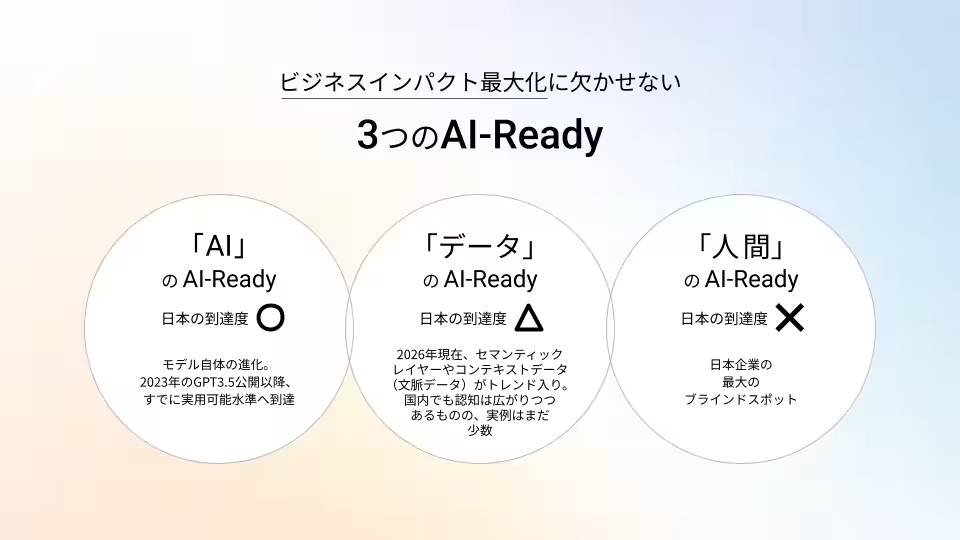
To maximize the potential benefits of AI, Miyanagah proposes that three forms of "AI-Ready" are essential: AI performance readiness, data readiness, and importantly, human readiness. As advancements in AI models and data infrastructure have accelerated, many Japanese companies lag in human and organizational places ready for AI. Without establishing frameworks that redefine responsibilities, authority structures, and processes with a focus on AI collaboration, even the most advanced AI systems will struggle to yield tangible business results.
The focus has shifted from whether AI has been implemented to how well investments in AI translate into favorable business metrics. The implications of these changes will not only influence departmental evaluations but will likely become indicators of executive performance within human resources.
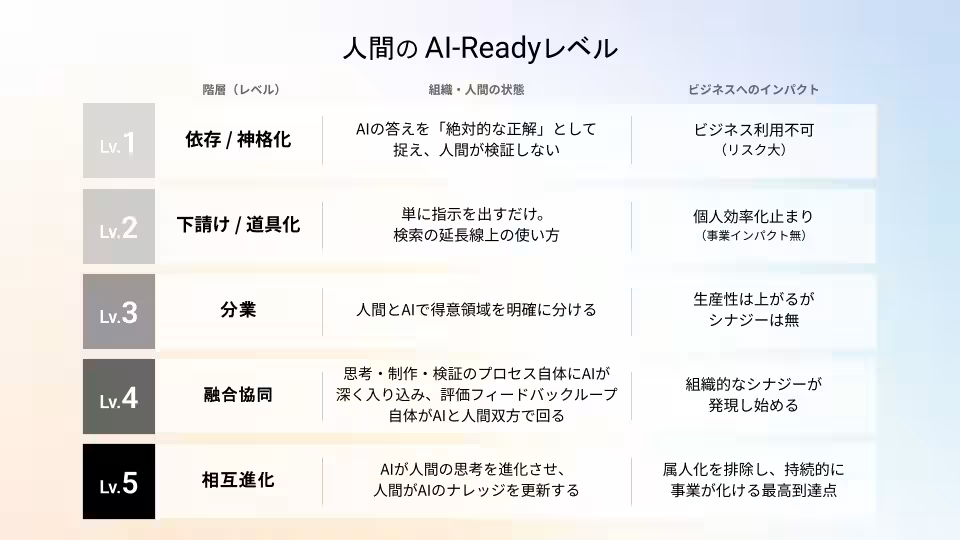
To enhance competitiveness in the AI era, businesses need to clarify which tasks can be automated through AI and define the roles humans will assume. Miyanagah organizes the maturity of organizations regarding "Human AI-Ready" into five distinct levels. The objective is to increase organizational use of AI, progressing toward Level 5, characterized by mutual evolution.
Achieving this involves a clear delineation of roles between AI and human contribution, reevaluating current evaluation systems, and creating feedback mechanisms that ensure continuous improvement.
Challenges: Unlearning Past Successes
Miyanaga posits that a significant barrier to transformational change is not a lack of technology but rather ingrained past practices and a culture of individuality. In environments where possessing extensive knowledge was synonymous with value, individuals may feel hesitant to share their expertise openly, perceiving this as relinquishing their worth. This mindset leads to a stagnation where critical knowledge remains siloed, hindering the necessary adjustments for effective AI usage.
The solution lies in "unlearning" past successful paradigms. This transformation is not only the responsibility of operational staff; leadership must also redefine their valuation of talent beyond traditional confines, reevaluating their personnel systems to consider individuals who facilitate the sharing of knowledge as organizational assets.
Essentially, moving into the AI era is not simply about upgrading tools but rather a fundamental redefinition of what constitutes value in talent.
For further details of the report, you can check out the following link: Understanding Market Evaluation Divergence through Human AI-Ready.
Accelerating AI Utilization in Enterprises with AI Knowledge Data Platform
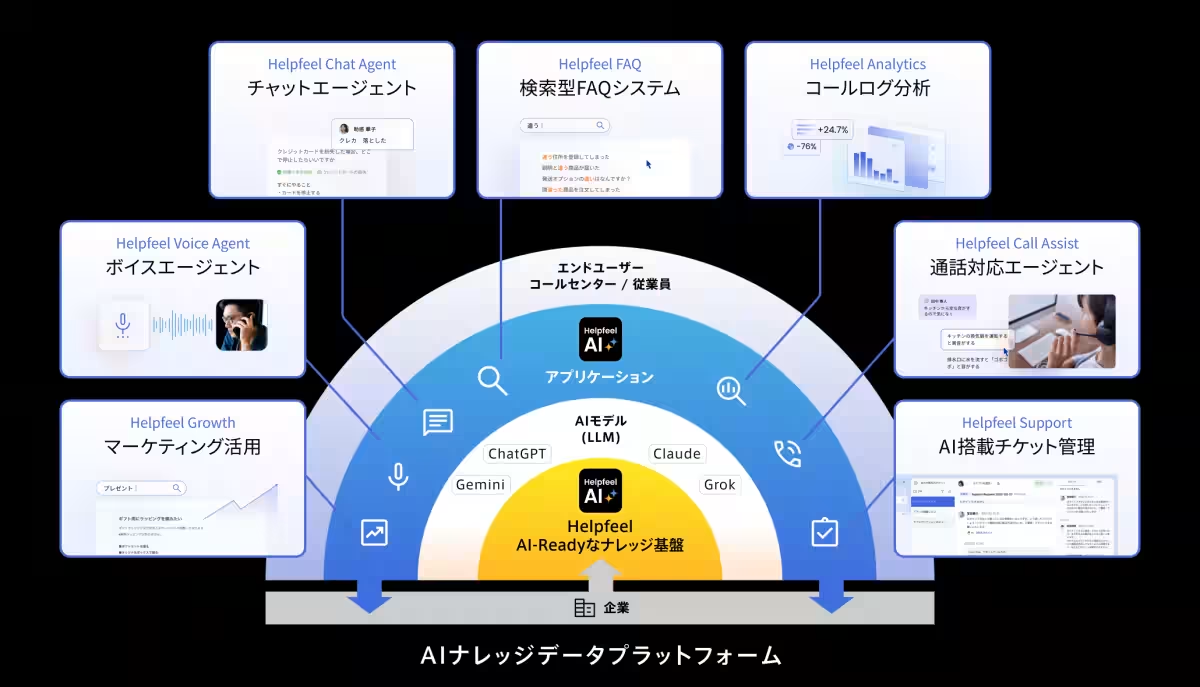
The core to unlocking AI's true potential lies in the quality of knowledge data utilized by the AI. Knowledge data, encompassing help sites, manuals, and interaction logs, needs to be organized and structured so AI can represent it efficiently as an information asset. Helpfeel's AI Knowledge Data Platform aims to transition such organizational knowledge into an AI-ready foundation. Focused on facilitating not just the technology but also the management aspects to improve decision-making and customer experiences, Helpfeel supports enterprises in various sectors such as finance, infrastructure, manufacturing, and retail, with over 900 implementations across multiple sites.
For more information on Helpfeel's offerings, you can visit their official site: Helpfeel Services.
Company Overview of Helpfeel
Founded on December 21, 2007, and establishing a Japanese entity on December 4, 2020, Helpfeel operates with the mission of optimizing vast knowledge assets within enterprises into an


Topics Other)









【About Using Articles】
You can freely use the title and article content by linking to the page where the article is posted.
※ Images cannot be used.
【About Links】
Links are free to use.