




New Study Reveals How Urbanization Affects Cicada Calling Patterns In Tokyo
Introduction
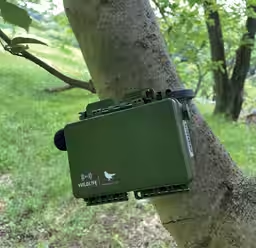
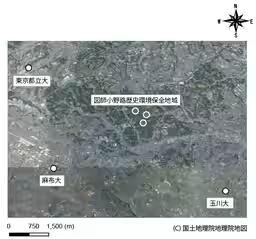
A recent study conducted by a group of researchers from Tokyo Metropolitan University and other institutions has revealed intriguing insights into how cicadas are adapting their calling patterns in response to urban environments. Utilizing autonomous recording units (ARUs), the team monitored cicada calls continuously over 24 hours across six different locations in Tokyo and Kanagawa.
Study Overview
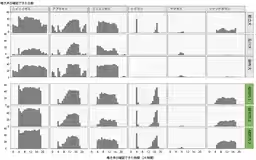
From late June to the end of August 2024, researchers placed ARUs at urban and green spaces to observe the calling behavior of cicadas. The study identified six cicada species, each exhibiting distinct calling times. A striking finding was that the Afrozeze and Nii Nii cicadas, in urban areas with artificial lighting, continued their calls into the night, whereas they ceased calling at sunset in well-lit green spaces. This suggests that factors like streetlights and elevated temperatures in urban areas significantly influence cicada activity.
Research Findings
The findings underscore the adaptability of cicadas to urban life. The team recorded cicadas at three urban sites and three green sites, capturing a wealth of data. Notably, the two prevalent species, Afrozeze and Nii Nii, began calling during the day in both environments, but their activity extended into the night in urban regions. Meanwhile, other species like Minmin, Higurashi, and Kumazemi showed little nocturnal activity, indicating variability in the level of sensitivity to urbanization among cicada species.
Implications and Ecological Insights
This study contributes to our understanding of urban ecology by portraying how urbanization can disrupt traditional patterns of wildlife behavior. The ability of cicadas to alter their calling times may impact other nocturnal insects and create changes in urban soundscapes. Not only does this highlight cicadas as a credible indicator of ecological change, but it also demonstrates the utility of ARUs in monitoring insect populations, as their recordings can effectively capture various biotic and abiotic sounds.
The implications reach beyond cicadas; understanding these shifts can inform broader conservation efforts and biodiversity assessments. As urban landscapes evolve, so will the ecosystems within them, underscoring the need for continuous monitoring and research.
Conclusion
In summary, this research offers a clear picture of the dynamic interactions between urbanization and biodiversity. With changing cicada calling patterns as a focal point, the findings urge a re-evaluation of urban planning and its impact on ecological communities. Future studies may extend this methodology to include a wider range of insect species, contributing to a more comprehensive picture of urban ecology.
Research published on April 13th, 2024, in the esteemed journal Ecological Research demonstrates the importance of continuous monitoring using ARUs, paving the way for future research initiatives aimed at understanding urban environments. The use of ARUs presents an innovative approach to study wildlife adaptations in response to human alterations to their habitats.




Topics Environment)


【About Using Articles】
You can freely use the title and article content by linking to the page where the article is posted.
※ Images cannot be used.
【About Links】
Links are free to use.