



The End of Traditional Marketing: Insights from a Study on Women's Beauty Purchasing Trends
Exploring Generational Shifts in Beauty Purchasing Trends
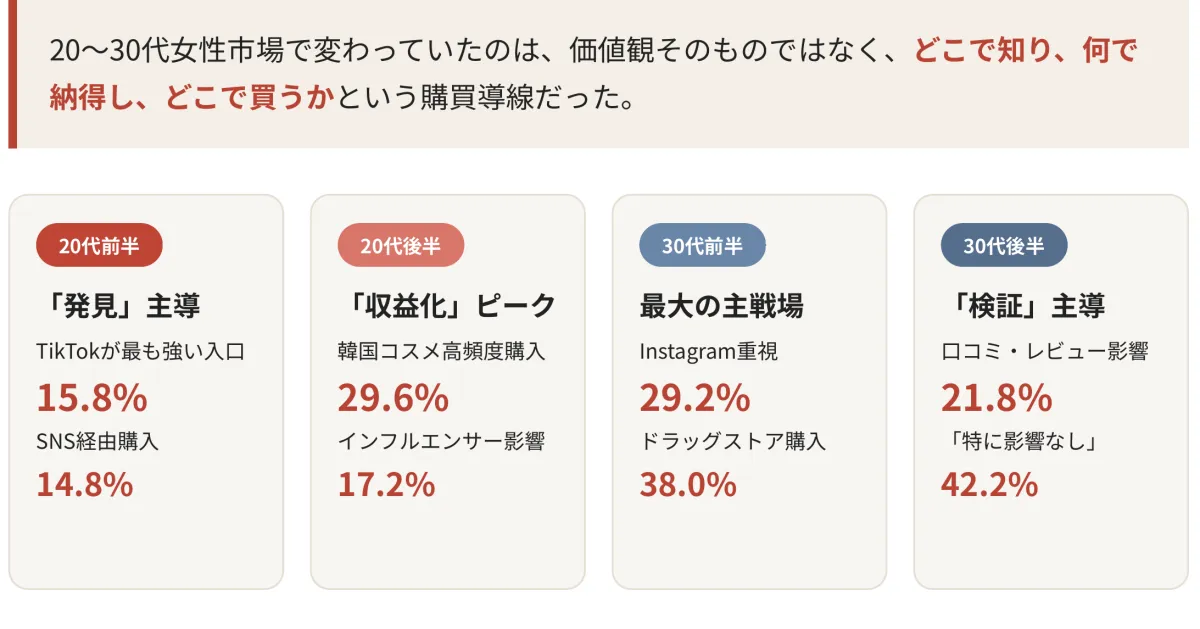
Recent research conducted by Chocobra Research surveyed 2,000 women aged 20 to 39 to investigate the channels through which beauty products are purchased, the sources of information, the criteria for selection, and experiences with Korean cosmetics. The key finding of the study is that the differences between the two generations—those in their 20s and those in their 30s—are less about a fundamental disconnect in values and more about variations in purchasing pathways, such as how products are discovered and selected.
Key Findings from the Study
1. Purchasing Pathways are Gradual and Nuanced
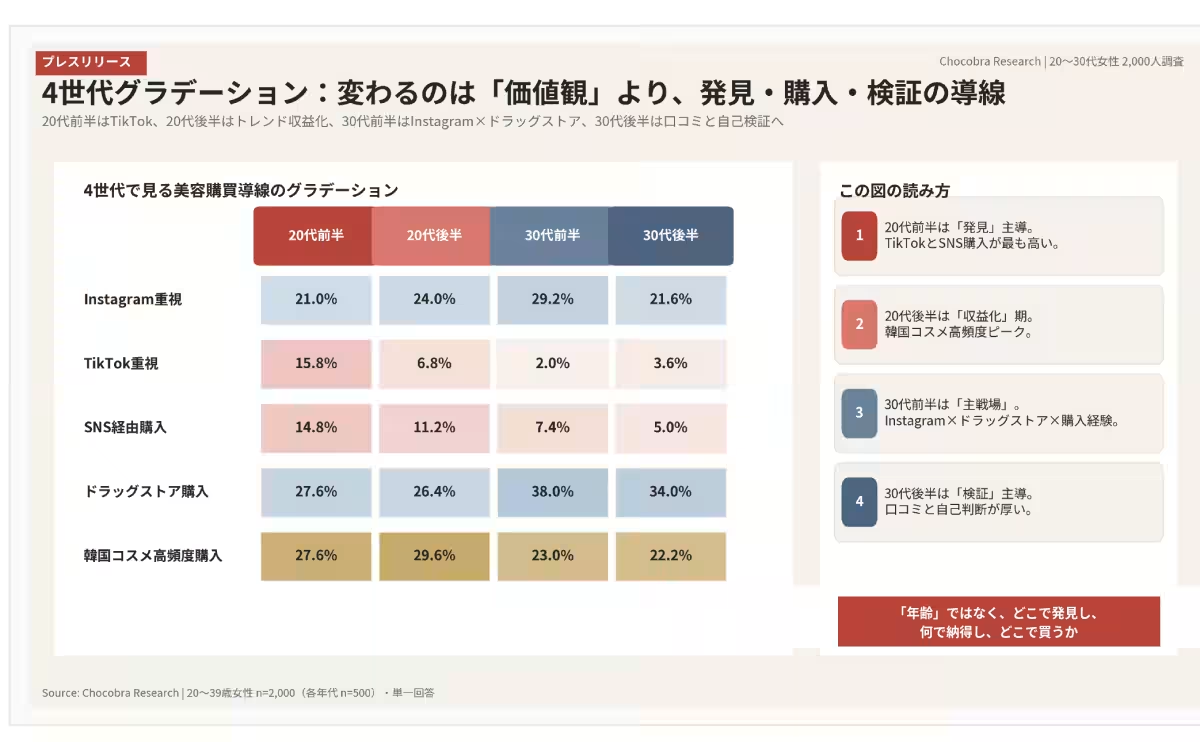
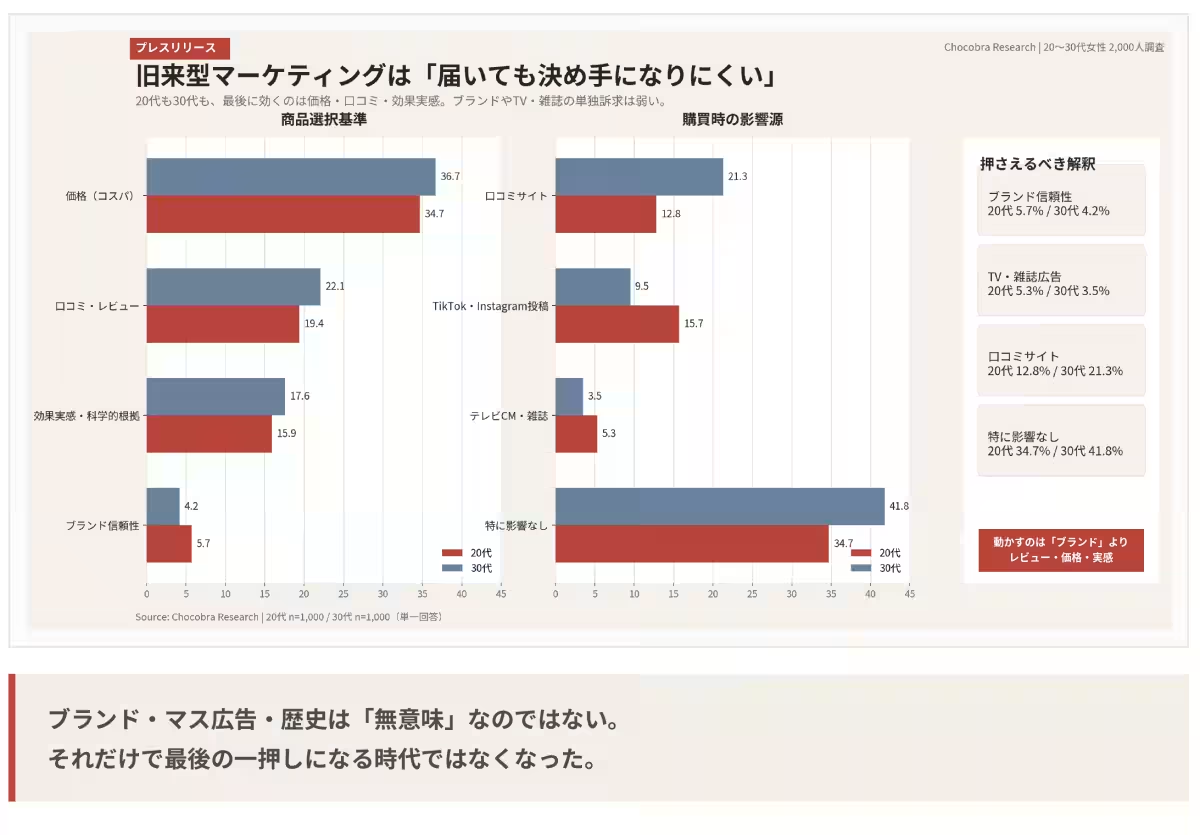
The analysis revealed that value-seeking characteristics like price, reviews, and perceived effectiveness remain consistent across the surveyed age groups, yet the sources of information, influential channels, and purchasing venues evolve incrementally. In particular, traditional marketing approaches tied to TV, physical retail, and brand trust are becoming less central to the final decision-making process.
2. The Shift in Information Sources with Age
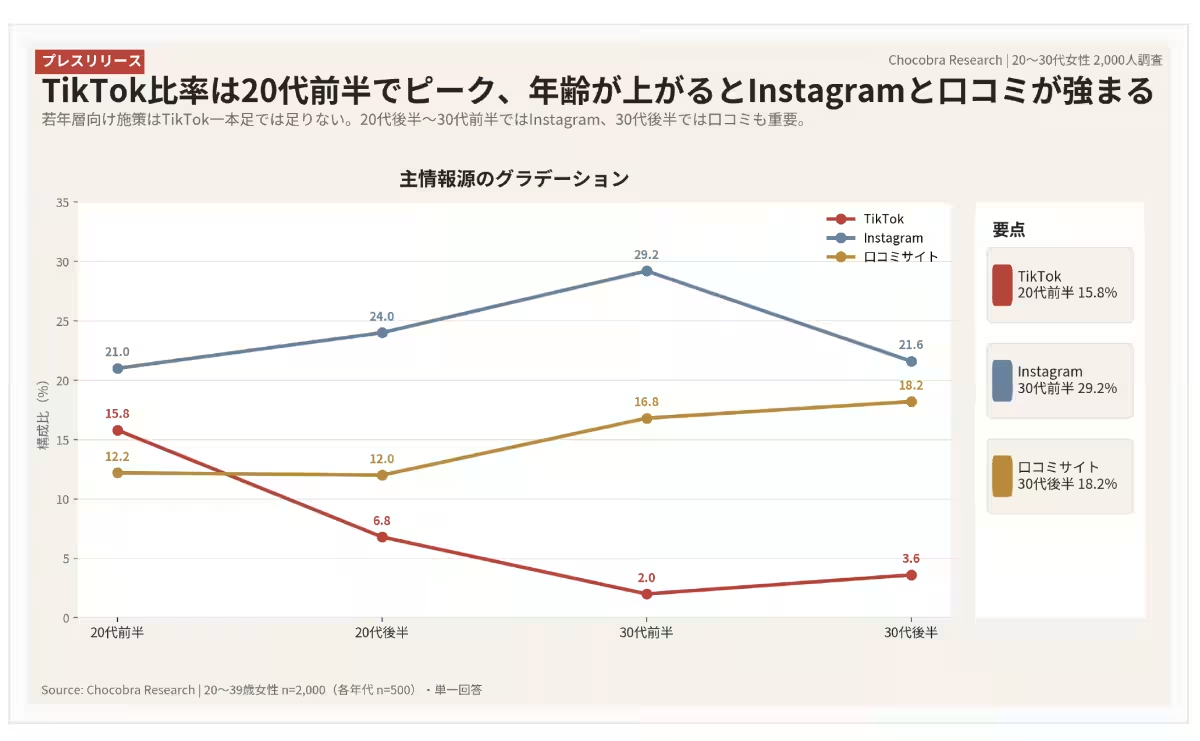
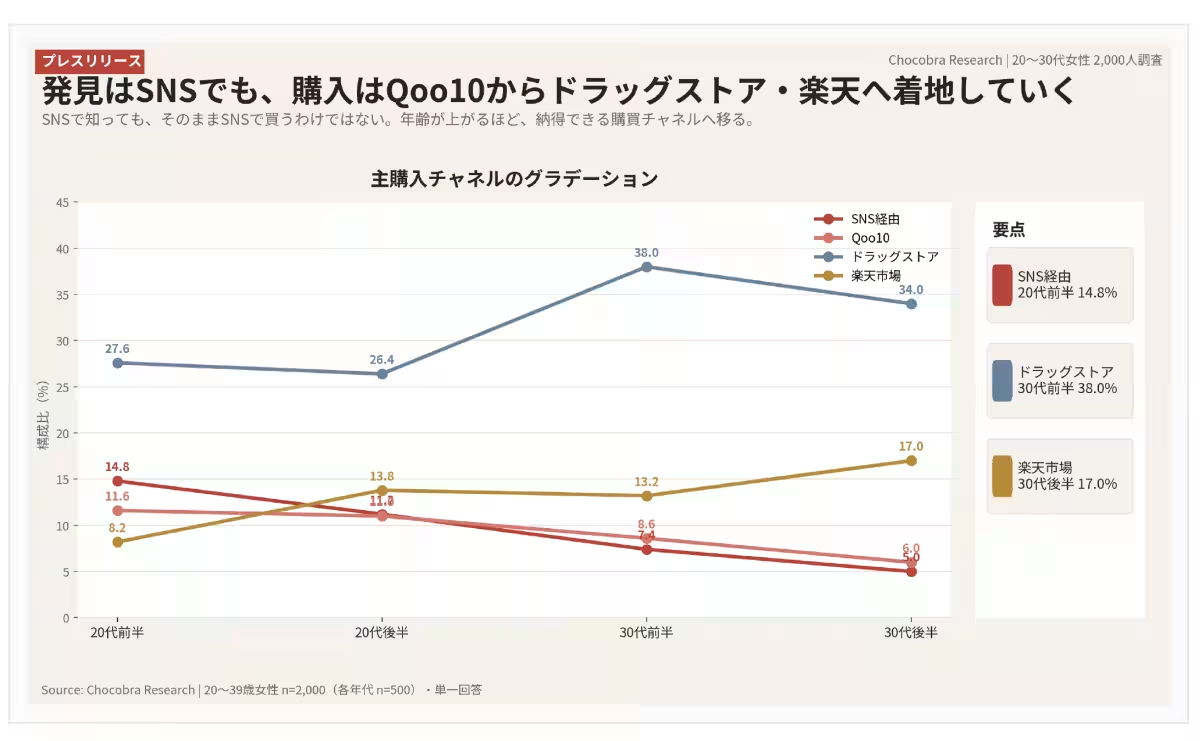
For women in their early 20s, TikTok and social media emerge as the primary avenues for discovering beauty products. As individuals age, the focus shifts towards platforms like Instagram and eventually to review sites, indicating a change in how beauty information is accessed and validated. When designing marketing strategies, brands should consider these generational shifts to tailor their approach effectively.
3. Social Media as a Discovery Tool, Not a Purchase Platform
The findings indicate that although products are often discovered through SNS channels, the actual purchase frequency through these platforms decreases with age. Older respondents tend to rely more on traditional retail options like drugstores and e-commerce sites for their beauty purchases due to perceived trust and validation. Brands need to recognize that discovery through social media is separate from actual purchasing behavior and optimize both pathways accordingly.
4. Diminishing Influence of Traditional Marketing
Across age groups, critical factors driving beauty product selection include price, reviews, and tangible results derived from scientific evidence rather than traditional brand advertising alone. Generational perception suggests that while major brands maintain recognition, there's a growing gap between awareness and the motivation to purchase, leading to a reevaluation of past marketing paradigms.
5. Korean Cosmetics: Not Just a Passing Trend
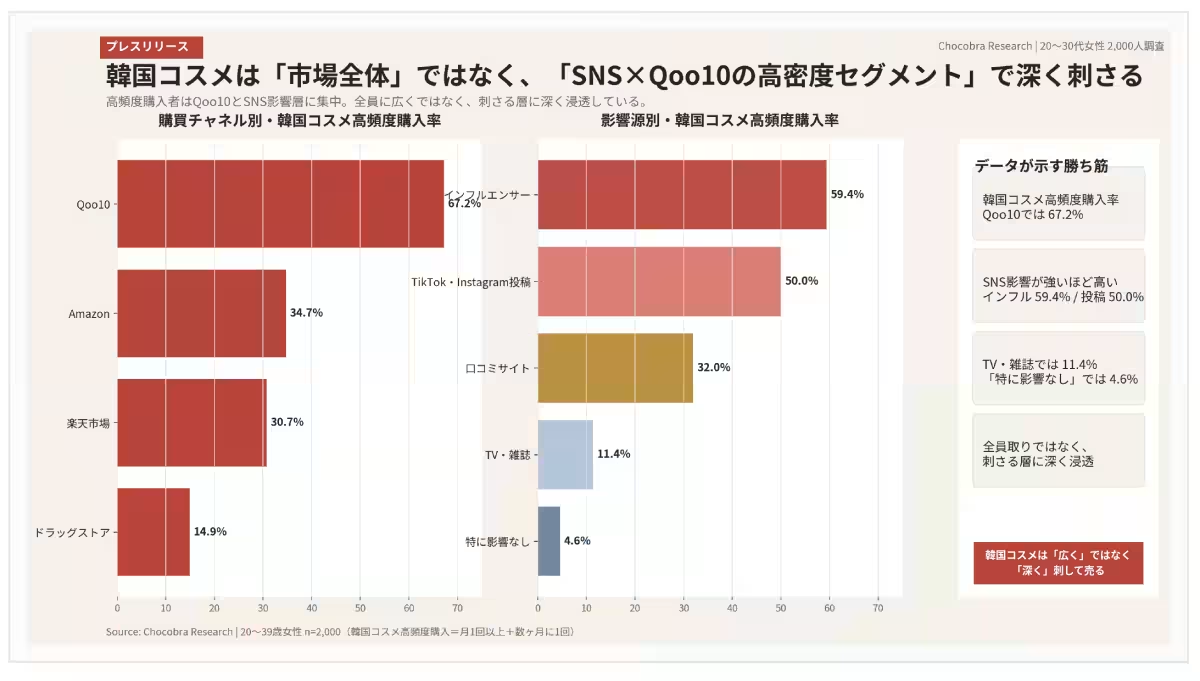
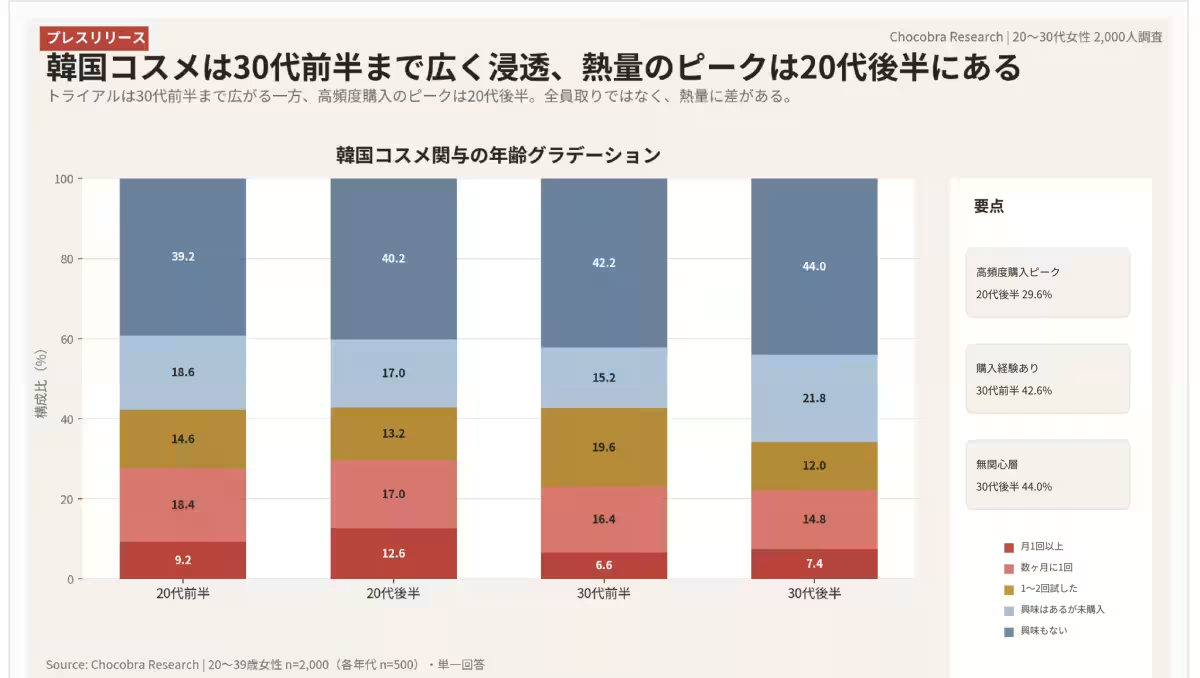
The study illustrates that while some might view Korean cosmetics as a trend primarily favored by younger consumers, their actual reach extends into the early 30s. The frequency of purchase peaks among women in their late 20s, at a rate of nearly 30%. The brand's strength lies not in a blanket market strategy but in targeting specific, high-engagement segments on platforms like Instagram and through influencer endorsements.
6. Shifts in Consumer Insights
Instead of simply attributing these shifts to generational differences, the study emphasizes the importance of understanding how purchasing pathways have evolved. Traditional marketing methods focused on mere visibility and trust in brands are witnessing a decline in effectiveness. As the data suggests, this has led to a paradigm shift in how brands approach the beauty market.
Implications for Beauty Marketing
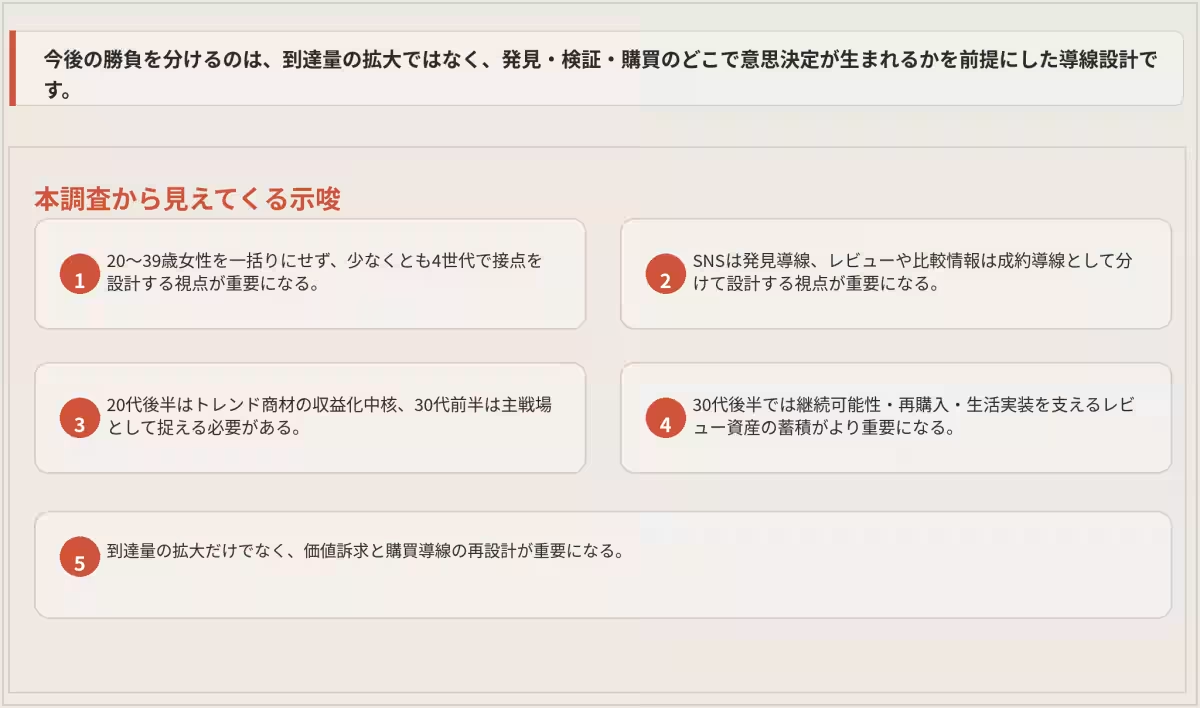
The evolving landscape of beauty marketing highlighted by this research necessitates a fundamental rethinking of strategies. Brands must move beyond the outdated notion that high visibility alone guarantees success. Instead, they should design comprehensive marketing strategies that facilitate consumer discovery, validation, and purchasing experiences in tandem.
The insights reveal that today's consumers favor rational decision-making processes driven by credible information and tangible results. The necessity for seamless integration of social media discovery, product validation, and shopping experiences is more critical than ever, redefining the essence of successful marketing in the contemporary beauty market.
Conclusion
The study ultimately suggests that the transformation we are witnessing in marketing strategies is not merely a byproduct of generational shifts but instead indicates a significant evolution in how consumers approach beauty products decisively. To thrive in this swiftly evolving market, brands will need to adapt their strategies to resonate with this new purchasing behavior while acknowledging that traditional marketing frameworks are becoming increasingly obsolete.
Topics Consumer Products & Retail)
【About Using Articles】
You can freely use the title and article content by linking to the page where the article is posted.
※ Images cannot be used.
【About Links】
Links are free to use.