




Innovative Research on Indoor Greening by parkERs Accepted in Dutch Journal
Innovative Research on Indoor Greening by parkERs Accepted in Dutch Journal
ParkERs, a space design brand under Park Corporation, has achieved a significant milestone in the field of indoor greening. Since its inception in 2013, the brand has focused on integrating the comforts of a park into everyday spaces. In collaboration with major companies including Toyota and Pasona, ParkERs has conducted extensive research examining the psychological effects of indoor plants on humans.
This research recently culminated in a paper that explores how different leaf shapes can influence human perceptions, which has been accepted for publication in the esteemed journal "Building and Environment" issued by Elsevier. Set to be released in May 2025, this publication is a testament to the rigorous scientific inquiry that ParkERs has championed alongside its partners.
The Essence of the Research
The core of the research revolves around the concept of utilizing green spaces to create specific psychological effects for their users. By revealing the distinctions in the impressions that various leaf shapes create, the findings enable more effective plant coordination aimed at enhancing the environments where people work, relax, and gather.
- - Example 1: Plants that evoke a sense of "vitality" can be introduced to spaces intended for promoting active communication.
- - Example 2: On the other hand, plants that induce a feeling of "relaxation" are ideal for quieter areas such as break rooms, where tranquility is prioritized.
The insights gained from this study are expected to greatly contribute to the future of well-being and create environments that improve mental health and happiness in indoor spaces.
You can view the full paper on the journal's website: Subjective mapping of indoor plants based on leaf shape measurements.
Background of the Research Collaboration
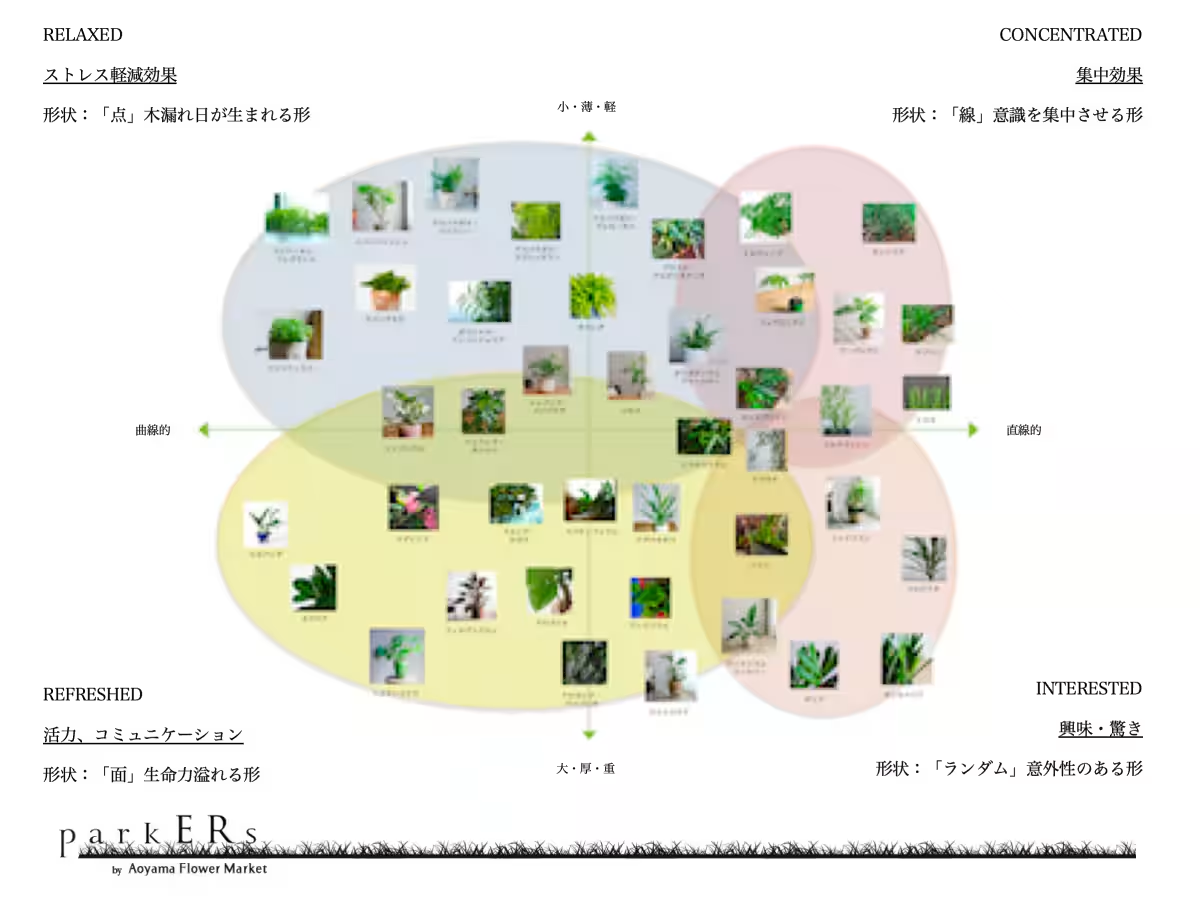
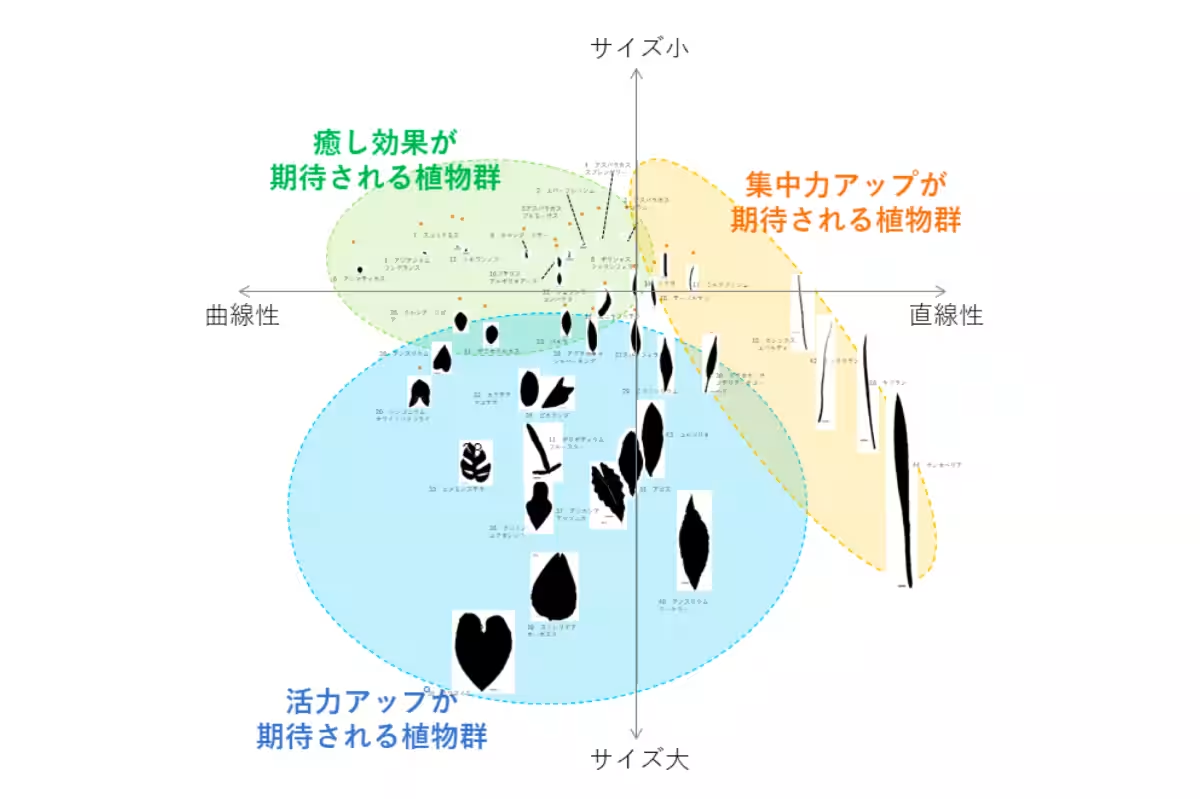
The journey began in 2016 when ParkERs developed a unique tree species map categorizing indoor plants based on their leaf shapes and other characteristics. This map was created with the intention of better aligning plant choices with the expected ambiance and aesthetics of various environments. The map’s two main axes plot plants according to leaf size and whether they feature linear or curvilinear shapes, further enabling customization based on desired impressions.
Understanding the importance of robust evidence behind their design philosophy led ParkERs to collaborate with notable industry players such as Toyota and Pasona to deepen the study into the psychological impacts of greenery in indoor spaces. The research involved quantifying leaf shape characteristics and establishing links between these shapes and the emotional responses they elicit in individuals.
Empirical Findings
By employing an innovative plant classification and selection system based on leaf shape measures, the team successfully categorized plants into three groups: point, plane, and line. This system was granted a patent (No. 7475761) for its novel approach to plant selection.
To substantiate their research claims, an independent survey was conducted. Six plant coordinators from ParkERs provided their impressions of different leaf shapes through descriptive adjectives. Further, a broader audience survey with 1,000 participants was carried out to compare impressions from the experts against those of the general public. The results confirmed that both groups shared similar perceptions concerning plant types, demonstrating that point plants are linked to relaxation while plane-shaped plants evoke a sense of liveliness.
Experimental Spaces Designed by ParkERs
ParkERs' contributions to the research included designing and coordinating plant placements for specific experimental environments. Two pivotal setups were developed:
- Genki-tron: A controlled greenhouse equipped to monitor temperature, humidity, sunlight, and airflow. This space allowed for detailed observation of participants' responses to exposure to various plant types within a natural-like setting.
- Genki-office: Designed to evaluate longer-term exposure effects, this office-type space is structured for extended participant sessions, aiming to gather comprehensive insight into how prolonged interactions with plants impact mood and productivity.
Both experimental setups underscore the commitment of ParkERs to combine creative design and empirical evidence, further solidifying the brand's mission to enhance indoor environments through thoughtful integration of nature.
Looking Ahead
The implications of this research are far-reaching, paving the way for the continued exploration of the intersection between design, science, and wellbeing. ParkERs aims to bridge the gap between aesthetic intuition and scientific backing, expanding access to pleasant, plant-filled spaces for a broader audience. The innovative designs developed under the ParkERs brand demonstrate a commitment to not just beautiful interiors, but also environments that enrich the lives of individuals within them.
For further information, please visit ParkERs' official websites:



Topics Consumer Products & Retail)





【About Using Articles】
You can freely use the title and article content by linking to the page where the article is posted.
※ Images cannot be used.
【About Links】
Links are free to use.