



NTT Docomo Solutions Develops Comprehensive CO2 Emission Rules for Software Lifecycle
NTT Docomo Solutions Develops Comprehensive CO2 Emission Rules for Software Lifecycle
In a significant step towards reducing carbon emissions in the software sector, NTT Docomo Solutions has formulated essential rules for calculating CO2 emissions across the entire lifecycle of software products. This initiative was established as part of the company’s commitment to support decarbonization within the industry, in collaboration with various corporate members of the Japan Environmental Club, specifically through the Software Decarbonization Research Committee.
The Need for New Emission Rules
As artificial intelligence (AI) continues to gain traction, concerns regarding the environmental impact of the ICT industry have intensified. Software, while not directly consuming physical resources, contributes to increased energy consumption indirectly through its reliance on cloud services, data centers, networks, and user devices. This creates a significant ecological footprint, necessitating a focus on the sustainability of software products. Recent trends in corporate social responsibility also underscore the importance of measuring Scope 3 emissions, with stakeholders requesting transparency regarding CO2 emissions associated with software products.
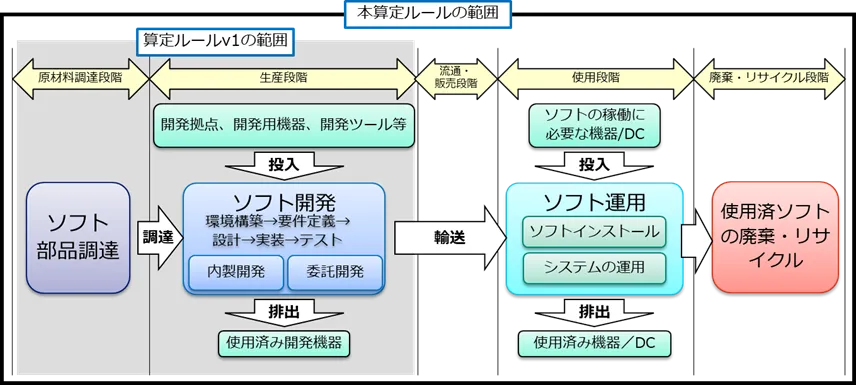
In light of these issues, the Japanese Ministry of Economy, Trade and Industry (METI) launched the program to support the development of product-specific carbon footprint calculation rules. With an initial focus on a Cradle-to-Gate model, these rules evaluated CO2 emissions from the development stage, but did not encompass the entire lifecycle of software products. Recognizing that software is typically utilized over long durations, NTT Docomo Solutions acknowledged the critical need for comprehensive evaluation methods that account for emissions during operation and disposal as well.
Key Achievements
Through the insights gained from the Software Decarbonization Research Committee, NTT Docomo Solutions expanded the previous rules, which were limited to procurement and development stages, thus establishing a Cradle-to-Grave version of the emission calculation rules. This framework not only aligns with METI's Carbon Footprint Guidelines but also facilitates a comprehensive evaluation of CO2 emissions associated with the procurement, development, operation, and disposal of software products.
Focus Areas of the New Rules
1. Defining the Scope of Emissions: The assessment of CO2 emissions used to focus primarily on the development phase or encompassed broad evaluations of ICT services. The new rules zero in on the software products themselves, outlining specific sources of emissions and calculation processes for each lifecycle stage, thus allowing companies to accurately gauge emissions during various phases.
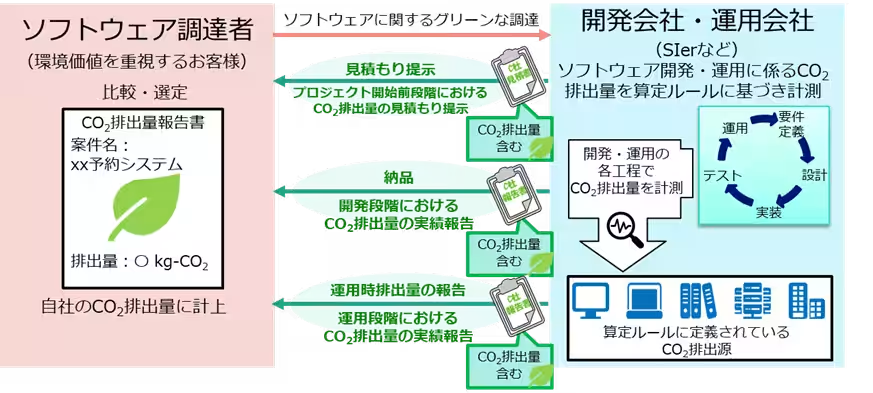
2. Enhanced Accuracy in Estimations: Previously, emissions estimates calculated during the software's operational phase were based on development costs, leading to inaccuracies. The new rules clarify emission sources related to software usage, thereby improving the precision of these estimates and promoting greener procurement decisions.
3. Globally Applicable Framework: Aiming to establish rules that can be utilized both domestically and internationally, this initiative incorporated input not only from environmental experts but also from software developers, ensuring that the rules reflect practical applications within the industry.
NTT Docomo Solutions' Pivotal Role
Being a pioneer in the sector, NTT Docomo Solutions applied the Cradle-to-Gate framework to real-world software development projects. By thoroughly identifying emission sources within ICT hardware and communication networks based on established activity metrics, they executed a robust calculation of emissions. The knowledge acquired through these practical applications, combined with their experience from developing and operating several large-scale systems, greatly contributed to the formulation of the Cradle-to-Grave rules.
Future Endeavors
As NTT Docomo Solutions continues to adopt the new emission calculation rules, they plan to conduct practical assessments throughout the entire software lifecycle, addressing potential challenges and opportunities for regulatory compliance. They also aim to secure third-party verification to safeguard the accuracy and reliability of the methods and outcomes, ensuring widespread applicability alongside stakeholder trust.
This ongoing effort will be shared within the Software Decarbonization Research Committee, fostering continuous improvement and integration of feedback into the calculation rules.
Ultimately, through practical validation and collaboration within the software industry, NTT Docomo Solutions strives to significantly contribute to reducing CO2 emissions associated with software lifecycles and advancing the principles of green software development.
Topics Consumer Technology)
【About Using Articles】
You can freely use the title and article content by linking to the page where the article is posted.
※ Images cannot be used.
【About Links】
Links are free to use.