




Examining the Realities of Micro Mobility Sharing Services in Urban Areas
Understanding Urban Micro Mobility
In a rapidly urbanizing world, transportation options are becoming increasingly critical to addressing both mobility needs and environmental concerns. Recent analysis conducted between Luup, a leader in micro mobility sharing, and Pacific Consultants sheds light on the current landscape of micro mobility services in urban contexts, particularly focusing on electric scooters and electric bikes. As cities struggle with congestion and pollution, understanding how these micro mobility services can play a transformative role is vital.
Research Background
Electric scooters, electric bikes, and other forms of micro mobility are emerging as innovative commuting solutions in urban environments. Their utilization has surged in recent months, yet a comprehensive quantitative investigation into how these services are being used and the roles they play in urban and transportation policy has been relatively scarce. The objective of this joint study was to analyze the practical use of one such service—Luup—within urban settings and to clarify its potential contributions toward solving mobility challenges.
Key Findings from the Study
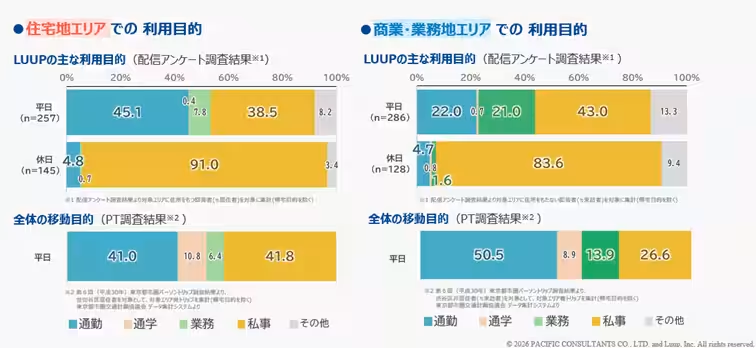
The results indicated that Luup micro mobility services are predominantly utilized for short-distance and short-duration trips. Approximately 40% of rides from residential areas were used for commuting to school or work. Meanwhile, in commercial and business districts, services were utilized for various purposes including work-related travel, shopping, dining, and tourism. This illustrates the necessity of micro mobility as a versatile everyday travel solution.
Interestingly, while most urban areas are well served by train and bus lines, about 20% of the rides occurred between locations poorly served by public transit. This suggests that micro mobility services are filling critical gaps in transportation and enhancing connectivity during inconvenient times.
Residential vs. Commercial Usage
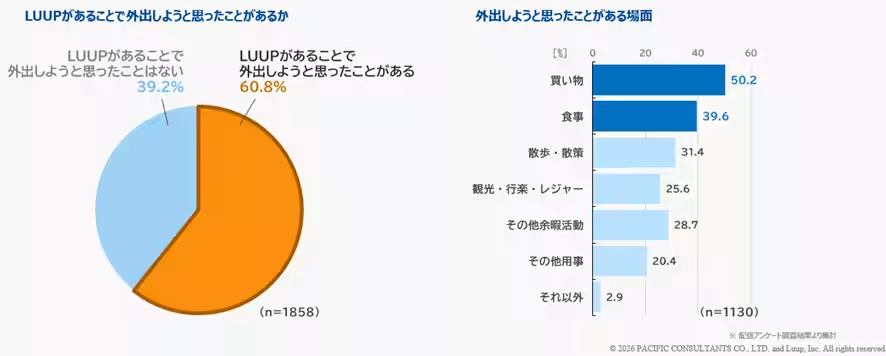
When comparing the usage motives between residential and commercial areas, it is noteworthy that around 50% of users chose micro mobility (specifically Luup) to have more flexibility with their time. Furthermore, approximately 60% of users reported that the availability of Luup prompted them to venture out, while about 40% indicated that the proximity of Luup hubs influenced their choice of destination. This data suggests that the micro mobility port installations can significantly enhance foot traffic and patronage in specific locations.
Implications for Urban Mobility
This joint study showcases that micro mobility sharing services could serve as flexible short-distance transport options that enhance urban residents' mobility. They provide a degree of freedom for users who may not want to rely solely on traditional public transport, especially when facing barriers like time constraints or services that do not operate in certain areas. The research underscores the importance of strategically implementing micro mobility services in urban planning to promote accessible and sustainable transportation options.
About the Organizations
Pacific Consultants has been a leading figure in the construction consultancy field since its establishment in 1951, contributing to urban development and infrastructure services both domestically and internationally. Their commitment to producing a sustainable future aligns with the ongoing evolution in urban transportation.
Luup aims to transform urban mobility with the mission to create 'station-like' access throughout cities. By developing micro mobility sharing solutions including electric scooters and bikes, they endeavor to tackle community transport challenges and promote a more inclusive mobility landscape for all.
For a complete summary and full report of the findings, visit Pacific Consultants' website.

Topics Other)
【About Using Articles】
You can freely use the title and article content by linking to the page where the article is posted.
※ Images cannot be used.
【About Links】
Links are free to use.