



Eye City Eco Project Partners with Ikoma for Sustainable Recycling Initiative
Eye City Eco Project: A Step Towards Sustainability
In a significant move towards environmental sustainability, HOYA Eye Care Retailing Co., Ltd. has announced a partnership with Ikoma Town in Nara Prefecture. On August 10, 2026, the two entities signed an agreement aimed at enhancing the recycling of disposable contact lens cases. This initiative marks the second partnership between Eye City and a local government in the prefecture.
Goals and Vision of Ikoma Town
Ikoma Town envisions creating a community that thrives alongside lush water and greenery. Their commitment to environmental preservation aligns perfectly with Eye City’s objectives under its Eco Project. This joint effort seeks to advance the construction of a circular economy focusing on the principles of reduce, reuse, and recycle.
Details of the Agreement
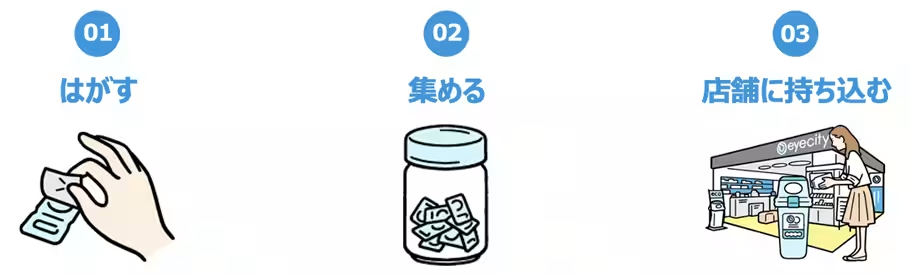
The agreement entails the collection and recycling of used disposable contact lens cases. The Town of Ikoma will actively participate in raising public awareness about plastic waste reduction and resource recycling. They will handle the logistics of collecting the used cases from designated pickup points, which include the Ikoma Town Hall, the Ikoma Cultural Center, and the Ikoma Town Library.
Eye City, on the other hand, will manage the collected resources and provide necessary facilities such as collection boxes. This cooperative effort is expected to engage the community, instilling a deeper understanding of recycling practices.
Eye City Eco Project
Launched in 2010, the Eye City Eco Project has established a nationwide recycling initiative to promote the sustainable disposal of contact lens cases. Currently, this program has over 9,030 dedicated collection points across Japan, including participating municipalities, businesses, and educational institutions. Eye City connects three social contributions through this initiative:
1. Environmental conservation through the repurposing of contact lens cases.
2. Supporting independence and employment for individuals with disabilities.
3. Donations to the Japan Eye Bank Association.
Although the project has been running successfully for 16 years, statistics reveal a stark reality: around 4,000 tons of contact lens waste still end up in landfills annually. This indicates the urgent need for increased community involvement in recycling initiatives.
Participation and Impact
As of July 2026, the project boasts participation from:
- - Schools: 3,422 institutions (including primary, junior high, high schools, universities, and technical colleges)
- - Companies: 1,268 firms, with 4,738 operational locations
- - Local Governments: 495 sites, including public facilities
The collaboration with Ikoma Town is part of Eye City’s ongoing outreach to recruit more organizations to support the recycling efforts.
Additionally, the project has achieved remarkable milestones in terms of collection and fundraising:
- - Total Collection: 903.32 tons (approximately 903 million used contact lens cases)
- - CO2 Reduction: 2,493.17 tons of CO2 emissions, equating to the size of 149 Tokyo Domes
- - Total Donations: 21,588,576 yen to assist those wishing to restore their eyesight.
Future Directions
There is still much work to be done. Eye City is dedicated to broadening the impact of its Eco Project, encouraging more members of the community to participate in this crucial environmental initiative. Each collective effort helps in crafting a greener future and a sustainable society for generations to come.
About HOYA Eye Care Retailing Co., Ltd.
HOYA Eye Care Retailing is a subsidiary of HOYA Corporation, which operates globally in the fields of life care and information & communications. With a growing network of over 382 Eye City outlets across Japan, the company is committed to providing eye care services that support the vision of every customer. For more information, visit their website at Eye City.
Conclusion
This partnership between Eye City and Ikoma Town represents an essential step in promoting sustainability and environmental responsibility. With initiatives like the Eye City Eco Project, there is hope for a cleaner, more efficient future where communities actively participate in the move towards a circular economy.


Topics Consumer Products & Retail)
【About Using Articles】
You can freely use the title and article content by linking to the page where the article is posted.
※ Images cannot be used.
【About Links】
Links are free to use.