



Exploring the Dynamics of Game Brand Establishment by Distributors and Licensors in China's Market
Game Brand Establishment in China's Gaming Market
In the rapidly evolving landscape of the gaming industry, especially within China, a noteworthy trend has emerged: the establishment of game brands by distributors and licensors. Conducted by SpiceSmart, a pivotal study sheds light on how various entities within the industry are venturing into significant game brand developments. As more companies from Japan and the West delve into this domain, understanding the Chinese market's unique position becomes imperative.
Overview of the Study
The research specifically targets game distributors and licensors operating in mainland China as of June 1, 2026. It aims to analyze the formation of game brands and the titles or historical performance associated with these companies. Possible dimensions covered in the report include:
- - The synergy between film and gaming sectors.
- - Trends in licensing out IPs by publishers and novel licensors.
- - New game brands emerging on the scene.
Key Findings of the Research
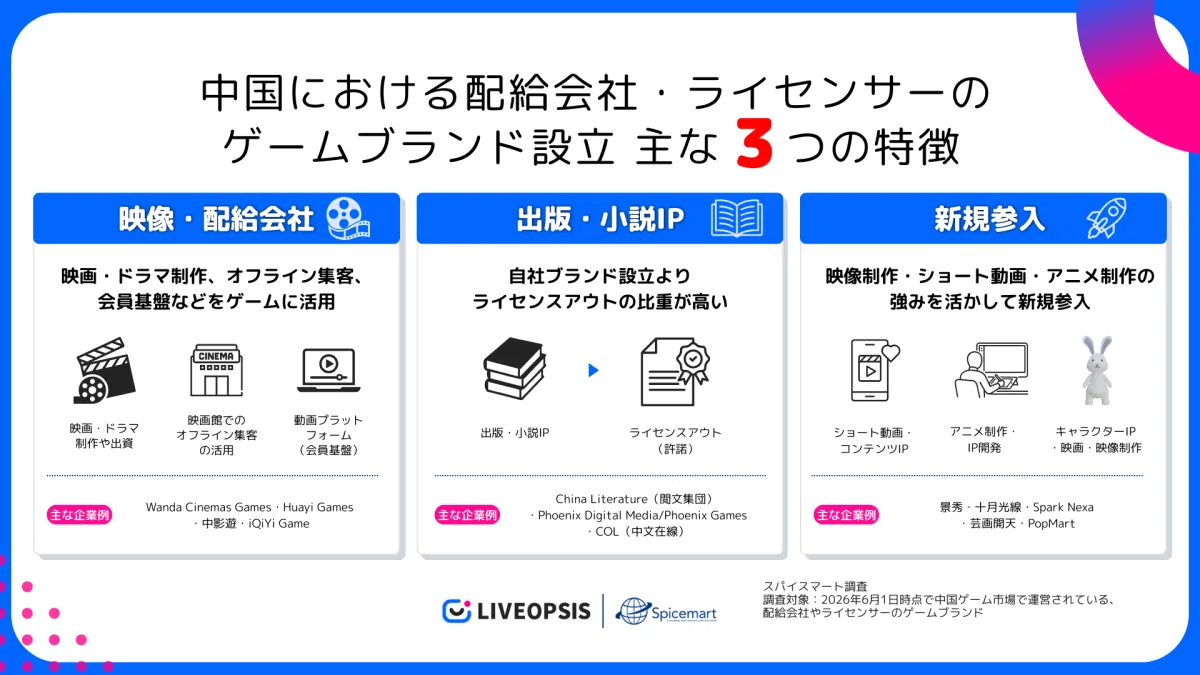
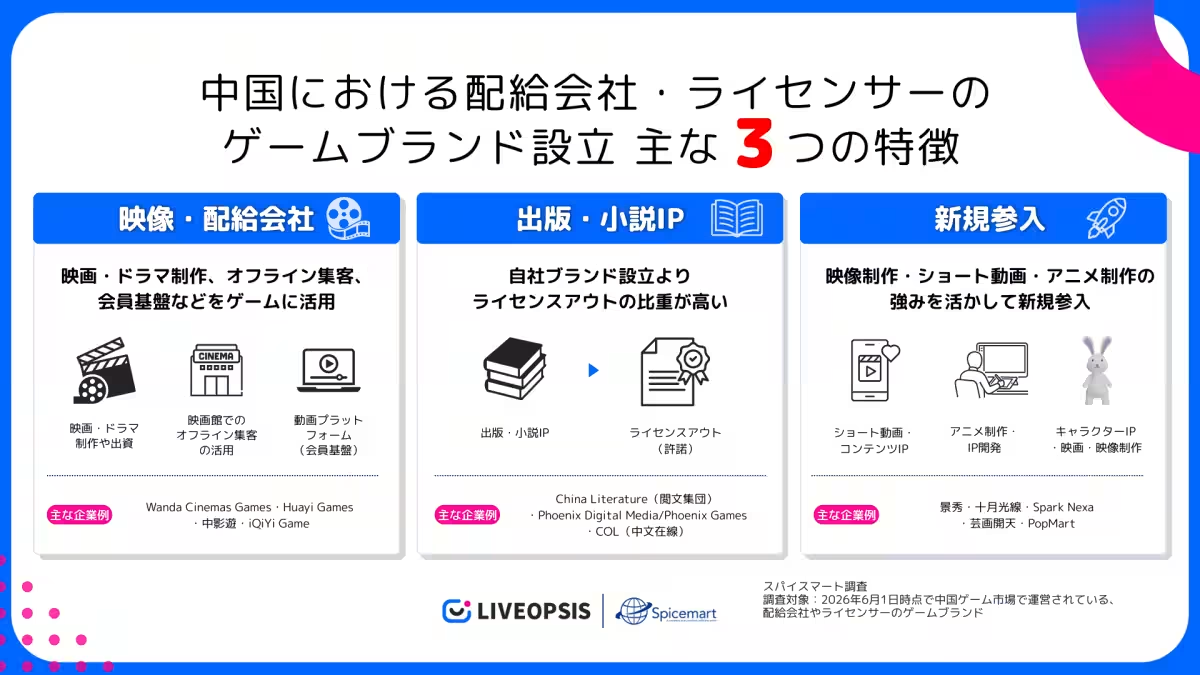
1. Synergy Between Film Companies and Game Developments
Since around 2018, numerous film and entertainment firms in China have successfully established their game brands, cleverly utilizing their cinematic IPs for gaming ventures. For instance, the China Film Group Corporation founded a gaming brand, Zhongyingyou, back in 2016. This entity has capitalized on its film distribution rights to license out games and foster collaborative projects.
2. Publishing and Novel Licensors’ Approach
Many Chinese entities associated with publishing and novels lean towards licensing gaming rights rather than creating their brands. China Literature, which holds a significant portion of the online novel landscape, does not operate a game studio but instead licenses its popular works to established gaming companies like Tencent and NetEase. They benefit from royalty fees and revenue sharing based on these agreements.
3. Emergence of New Gaming Brands
A notable trend has unfolded with production companies from sectors like film and anime launching new gaming brands. For instance, Enlight Media announced its plan to create a game company that produces AAA titles, building on its successes from blockbuster films. In 2021, Kuaishou, known primarily for short video content, ventured into gaming with its brand Spark Nexa, further diversifying its portfolio with mobile gaming projects.
4. Innovative Collaboration and Marketing Techniques
One distinctive feature of entities like Wanda Cinemas Games is their unconventional promotional strategies that leverage offline engagement at cinemas, presenting a stark contrast to typical online marketing tactics. Similarly, the game brand created by iQiYi, a video platform, showcases how media properties can align with gaming releases timed to their popular shows, enhancing audience engagement.
Conclusion
The detailed analysis presented by SpiceSmart highlights the progressive evolution of China’s gaming landscape, particularly the interplay between traditional media and gaming industries. This interplay not only opens new avenues for collaboration but also invites IP holders from diverse sectors to immerse themselves into the dynamic world of gaming, fostering innovation and growth.
To access comprehensive insights and the complete report, please utilize the LIVEOPSIS platform and explore the range of services offered by SpiceSmart. Interested parties can register for a free account to stay informed about evolving trends and analyses pertinent to the gaming industry.
Topics Entertainment & Media)
【About Using Articles】
You can freely use the title and article content by linking to the page where the article is posted.
※ Images cannot be used.
【About Links】
Links are free to use.