



Seed, Refineverse, Mitsubishi Chemical, and Nippon Polypropylene Launch Pilot Program for Recycling Contact Lens Blisters
Introduction
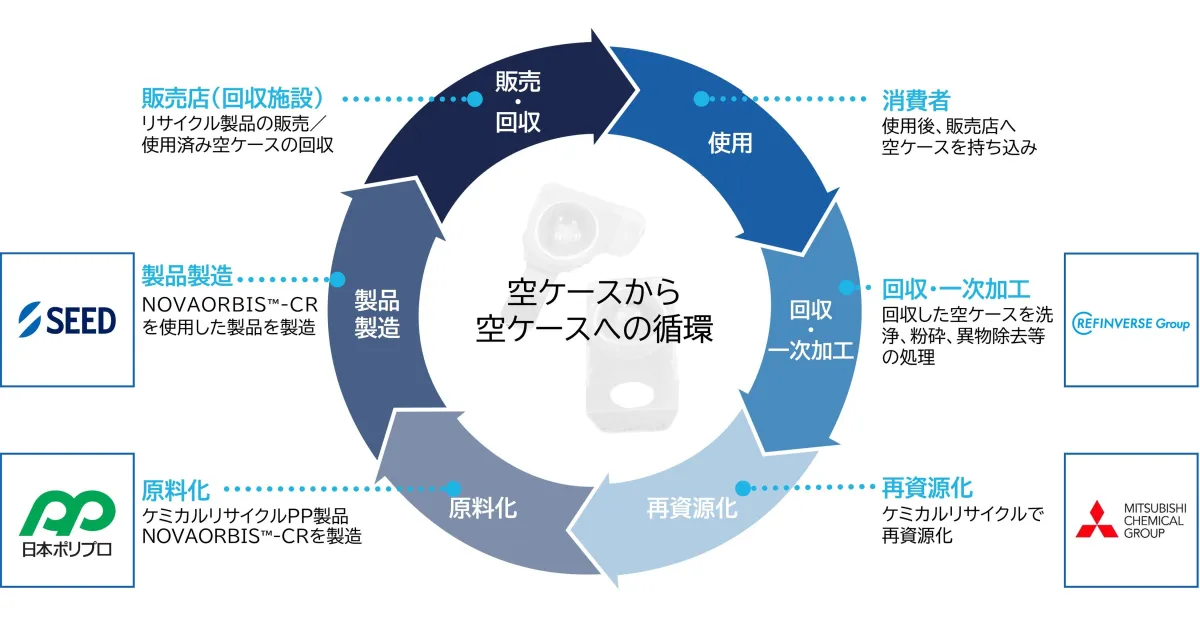
In a groundbreaking initiative, four prominent companies in Japan have teamed up to demonstrate the chemical recycling of used blister packs from disposable contact lenses. The project, led by Seed, Refineverse Group, Mitsubishi Chemical, and Nippon Polypropylene, aims to establish a circular economy model by converting used blister packs, collected from consumers, back into raw materials for new blister packs. This innovative approach is part of an ongoing commitment to sustainability and reducing plastic waste in the contact lens industry.
Background
Seed, a leading contact lens manufacturer, has been championing the BLUE SEED PROJECT since June 2019, focusing on the collection and recycling of used blister packs at retail locations. Over the years, the company has successfully collected numerous empty cases through partnerships with facilities nationwide, repurposing them into materials like logistics pallets.
With aspirations for a more advanced resource circulation strategy, the four participating companies are now embarking on a project to chemically recycle used blister packs. This method promises to return the plastic to a level where it can be repurposed into new blister packs with equivalent quality to virgin materials. Given the hygiene and safety standards required for contact lenses, ensuring a high-quality recycling process is paramount.
Details of the Pilot Program
As of October 2025, the four companies will begin developing a model for the circulation of blister packs. The pilot program will collect used packs from various facilities, including ophthalmology clinics and contact lens retailers, across Japan. Using chemical recycling, these used packs will be transformed into sustainable raw materials for new blister packs, which Seed plans to bring to market by 2027. This initiative will utilize a mass balance approach, blending fossil-derived materials with recycled materials to create the new products.
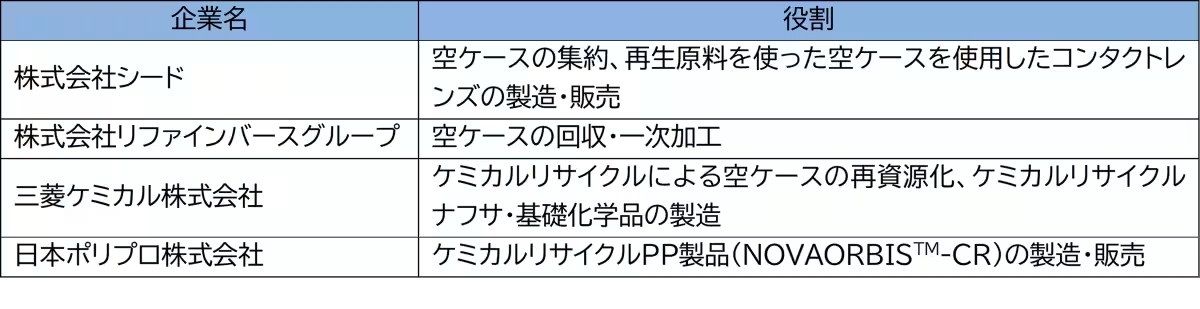
Roles of Each Company
The pilot experiment will be conducted under the management of the ISCC PLUS certification, ensuring adherence to international standards for sustainability and carbon neutrality. This certification will help to document and verify the flow of materials and products from collection to recycling and production, ensuring transparency and reliability in the recycling process. Participating facilities will be asked to obtain a
Topics Consumer Products & Retail)
【About Using Articles】
You can freely use the title and article content by linking to the page where the article is posted.
※ Images cannot be used.
【About Links】
Links are free to use.