



New Capital Initiative: Shuto Expressway Company Launches Social Bonds via Daiwa Securities
Introduction
In a move aimed at enhancing urban infrastructure and addressing social issues, Shuto Expressway Co., Ltd. is set to launch a new series of social bonds through Daiwa Securities. This initiative is significant as it allows corporate investors across the nation to engage in financing projects that contribute positively to society.
About the Social Bonds
The Shuto Expressway social bonds can be purchased at Daiwa Securities branches, and investors who acquire them have the option to officially express their investment intentions via the company’s website. This ensures that the names of the investing corporations will be publicly acknowledged on the Shuto Expressway's webpage, creating a sense of accountability and community involvement. The objective of these bonds is to secure funding for projects that address various societal challenges, aligning with the International Capital Market Association's principles of social bonds.
Company Background
Founded on October 1, 2005, in accordance with the government's policy to delegate feasible projects to private sectors, Shuto Expressway Co. was established to efficiently manage the construction, renovation, maintenance, and management of the expressway network. The company is firmly committed to fostering public welfare and is driven by a core philosophy: "We connect the people, towns, and lives of the metropolitan area with a safe and smooth expressway network, contributing to the creation of a rich and comfortable society."
Commitment to Sustainability
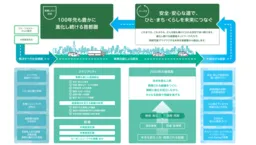
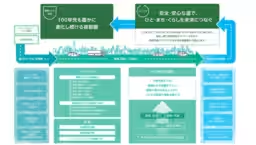
Shuto Expressway Co. is dedicated to sustainable management and has made significant strides in defining its value-creation story. The company's aim is to continue being a reliable entity amid societal changes and to contribute through its business activities towards achieving a metropolitan area that evolves positively for generations to come.
Use of Funds
The raised funds from this bond issue will support qualified social projects, including the construction and renovation of roads, disaster recovery efforts, and enhancements to the existing infrastructure. Notably, these projects are expected to address critical social issues such as traffic congestion, safety improvements, disaster preparedness, infrastructure aging, and air quality improvement—aligning with several Sustainable Development Goals (SDGs).
Example Project: Nihonbashi Underground Project
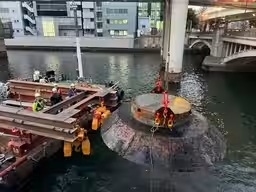
One of the highlighted initiatives of this funding is the underground project in the Nihonbashi area, which aims to alleviate traffic congestion in downtown Tokyo. Originally constructed before the 1964 Tokyo Olympics, this expressway segment has aged, with roughly 100,000 vehicles using it daily. The project intends to not just replace aging structures but also enhance the surrounding area's urban landscape through innovative redevelopment, thereby increasing local appeal.
Plans are underway to begin full-scale underground construction by April 5, 2025, which will include the complex process of removing existing bridge piers to facilitate a smooth transition for future traffic routes.
Project Timeline
The aim is to complete the underground route by FY2035 and remove overhead structures by FY2040, enhancing the metropolitan infrastructure significantly. This project, along with others funded by the social bonds, epitomizes Shuto Expressway's commitment to contributing to a sustainable urban future.
Conclusion
Shuto Expressway Co.’s launch of social bonds in collaboration with Daiwa Securities marks a vital step towards fostering corporate investment in sustainable infrastructure. By engaging corporate investors in meaningful social projects, they aim to improve the quality of life within urban areas while promoting economic growth. For corporate investors looking to make a positive impact, these bonds present a unique opportunity to contribute to the future of urban transportation.
For more information regarding the social bonds, potential investors can visit the Daiwa Securities branches or check the Shuto Expressway website for detailed insights on the investment process.


Topics Financial Services & Investing)
【About Using Articles】
You can freely use the title and article content by linking to the page where the article is posted.
※ Images cannot be used.
【About Links】
Links are free to use.