



Kiri-origami: A Revolution in Stretchable Electronics from Traditional Crafts
Exploring Kiri-origami: Bridging Tradition and Technology
In the dynamic world of electronics, flexibility and durability are essential attributes for creating effective wearable devices and adaptive displays. A breakthrough development has emerged from Waseda University, where researchers have ingeniously combined origami and kirigami principles into a novel structure known as Kiri-origami. This innovative technology allows for electronic circuits to stretch and bend without compromising the performance of the rigid electronic components they incorporate.
The Genesis of Kiri-origami
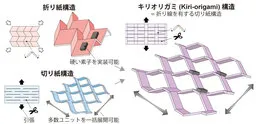
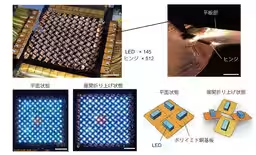
The research group led by Professor Eiji Iwase and master’s student Nagi Nakamura explored traditional Japanese art forms to design a new stretchable electronic device structure. The Kiri-origami structure integrates the folding capabilities of origami with the cut patterns of kirigami, resulting in a system that allows for a collective folding mechanism when tension is applied across the entire surface. This approach minimizes the risk of damage to the rigid parts often found in conventional electronic components, enabling the creation of large-scale, flexible devices like the recently prototyped stretchable display featuring 145 LED chips.
Applications and Implications of Kiri-origami
This advancement holds considerable promise for various fields, particularly in wearable technology and flexible displays. The capacity to mount numerous fragile electronic components onto a single stretchable substrate could transform products like health sensors that adhere to the skin, next-generation foldable smartphones, and dynamic advertising displays that conform to the contours of surfaces. By proving the functionality of their prototype under tension, the research signifies a leap towards practical applications in areas traditionally restricted by the limitations of rigid electronics.
Technical Insights
One of the critical breakthroughs was ensuring that the rigid electronic elements could maintain their integrity while being part of this flexible structure. The researchers created folding lines integrated into the kirigami structures, providing designated points for controlled bending. Two main innovations were vital to the success of the Kiri-origami structure:
1. The Buffer Structure: A spring-like portion at the edges of the structure helps distribute pulling forces evenly, maintaining structural stability and preventing distortions during folding.
2. Biaxial Tension Control: By equally applying tension in both vertical and horizontal directions, the structure folds naturally along the pre-defined lines without creating unwanted distortions elsewhere.
These principles were tested successfully in constructing an electronic circuit with 512 fold lines, demonstrating the ability to maintain functionality even when stretched or folded.
Future Perspectives
The Kiri-origami structure is more than a technical innovation; it represents a paradigm shift in designing flexible electronics. The implications for future research are vast, as it fosters a new field combining mechanical design with electronic engineering. Researchers predict that this method could pave the way for advanced integration in areas such as robotics and healthcare devices, offering safer and more efficient interactions between humans and machines.
In terms of societal impact, Kiri-origami's potential extends into environmental sustainability. By enabling the production of lighter and less resource-intensive devices, this advancement could contribute positively to reducing the ecological footprint of technology manufacturing.
Conclusion
Kiri-origami encapsulates the beauty of Japanese craftsmanship and modern engineering, making it a symbol of innovation that respects tradition while paving the way for future advancements. As this technology matures, its adoption across various sectors could redefine how we think about wearable electronics and their integration into everyday life. The academic community and industry alike are keenly observing how this synthesis of art and science develops, hoping it will inspire new generations of inventors and thinkers in the realm of flexible electronics.
Reference and Contributions
Research results will be published in the international journal npj Flexible Electronics on June 5, 2025, detailing the intricacies and potential of the Kiri-origami structure. This initiative has received funding from the Scientific Research Fund (Grant Number 22H04954) to support sustainable innovations in electronic design and implementation.
Topics Consumer Technology)
【About Using Articles】
You can freely use the title and article content by linking to the page where the article is posted.
※ Images cannot be used.
【About Links】
Links are free to use.