



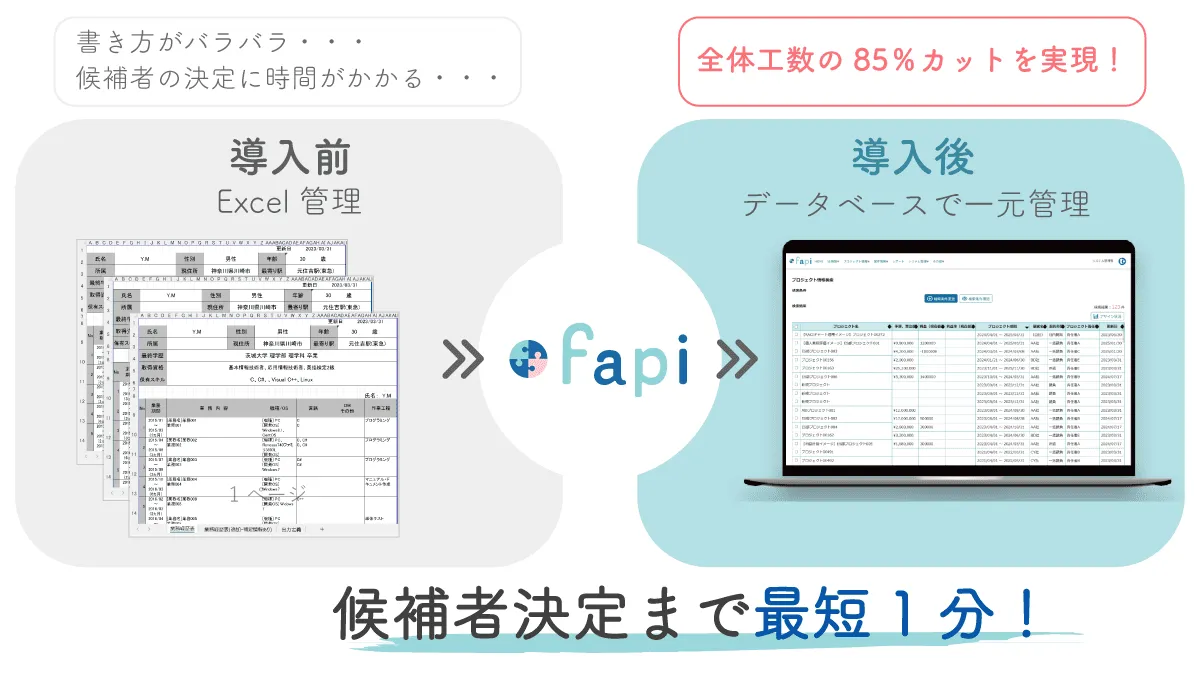
Breaking the Limitation of Experience-Based Assignments: Fapi Emerges from Organizational Expansion Challenges
Exploring the Challenges of Experience-Based Assignments in Growing Organizations
In today’s highly competitive environment, effective resource management plays a crucial role in ensuring business success. However, as organizations expand, they often face significant challenges associated with assignment management. These challenges, particularly the reliance on individual memory and experience for task allocation, can lead to inefficiencies and risks that organizations can no longer afford to overlook.
The Launch of Fapi: A Response to a Growing Dilemma
FDC Inc., a software and system development company based in Chiyoda, Tokyo, has taken a proactive approach to address these complexities with the introduction of Fapi, a skill and assignment management support tool. Recently, FDC released an insightful video, the first of a two-part series, explaining the challenges organizations face as they grow, particularly focusing on the limitations of experience-based assignment decisions.
A Shift from Memory to Structured Systems
The initial part of the video featuring company representative Takaki Wada highlights a significant issue: as the workforce expands, relying solely on management's memories to track employee skills and project allocations becomes impractical. Smaller organizations can benefit from direct oversight; however, as more employees join, the need for a structured approach is undeniable. Wada shares how FDC has grappled with issues of personal dependency in resource management and recognizes the risks involved in relying solely on intuitive decision-making.
Key Topics Covered in the Video:
- - The Importance of Assignment Understanding: Wada emphasizes how crucial it is for business growth to understand roles and responsibilities within a team, ensuring that assignments align with skill sets.
- - Risk of Personal Dependency: Challenges arise when managers cannot keep track of all employee skills and past achievements, leading to potential mismatches in project assignments.
- - The Dangers of Intuitive Judgment: The reliance on personal recall can create discrepancies between management and on-ground staff regarding assignment expectations.
- - Making Tough Decisions: FDC's journey included confronting the obstacles associated with implementing structural changes while minimizing the impact on frontline operations.
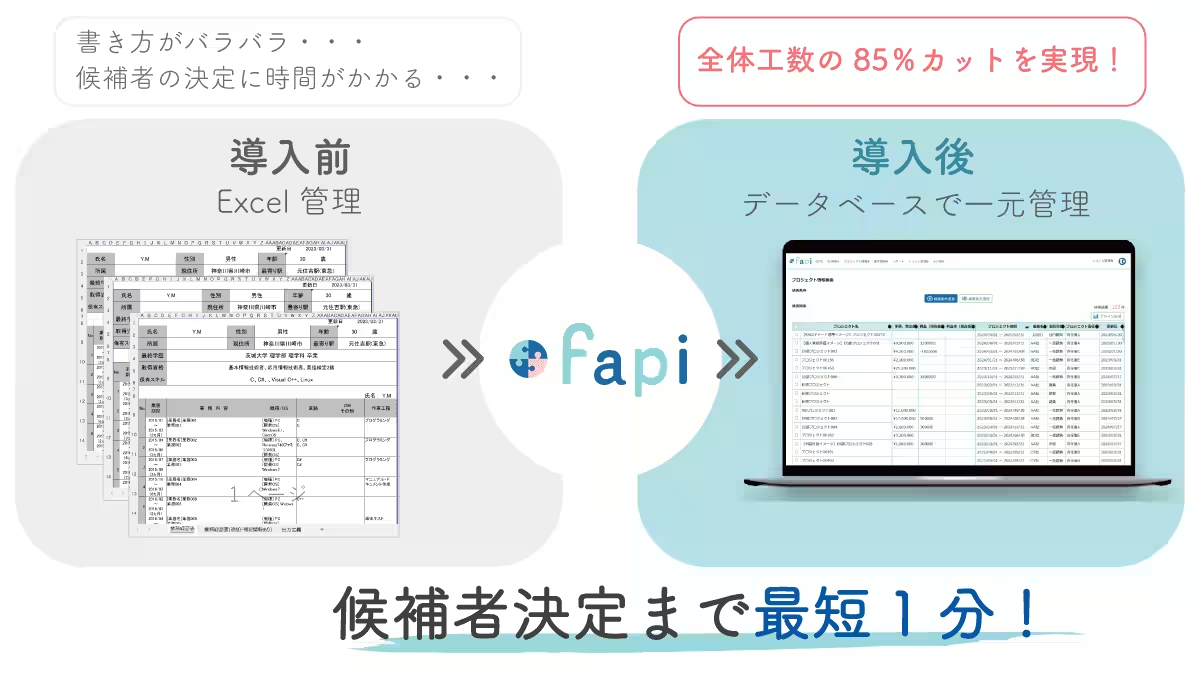
With these insights, the video illustrates the foundational reasons that propelled FDC to develop Fapi. This tool personalizes the management of skills and assignments, providing flexibility in tracking and categorizing necessary data customized to each organization's needs.
Recommended for Leaders and Managers Facing Assignment Challenges:
1. If you are unable to assess the latest skill sets and experience levels of your engineering team in real-time.
2. If your assignment adjustments are overly dependent on the intuition of a few managers.
3. If there's a growing gap in perceptions between your employees and management regarding resource allocation.
4. If you feel limited by Excel management but are hesitant to adopt new tools due to potential impacts on current workflows.
Next Steps and Future Insights
In the upcoming second part of the video series, the discussion will lead to overcoming employee resistance toward new systems, particularly the pushback for sticking with Excel. Wada promises to share practical steps taken to implement structured management, leveraging Fapi to ensure organizational transformation and growth moving forward.
About Fapi
Fapi’s innovative design allows businesses to efficiently manage skill assessments and project assignments, preventing dependency on personal memory while streamlining workflows. With customized settings, it aims to enhance the operational efficiency of resource management.
For more details on Fapi and to watch the first video, visit FDC’s official YouTube channel and subscribe for the next phase of insights into building effective assignment structures in your organization.
About FDC Inc.
Founded in 1997 and located in the heart of Tokyo, FDC Inc. specializes in system development and consulting services, dedicating efforts to improve efficiency within various fields. For more information, please visit FDC’s website.

Topics Business Technology)

【About Using Articles】
You can freely use the title and article content by linking to the page where the article is posted.
※ Images cannot be used.
【About Links】
Links are free to use.