



Understanding the Increasing Workload of Educators and Its Impact on Education Quality
Introduction
The rising pressures faced by educators have become a point of significant concern among parents. In a recent survey conducted by Systech IT Solutions, which focused on parents of children attending private middle and high schools, the implications of teacher workloads on educational quality were examined. This survey reveals alarming insights regarding the working conditions of teachers and how they affect student learning.
Background of the Survey
The survey, which took place between May 26 and May 29, 2026, involved 1,002 parents and was facilitated by the online research platform PRIZMA. The aim was to understand parental perceptions regarding the workload of teachers and how it relates to the quality of education provided to students.
The Reality of Teacher Workloads
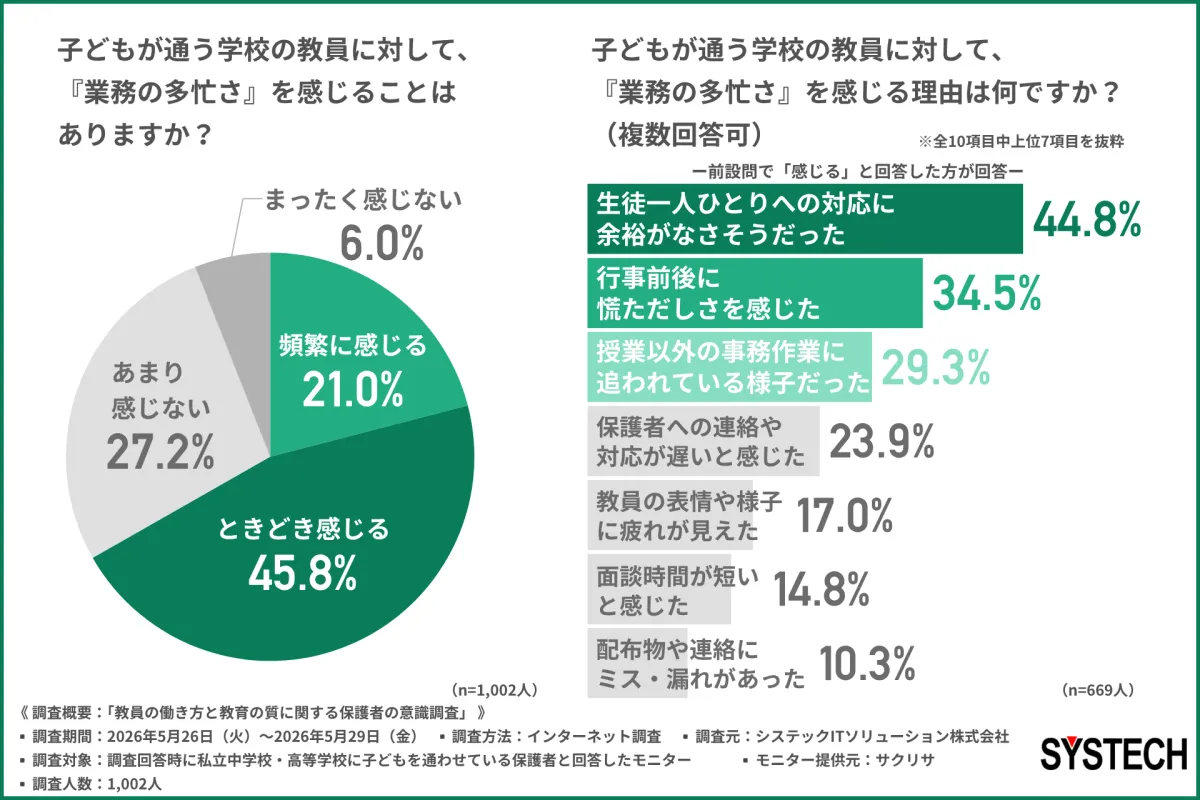
Approximately 70% of parents expressed that they frequently or occasionally perceive teachers as overwhelmed by their duties. This finding underscores a prevalent concern that many parents have about the capacity of educators to effectively engage with their students on an individual level.
The survey revealed several scenarios contributing to this perception of overwhelming workloads:
- - 44.8% of respondents believed that teachers lack the bandwidth to adequately respond to each student’s needs.
- - 34.5% noted the frenetic pace surrounding school events, further limiting teachers’ availability.
- - 29.3% cited extensive clerical work outside of teaching hours as a contributing factor.
Such findings suggest a troubling trend where administrative burdens may detract from teachers’ primary responsibilities—nurturing and educating their students.
Concerns about Educational Quality
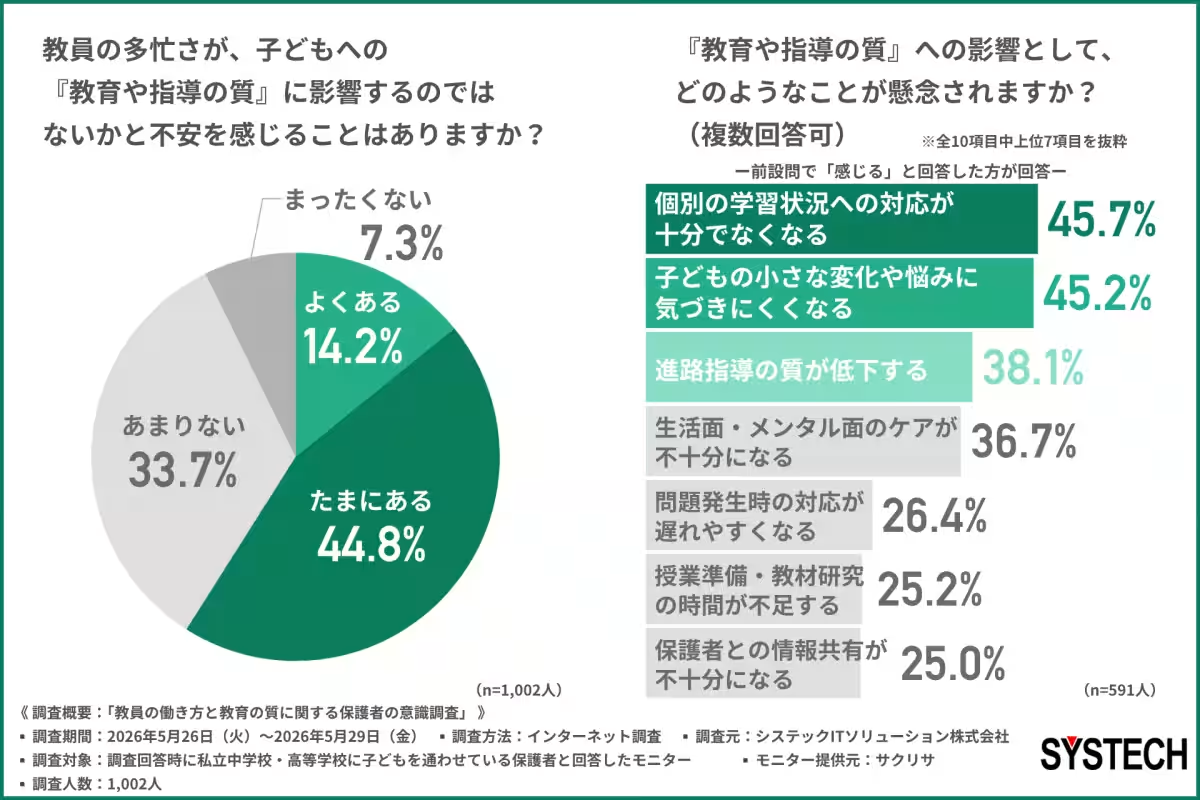
When asked if they worried that teacher workloads impact the quality of education, approximately 60% of parents reported that they often or sometimes feel this way. This reflects a significant level of concern about how educational instruction is affected by teacher stress.
A closer look at the responses revealed specific areas of concern:
- - 45.7% of parents feared that teachers might be unable to provide tailored support to individual learning needs.
- - 45.2% expressed worry regarding the potential neglect of subtle changes in their children’s emotional or psychological welfare.
- - 38.1% were concerned that the quality of career guidance might decline.
These responses indicate a strong desire among parents for attentive, personalized teaching, further emphasizing the need for teachers to have sufficient time to focus on their students.
Expectations from Teachers
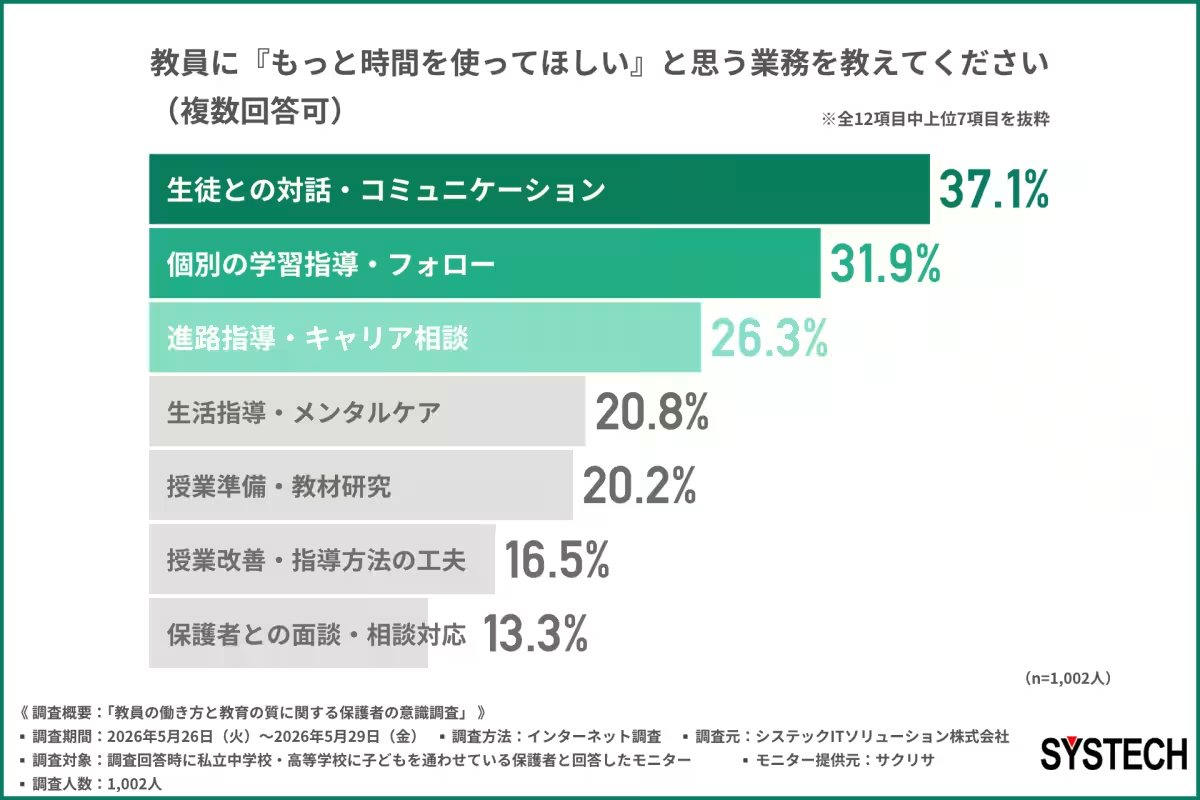
Parents have articulated a clear demand: they want teachers to prioritize engagement with students rather than administrative tasks. In response to a prompt asking what responsibilities they wish teachers would invest more time in, 37.1% mentioned direct communication with students, showing an overwhelming preference for personal interaction.
This expectation highlights the perceived need for a shift in priorities such that student interactions take precedence—an idea further supported by the significant concern for reduced individual academic support and emotional monitoring.
The Push for Digital Transformation
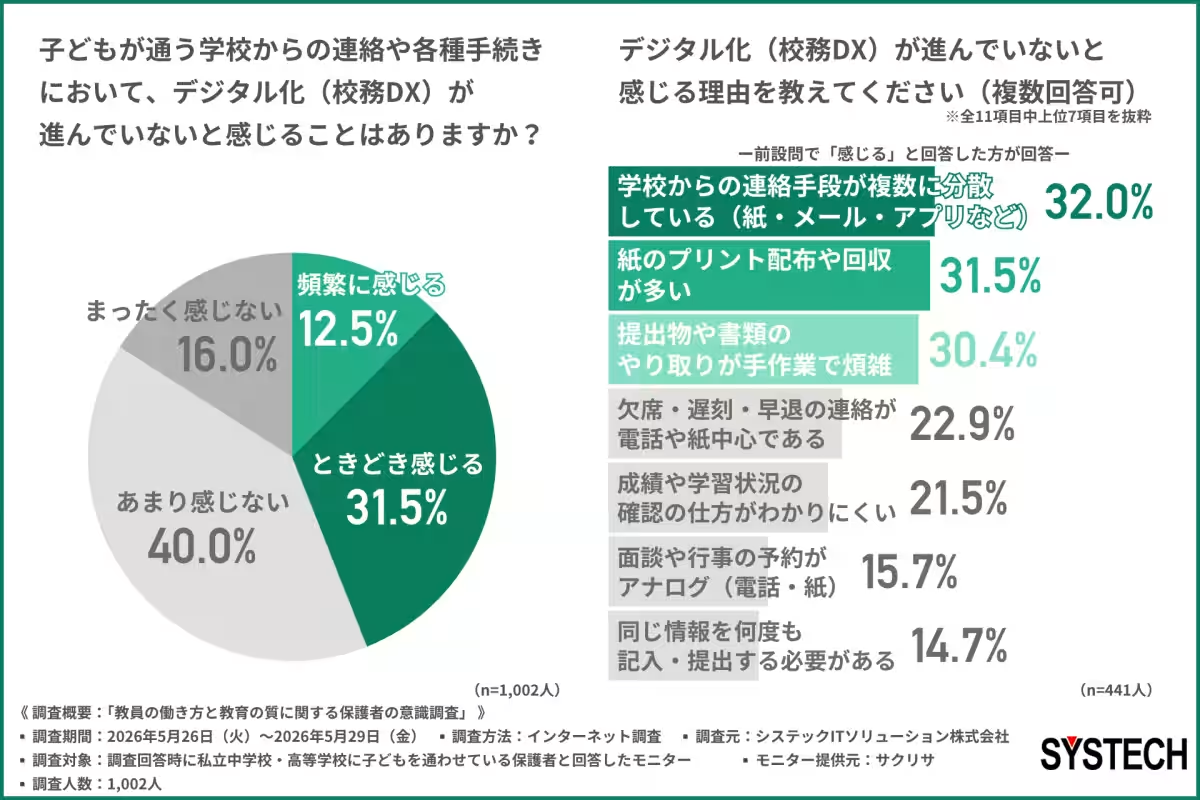
While the emphasis on educational quality grows, parents have also noted a lag in the digital transformation within school systems. About 40% observed that their schools are not leveraging digital tools effectively, with many school communications still relying on paper and phone calls.
The survey revealed specific frustrations related to the digital landscape:
- - 32.0% cited the fragmented communication channels as a significant issue.
- - 31.5% expressed discontent with the reliance on paper for handouts and notifications.
- - 30.4% found the manual handling of paperwork cumbersome and inefficient.
Parents’ Demands for Digital Solutions
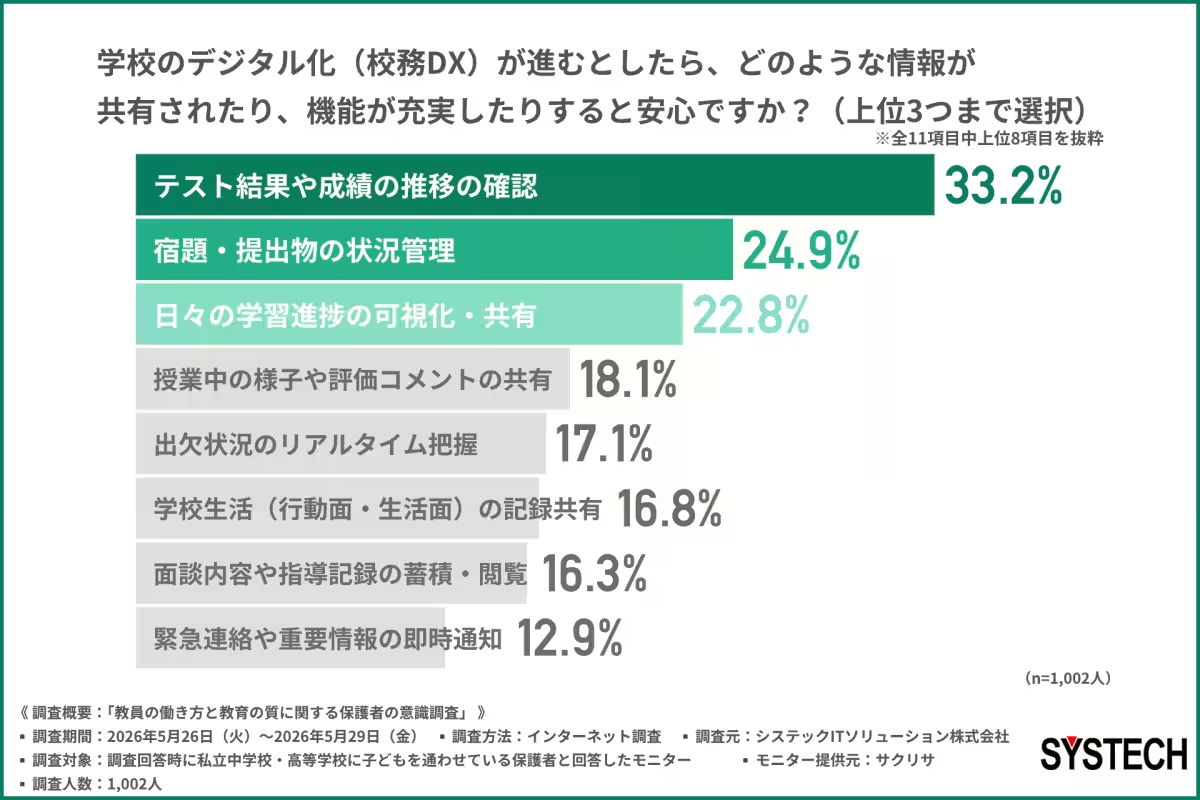
Parents are not only seeking improved digital communication from schools but are also eager for systems that can provide real-time information about their children’s learning progress. Key aspects of the digital transformation they desire include:
- - Access to test results and performance over time (33.2%)
- - Efficient management of homework and submissions (24.9%)
- - Enhanced visibility of daily learning progress (22.8%)
This urge for comprehensive feedback mechanisms highlights a shift in expectations—parents want not just information but actionable insights that can aid their children’s learning at home.
The Role of Digitalization in Alleviating Workloads
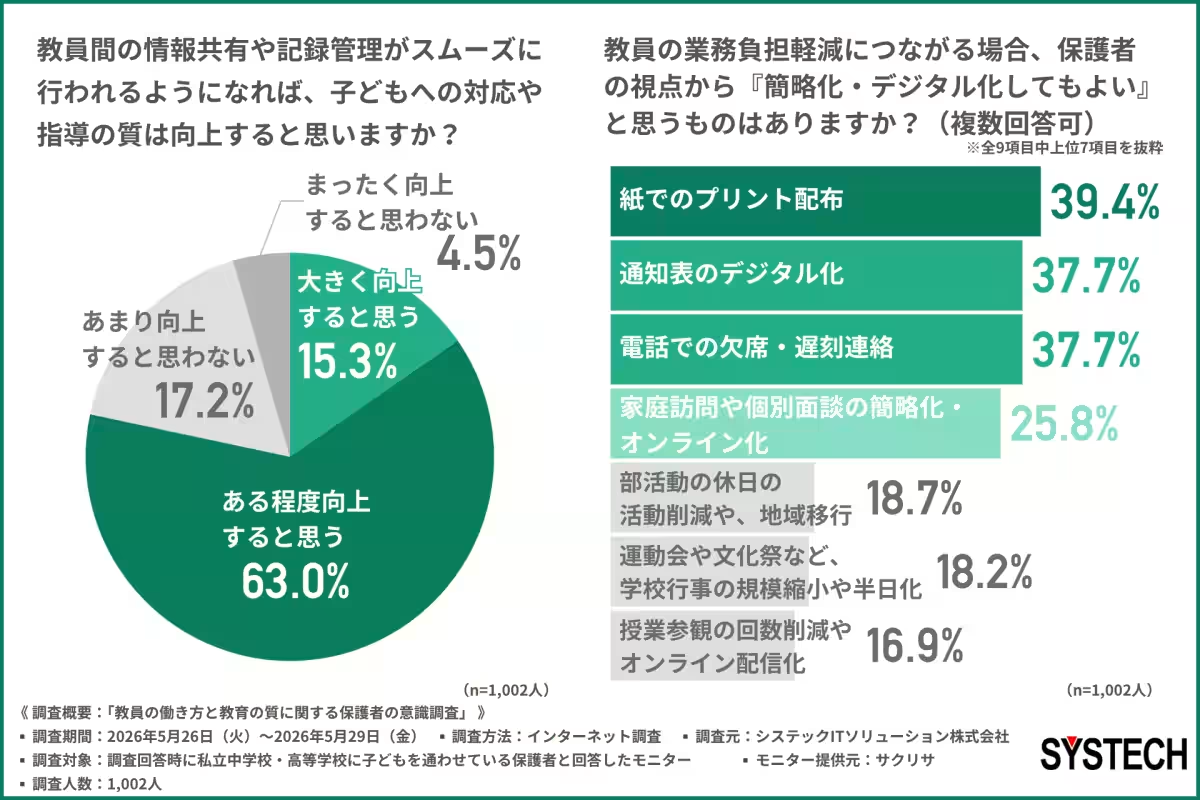
Encouragingly, the survey indicated that a significant majority (around 80%) believes improving information sharing among teachers through digitalization would enhance educational quality. Many parents expressed openness to digital transformations that could alleviate teachers’ administrative burdens.
When queried about aspects of educational practice that could benefit from digitization, responses were overwhelmingly supportive:
- - 39.4% favored digitalizing printed handouts.
- - 37.7% supported the online viewing of report cards.
- - 25.8% saw potential in simplifying personal meetings through digital means.
These indications suggest a willingness to embrace change, particularly in areas that would streamline processes while maintaining the quality of personal interactions.
Conclusion
The findings from this survey articulate a pressing concern about the interplay between teacher workloads and educational quality. Parents not only recognize the burden faced by educators but also emphasize the critical need for approaches that foster engagement between teachers and students.
To respond effectively, implementing digital solutions that ease administrative tasks is crucial. The move towards a more streamlined, digital framework could mitigate many operational challenges faced at schools today. Importantly, as educational systems evolve, it will be vital to maintain a balance between the efficiency gained through technology and the elemental need for meaningful human interactions.
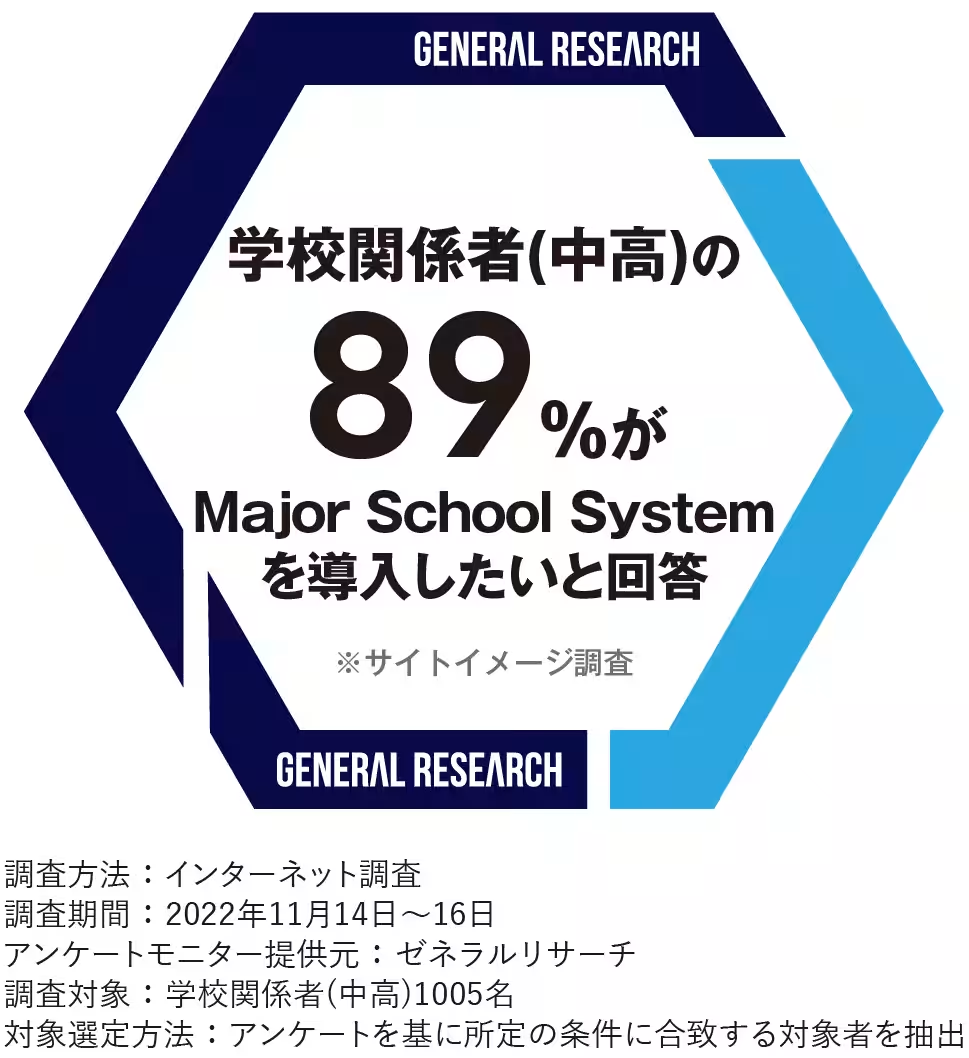
In closing, as Systech IT Solutions continues to promote tools such as their 'Major School System' tailored for high schools, they pave the way for schools to enhance their operational efficiency while prioritizing the quality of student education.



Topics Other)
【About Using Articles】
You can freely use the title and article content by linking to the page where the article is posted.
※ Images cannot be used.
【About Links】
Links are free to use.