



Understanding Air Conditioner Usage Habits: Insights from Recent Survey
Insights into Air Conditioner Usage Habits
A recent survey conducted by 'Ouchi ni Pro' aimed to uncover the utilization patterns and perceptions regarding air conditioners among Japanese households. This survey garnered responses from 100 participants, predominantly in their 30s and 40s, shedding light on common practices and misconceptions.
Key Findings
Extreme Temperature Settings
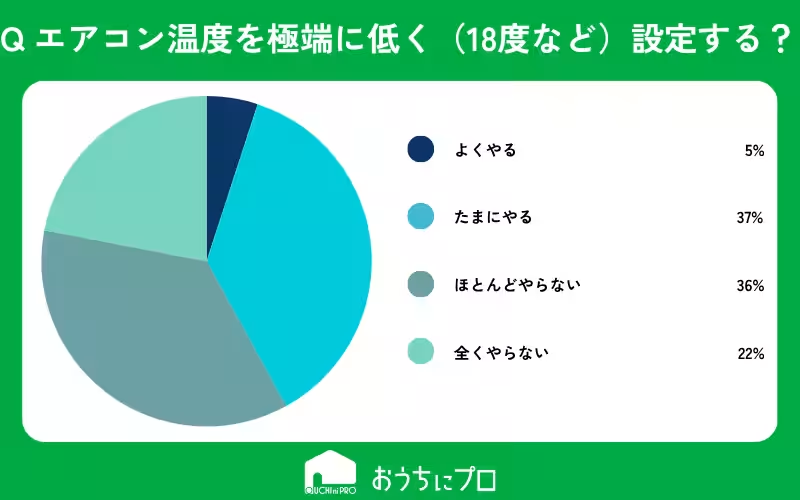
Interestingly, a significant 42% of respondents admitted to setting their air conditioning units to extremely low temperatures, as low as 18 degrees Celsius, to cool their rooms quickly. This habit raises questions about energy efficiency and the associated costs—an area where many users might need more awareness.
Misconceptions About Energy Savings
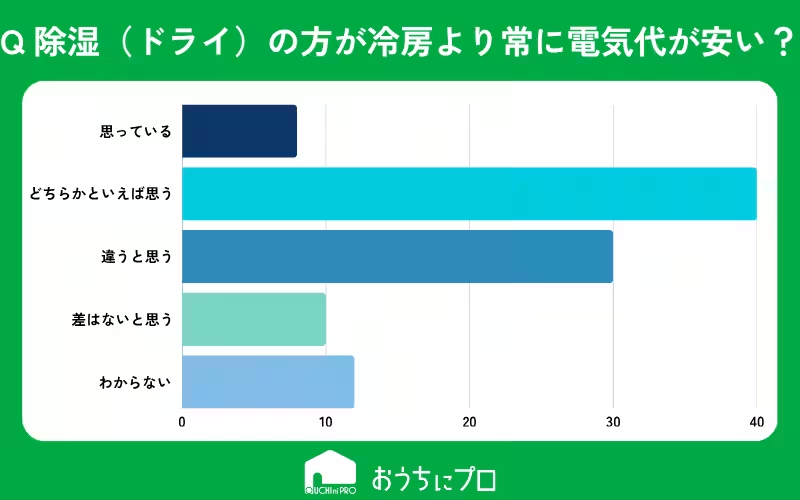
When it comes to energy costs, 48% of participants believe that using the dehumidify (dry) mode is always more economical than standard cooling. This perception indicates a lack of clarity on operating modes, which could lead to increased expenses rather than savings.
Wind Direction Preferences
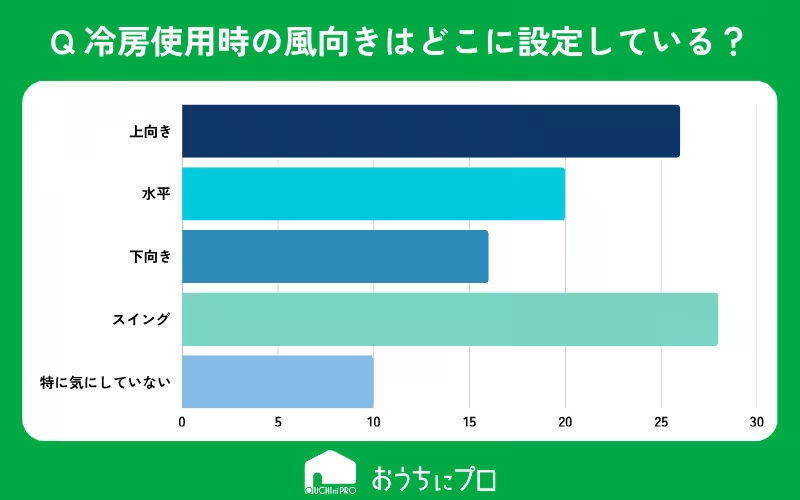
The survey also explored wind direction settings during cooling. Many respondents reported using the 'swing' and 'upward' settings, which are generally recommended for optimal airflow and cooling efficiency.
Understanding Energy-Saving Practices
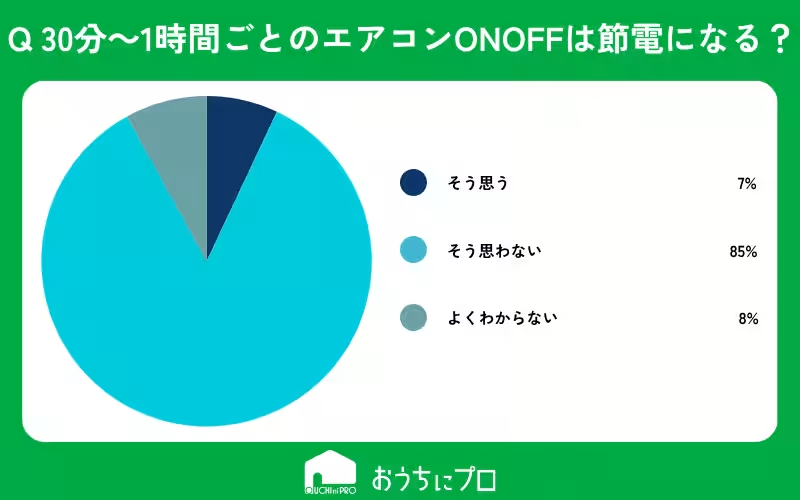
However, the survey revealed a concerning statistic: only 7% of participants were aware that frequent switching on and off the air conditioner (every 30 minutes to an hour) could save energy. This highlights a significant gap in understanding energy management strategies among users.
Cleaning Perceptions
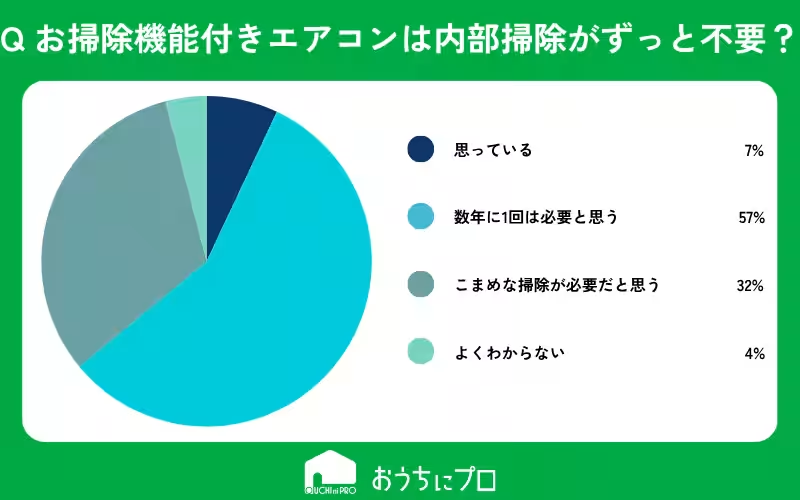
Another intriguing finding centers around perceptions of air conditioner maintenance. While 57% of respondents believe that internal cleaning is necessary every few years, only 7% think that air conditioners with self-cleaning features do not require any attention at all. This misconception may lead to neglecting necessary maintenance, potentially affecting performance and longevity.
The Survey Methodology
The survey was conducted through Cloudworks, targeting an evenly distributed demographic of men and women, mostly from their 30s to their 40s, confirming that middle-aged individuals are the primary users of air conditioning systems in Japan. The data collection lasted throughout April 2026, primarily using internet research methods.
Age Distribution of Respondents
- - 20s: 9 respondents
- - 30s: 35 respondents
- - 40s: 36 respondents
- - 50s: 18 respondents
- - 60s and above: 2 respondents
Regional Focus
The research primarily focused on Japan, providing localized insights specific to the Japanese market and climate, which is crucial for understanding air conditioning habits in this region.
About Ouchi ni Pro
'Ouchi ni Pro' serves as a reliable comparison and reservation site for various home services, including air conditioning cleaning. It hosts information on over 4,000 registered providers nationwide, enabling users to access trustworthy services based on specific criteria. The platform aims to assist users in establishing a comfortable home environment by facilitating informed decisions.
Conclusion
The survey uncovers various trends and gaps in knowledge surrounding air conditioning usage among Japanese individuals. Educating users on effective practices and maintenance, along with clarifying misconceptions about energy consumption and operational modes, can significantly enhance their climatic comfort and energy efficiency in the future. As climates become increasingly unpredictable, understanding these habits and making informed choices with guidance from platforms like 'Ouchi ni Pro' will be more important than ever.
Topics Consumer Products & Retail)



【About Using Articles】
You can freely use the title and article content by linking to the page where the article is posted.
※ Images cannot be used.
【About Links】
Links are free to use.