



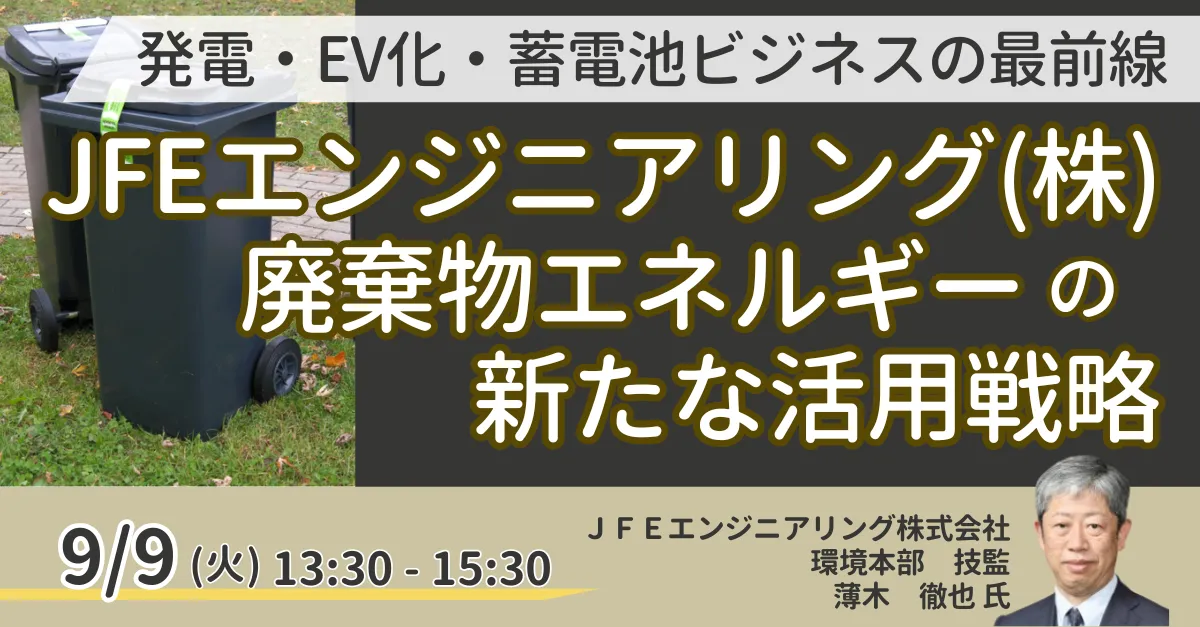
Exploring Innovative Waste-to-Energy Strategies by JFE Engineering
Seminar on Waste-to-Energy Strategies by JFE Engineering
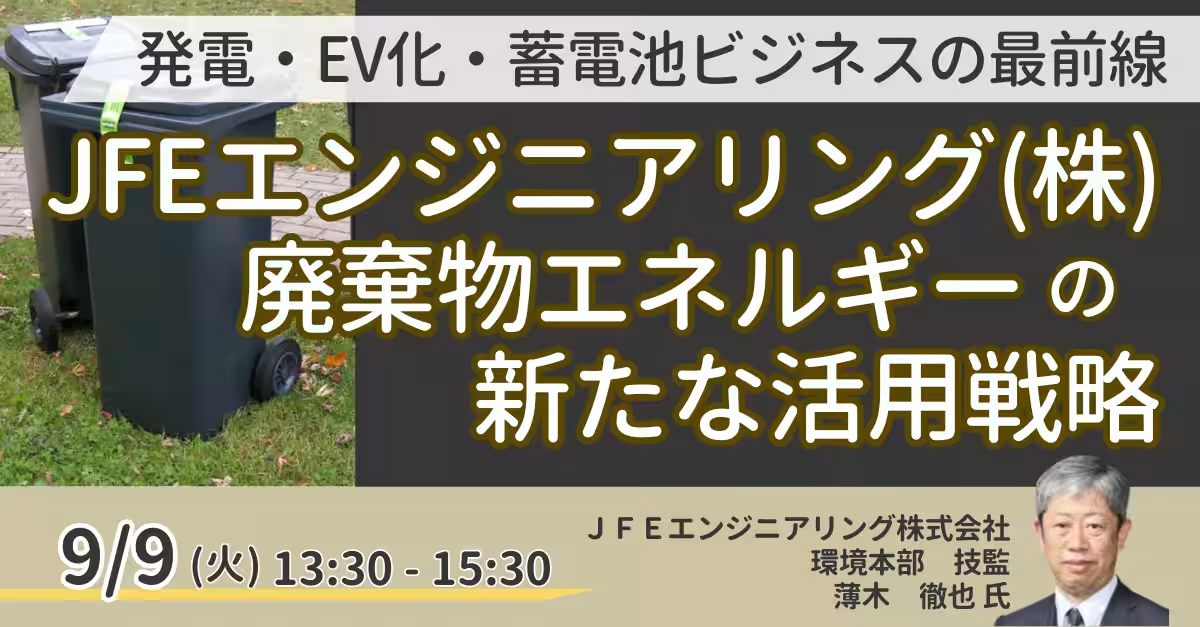
On September 9, 2025, from 1:30 PM to 3:30 PM, the Japan Planning Institute (JPI) will host a seminar featuring Tetsuya Usuki, Chief Engineer at JFE Engineering's Environmental Headquarters, who will present innovative strategies for utilizing waste energy. This informative session addresses crucial topics in the context of carbon neutrality goals for 2050.
Seminar Overview
One of the significant challenges facing waste management industries today is reducing CO2 emissions output. JFE Engineering tackles this issue by promoting a shift from selling electricity generated from waste to power companies towards self-consumption models. A key proposal includes transitioning garbage collection trucks, known as packer trucks, to electric vehicles (EVs). In Japan, there are over 30,000 diesel-powered trucks currently operational, each contributing to greenhouse gas emissions. JFE is responding to this problem by developing a battery-swapping EV packer that can significantly reduce CO2 emissions.
Key Features of the Seminar
1. Current Status of Waste Management and Decarbonization Efforts
- - Overview of Waste-to-Energy Technology: Insight into how waste is being transformed into valuable energy sources, focusing on current processing techniques and efficiency.
- - Electricity Utilization Practices: Understanding how Japan utilizes electricity generated from waste and identifies potential areas for improvement.
- - Development of Decarbonization Technologies: Exploration of cutting-edge technologies like Carbon Capture and Utilization (CCU) and other gainful innovations.
2. Development of Battery-Swapping EV Packer
- - Current State of Packer Trucks: Analysis of existing challenges in the industry and initiatives towards decarbonization.
- - Overview of Battery-Swapping Systems: Introduction to the revolutionary technology designed to minimize downtime and promote quick recharging.
- - Proof of Concept: Discussion surrounding the successful trials and real-world applications of battery-swapping electric trucks.
- - Promotion of EV Pack Technology: Steps towards broader acceptance and integration of these technologies in the market.
3. Diversifying Battery Utilization
- - Connection with Waste Management Facilities: How battery systems can enhance operations within waste treatment plants.
4. Interaction and Networking
Lead into a segment for Q&A, followed by a business card exchange and networking session that is indispensable for participants aiming to grow their professional networks and stimulate new business opportunities.
Learning Options
Participants can select from various attendance options, including on-site attendance, live streaming, or access to recorded sessions for two weeks post-event.
Registration Fees
- - Individual Admission: 37,840 JPY (including tax)
- - Group Discounts: A price of 32,840 JPY applies for additional attendees from the same company or related organizations.
- - Local Government Affiliates: Special prices set for up to two attendees at 11,000 JPY (including tax).
For more details and registration, visit this link
After the seminar, participants can engage with the speaker for questions and further discussions while also using networking opportunities to expand business connections. Post-event archive access allows for flexible review of the session's content.
Contact Information
Japan Planning Institute, Inc.
5-2-32 Minami Azabu, Kowa Hiroo Building,
Minato-ku, Tokyo 106-0047
Phone: 03-5793-9761
Fax: 03-5793-9767
Website
About JPI
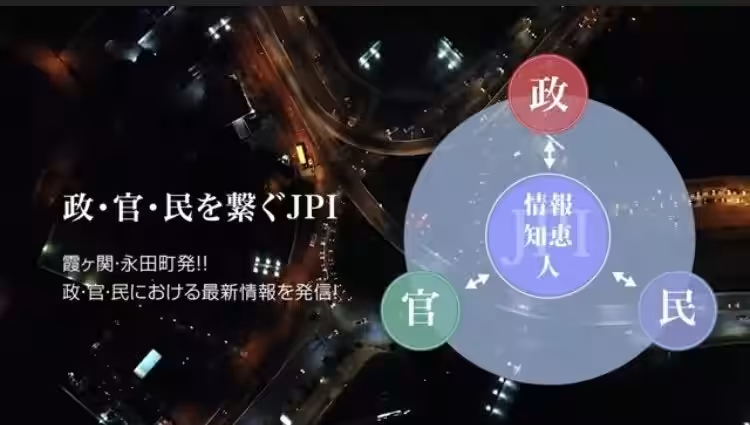
The Japan Planning Institute has dedicated over five decades to bridging the gap between the public and private sectors. Our targeted seminars provide high-level executives with invaluable insights and support in executing national policies and projects.

Topics Energy)
【About Using Articles】
You can freely use the title and article content by linking to the page where the article is posted.
※ Images cannot be used.
【About Links】
Links are free to use.