



What Defines Love vs Reality for Cohabiting Couples? Insights from a Survey
Understanding Love and Reality in Cohabitation
In recent years, the trend of couples choosing to live together before marriage has significantly increased. However, living together is more than just a step toward marriage; it often serves as a critical juncture for many. While some couples transition from cohabitation into marriage successfully, others may find that living together leads them down a path towards separation.
To explore what defines this pivotal moment, Plus8, a company based in Shinjuku, Tokyo, conducted a survey with individuals in their 20s and 30s. The participants consisted of two groups: those who lived together and subsequently got married, and those who shared a home but chose to part ways instead.
The survey was conducted from November 11 to November 13, 2025, gathering responses from 1,018 individuals via an internet survey run by PRIZMA.
Key Findings from the Survey
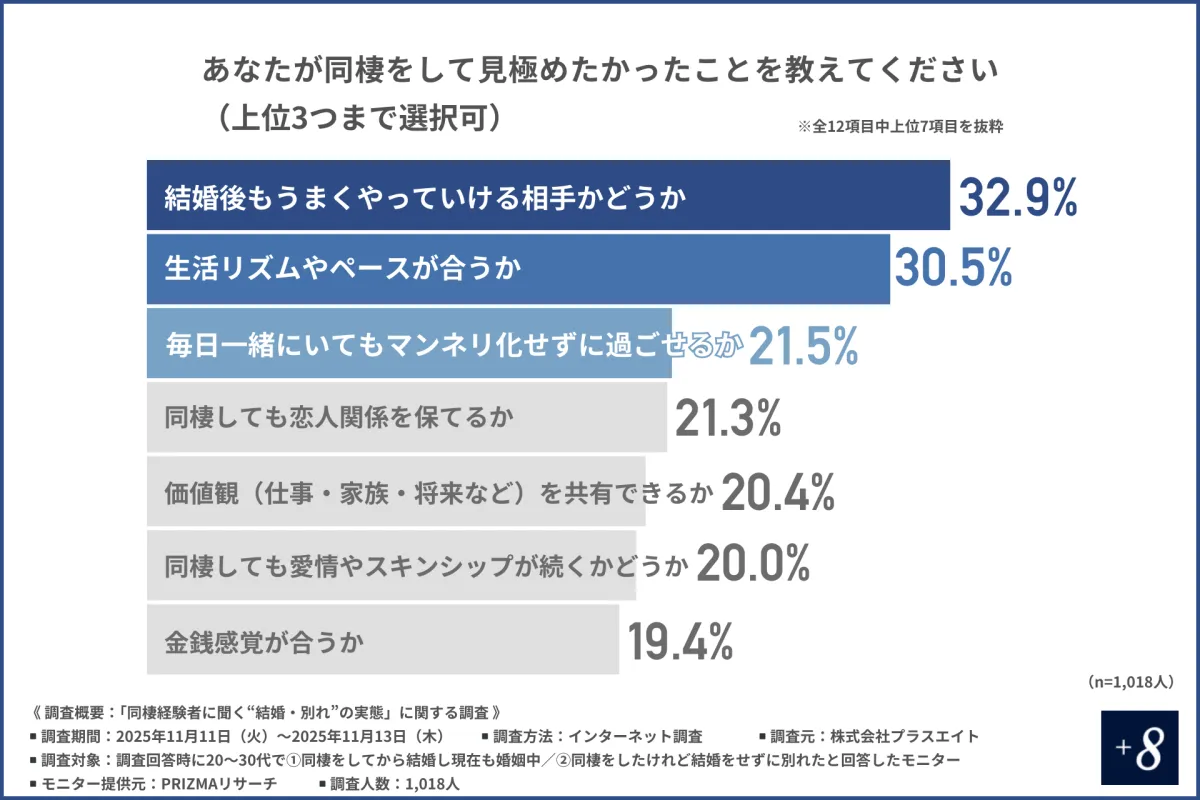
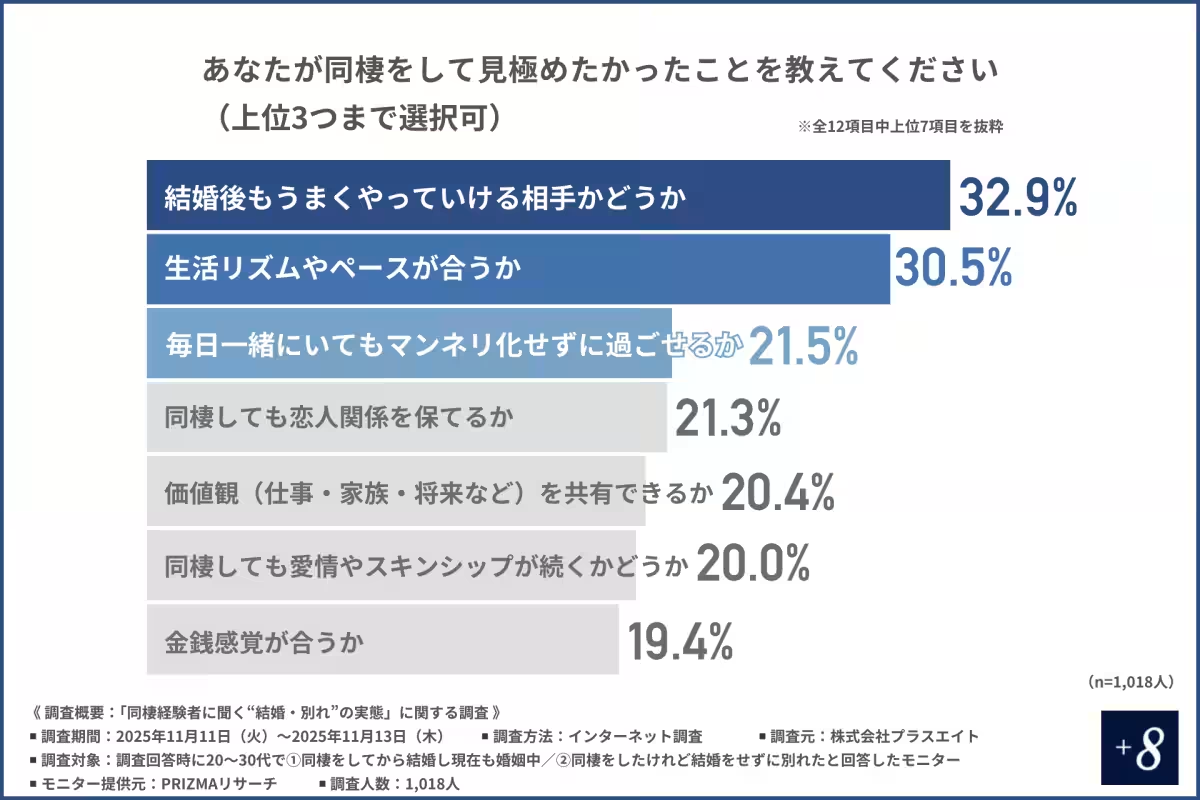
When asked what they hoped to determine during their time living together, the most common response (32.9%) was whether their partner would be compatible for life post-marriage. This was followed closely by the desire to assess if their daily routines and paces aligned (30.5%) and whether they could avoid falling into a monotonous routine even when spending every day together (21.5%).
The results indicate that through cohabitation, individuals prioritize not only their partner's personality and values but also look into how they manage daily tasks and finances, critical aspects necessary for future marital harmony. The respondents' focus on avoiding mundanity also highlights a conscientious understanding of relationship dynamics.
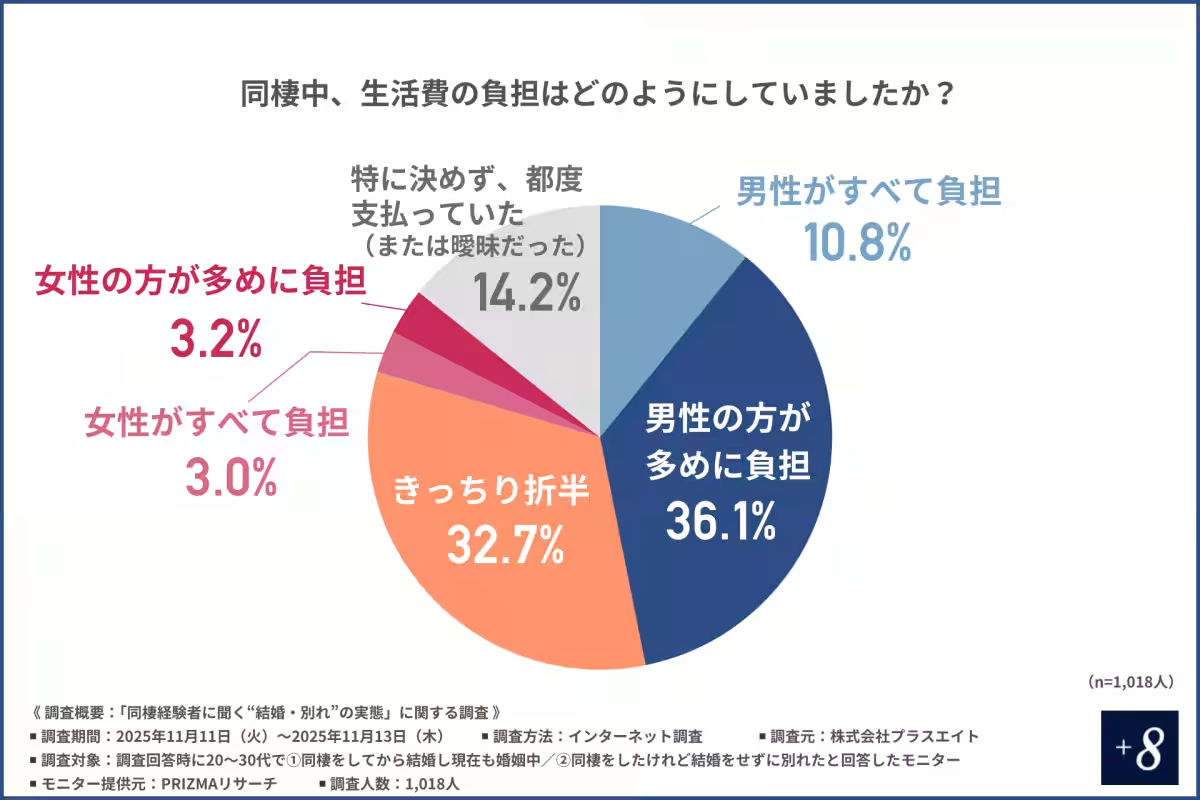
When it came to financial responsibilities, 36.1% of participants indicated that men typically bore a more significant share of the costs, whereas 32.7% noted that expenses were split evenly. The data reveals a shift towards more equitable approaches to financial management post-cohabitation, contrasting the traditional view that expects men to shoulder the bulk of expenses. Interestingly, only about 10% of couples reported that men covered all living expenses, suggesting a broader trend of shared financial responsibilities.
As couples navigate the nuances of living together, they must also manage the cultural norms surrounding dating expenses. While traditional attitudes about paying for dates persist, living together instigates a more practical and collaborative view of financial management, requiring alignment in values. Establishing clear financial responsibilities early on can mitigate potential relational discord.
The Stressors of Daily Life
When asked if they felt aligned with their partners regarding lifestyles and values during cohabitation, participants found it easier to synchronize elements like eating out or weekend activities. However, disagreements often emerged around household duties and spending habits—areas that reflect individuals' fundamental living standards. These divergences can become troubling, with individuals recognizing only after cohabiting that their 'norms' differ significantly.
Many respondents noted feeling strained by these small misalignments, often hesitant to voice their concerns for fear of disrupting harmony. The daily stresses included:
- - Financial disagreements, especially related to shared purchases.
- - Conflicting sleep schedules, leading to frustration about how downtime was managed.
- - Complaints about household noises, such as sneezes or other minor disturbances.
- - Unfulfilled agreements regarding household chores, causing resentments to build.
- - An uncomfortable shift where one partner felt more maternal towards the other, leading to dissatisfaction.
These day-to-day challenges reveal that the subtle disparities encountered in shared living environments can accumulate, potentially triggering significant relationship stress and dissatisfaction.
When Cohabitation Doesn't Lead to Marriage
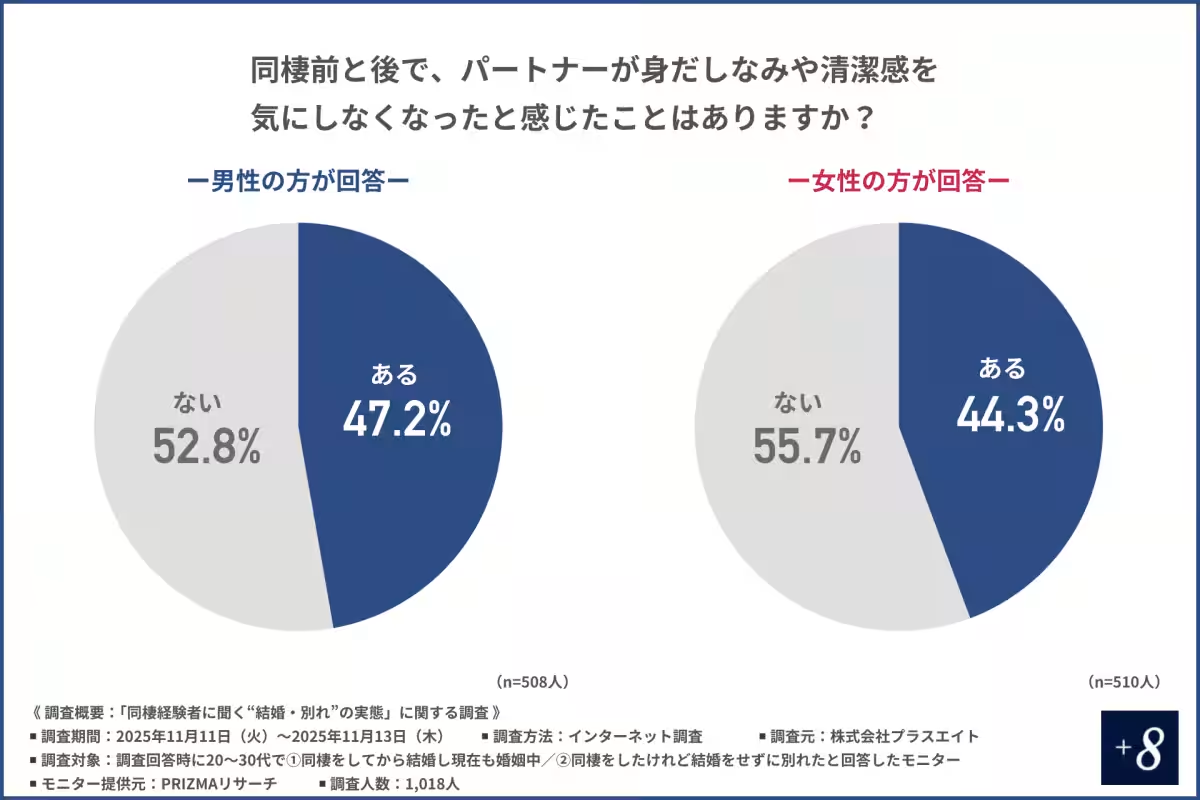
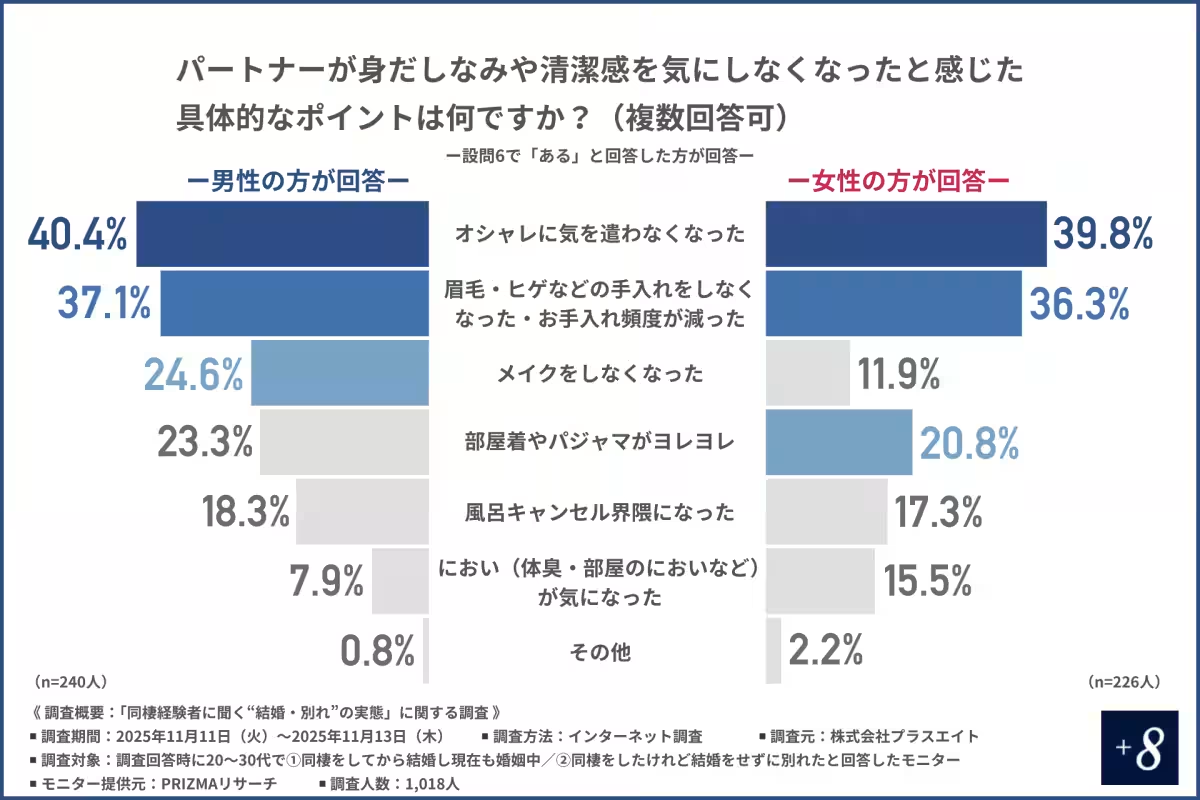
A striking finding was that over 80% of participants who chose not to marry after cohabiting reported a decline in their partner's attractiveness post-cohabitation. Many indicated that their partners became less attentive to personal grooming and cleanliness, with both genders acknowledging this trend. Men were notably more critical regarding women's appearance, perhaps due to newly heightened awareness of their partner's habits in a cohabitary setting.
Moreover, when asked how long it took for their partner's grooming standards to decline, responses varied, with a substantial percentage indicating that this shift occurred within the first six months to a year of living together. This timing hints at a natural easing of tensions that typically accompany early relationships, ushering in a more relaxed and comfortable lifestyle.
Maintaining Relationship Quality After Moving In
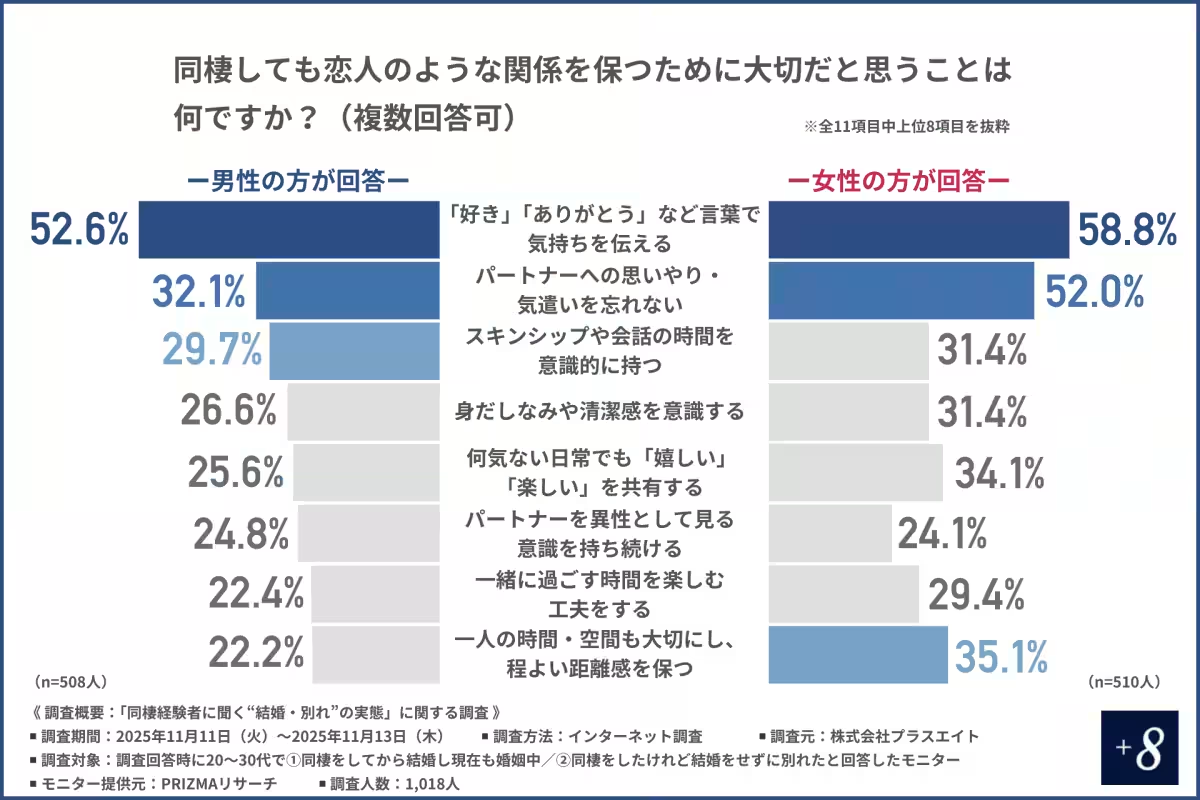
When querying the survey respondents about how to sustain romantic connection during cohabitation, most agreed on the importance of verbalizing feelings. Expressing appreciation and affection emerged as foundational for maintaining warmth and connection within relationships. Women, in particular, emphasized the significance of empathy and emotional space, indicating a conscious effort to respect individuality even in shared living. The delicate balance of emotional communication and maintaining personal distance plays a pivotal role in relationship longevity.
Conclusion
The survey revealed a fascinating intersection between cohabitation and couple dynamics. First, couples who transitioned into marriage often demonstrated a more adaptive approach to life's changes and emphasized the need for ongoing communication and understanding. Conversely, those who separated grappled with accumulating daily grievances that eroded their bond, such as differences in chores, spending habits, and expressions of appreciation.
Cohabitation serves both as a means to deepen relationships while simultaneously unveiling unseen differences in values and day-to-day habits. Ultimately, the ongoing maintenance of relationships hinges more on daily dialogues and mutual respect than grand gestures.
To ensure a long-lasting relationship, couples might wish to integrate a conscious concern for grooming and personal appearance as small yet significant gestures of regard for each other. For those seeking to enhance their grooming, the men’s eyebrow salon, Plus8, is a highly recommended option. They offer tailored styling solutions emphasizing each individual's unique features and preferences, supporting customers in refining their grooming routines.
For more information, visit Plus8's official website.



Topics People & Culture)




【About Using Articles】
You can freely use the title and article content by linking to the page where the article is posted.
※ Images cannot be used.
【About Links】
Links are free to use.