



Media Fusion Receives Certification as ORCID's Official Service Provider, Enhancing Researcher Information Synchronization
Media Fusion Achieves ORCID Certification
Media Fusion Co., Ltd., based in Osaka, has officially been recognized by ORCID as a Certified Service Provider (CSP) as of July 20, 2026. This achievement marks the company as an authorized provider for its ORCID Bi-directional Linking Tool, which allows seamless integration and management of researcher data in accordance with ORCID's best practices.
Background: Necessity for Accurate Researcher Information
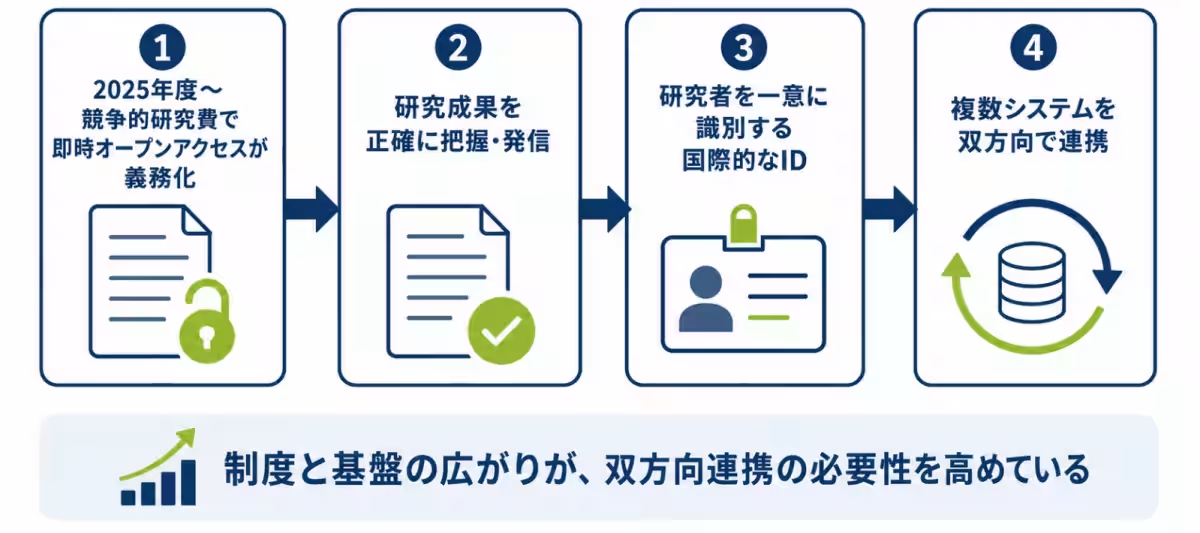
The movement towards public accessibility of research findings is accelerating. In Japan, from the fiscal year 2025 onwards, new competitive research funds require immediate open access to published papers and supporting data through institutional repositories. This mandates the need for robust systems to accurately capture and disseminate research outcomes. A crucial element in this framework is a reliable method of identifying researchers uniquely.
ORCID serves as an international identifier for individuals involved in research, academia, and innovation, utilized across various organizations, including universities, research institutions, publishing houses, funding agencies, governmental bodies, academic societies, and corporate research departments. In Japan, platforms like researchmap, e-Rad, and KAKEN are already compatible with ORCID iDs, highlighting the importance of having a bi-directional linking system to mitigate the challenges of repetitive data entry and discrepancies across multiple databases.
Significance of CSP Certification and Benefits for Implementing Organizations
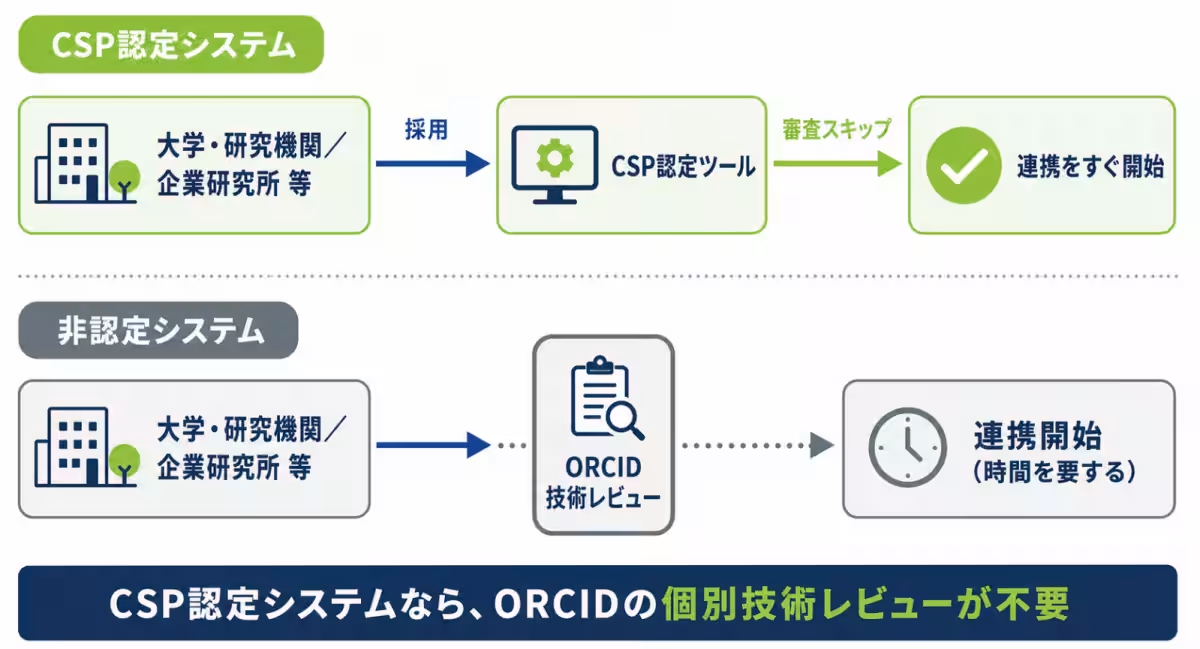
The CSP certification signifies that Media Fusion is officially recognized as a provider of the ORCID bi-directional linking tool, as validated by ORCID. Organizations that implement this tool enjoy several key benefits:
- - Rapid Implementation without Technical Reviews: ORCID-member organizations using CSP-certified systems can commence integration without the need for individual technical reviews, speeding up the process significantly, although they must still obtain ORCID Membership and Member API Credentials separately.
- - Supporting Documentation for Procurement: This third-party certification allows for use as formal justification in decision-making processes, with ORCID also providing certification letters for proposals and bids.
- - Clarified Integration Quality: Demonstrates compliance with ORCID's best practices, ensuring a commitment to ongoing quality as the certification will require periodic updates.
Features of the ORCID Bi-Directional Linking Tool
The tool is designed to:
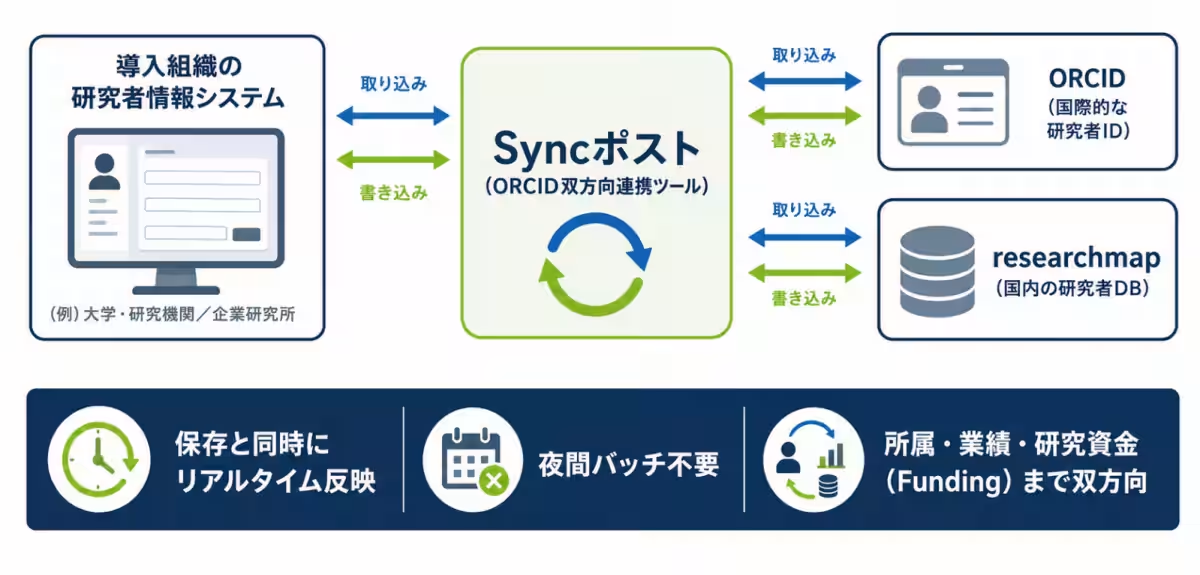
- - Automatically integrate data from ORCID into internal systems, including papers, research outcomes, and affiliations (with both scheduled and manual integration options).
- - Write data from internal systems back to the ORCID Registry in real time, ensuring that changes are reflected instantly without dependency on nightly batch processing.
- - Provide bi-directional synchronization, ensuring that information remains up-to-date across both the internal system and ORCID.
- - Cater to essential data items defined by ORCID, such as affiliations, educational background, funding sources, and research outputs.
- - Be retrofitted into existing systems without requiring modifications, thanks to the independent 'Sync Post' infrastructure, making it compatible with other products.
Practical Applications: From Universities to Corporate Research
The ORCID identifier allows for accurate aggregation and validation of research achievements, which is particularly useful in avoiding confusion from name similarities or variations in reporting. It also ensures that the contributions of researchers continue to be tracked effectively even after job changes.
For industry-academia collaboration, the tool facilitates matching researcher information from both corporates and universities based on ORCID, aiding accurate identification of participants in joint research efforts. The use of international standard IDs, such as ORCID, enhances the sharing of researcher information and joint achievements across borders, transcending language and institutional barriers.
Configuration Examples
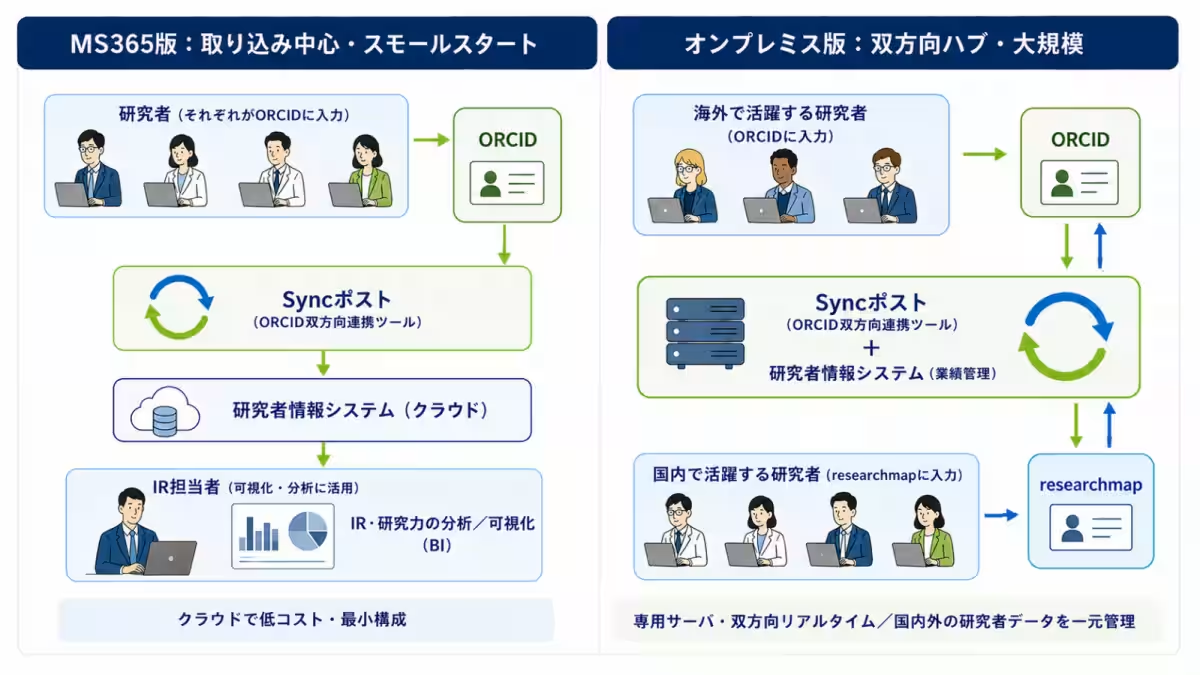
- - MS365 Version: Leverage researcher data pulled from ORCID for storage in Microsoft SharePoint, utilizing tools like Power BI for expert searches.
- - On-Premises Version: Centralize research achievement management, connecting both ORCID (international) and researchmap (domestic) in a bi-directional manner to manage researcher data comprehensively.
Note: To write to the ORCID Record, organizations must become ORCID Members and obtain Member API Credentials (Client ID/Client Secret). Non-member organizations are limited to public API usage for retrieving information.
Overview of Services and Products
Product Name: ORCID Bi-Directional Linking Tool
- - Provided Functions: Automatic data integration, bidirectional writing, and real-time synchronization with major data fields (affiliations, education, research funding, achievements, etc.).
- - Structure: Independent 'Sync Post' with three connectors (ORCID auto-input option, ORCID data adapter, writing connector for ORCID), utilizing OAuth2 for individual authentication.
- - Offering Structure: Available as a subscription-based package, with options to integrate with Media Fusion's 'MF Faculty Achievement Management System'.
- - Target Audience: Universities and research institutions with researchers who need to register and reference achievements on ORCID.
Implementation Process
1. Initial Consultation: Discussing challenges and requirements.
2. Online Demonstration: Providing operational images and insights.
3. Contract and Implementation: Assistance from requirements gathering to operationalization.
For inquiries, please feel free to reach out for a consultation or further information regarding our offerings.
Topics Other)

【About Using Articles】
You can freely use the title and article content by linking to the page where the article is posted.
※ Images cannot be used.
【About Links】
Links are free to use.