



AI and Robotics Revolutionize Quantitative Analysis of Sewer Corrosion in Kyoto's Infrastructure
Innovations in Sewer Management: AI and Robotics Lead the Way
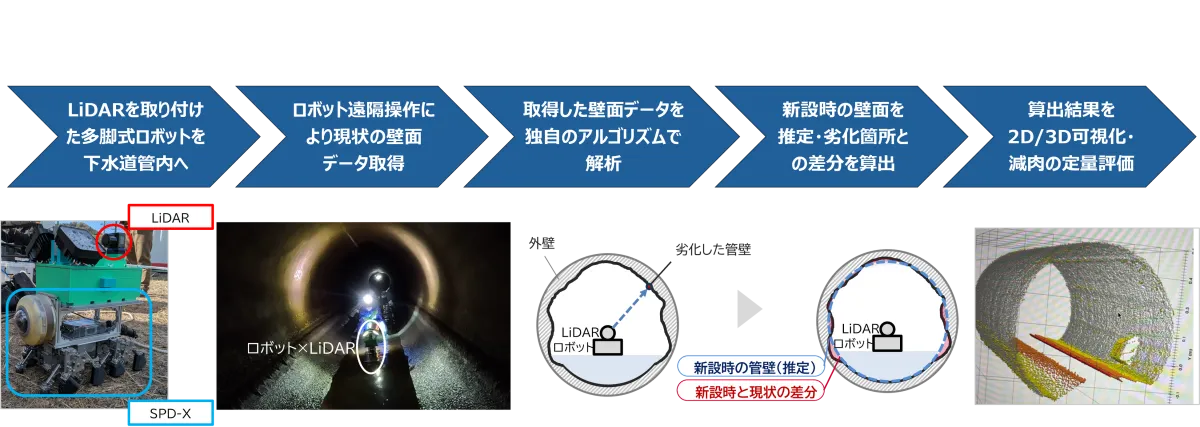
In a groundbreaking collaborative effort, NTT Docomo Solutions, the Kyoto Prefectural Sewer Office, and Temzac have undertaken a project to enhance the inspection processes of sewer pipelines in Kyoto. From April to December 2025, these organizations examined the structural integrity of wastewater pipes using advanced technologies, including multi-legged robots equipped with LiDAR.
The Significance of the Project
The primary goal of this initiative is to quantitatively assess the material loss, or "reduction of thickness," due to corrosion within sewer pipes. Given that Japanese sewer infrastructure is aging—about 7% of the existing 500,000 km of sewer lines were exceeding their 50-year expected lifespan as of 2022—innovative inspection methods are vital. Projections suggest that this percentage will escalate to 42% by 2043. To address this impending crisis, both financial and technical resources are needed to ensure timely maintenance and prevent incidents related to sewer deterioration, such as road collapses.
The Ministry of Land, Infrastructure, Transport and Tourism is already revising inspection guidelines to enhance the frequency and scope of assessments, thus requiring sewer managers to prioritize repairs effectively. Traditional inspection methods relying on visual assessments often fall short in identifying corrosion depth and extent, making it challenging to determine urgency and remediation priorities.
Project Outline and Outcomes
The collaborative project was carried out from April through December 2025, focusing on the following tasks:
1. Quantitative Assessment of Material Loss
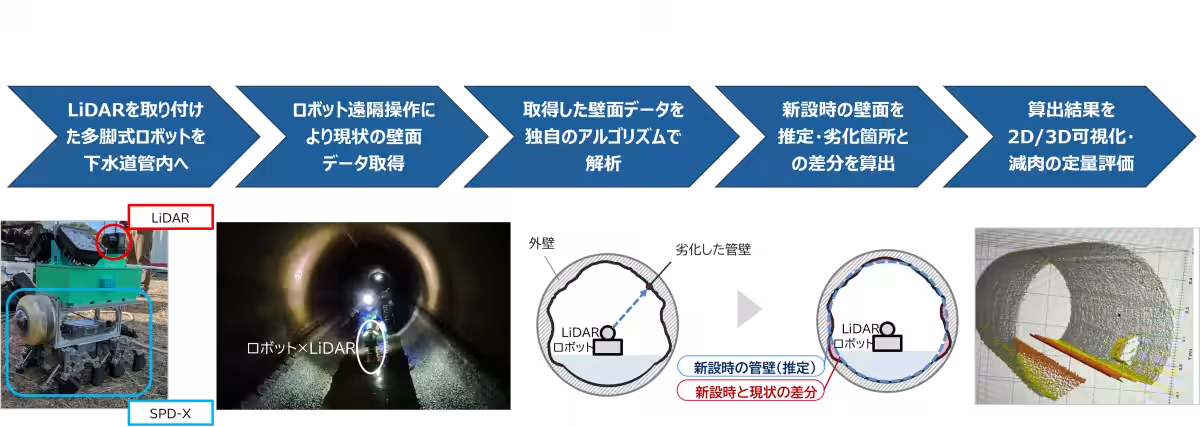
Utilizing a multi-legged robot, the team collected point cloud data within the pipes using LiDAR technology. Subsequently, AI was employed to estimate the original wall shapes of the pipes and to conduct differential analyses to identify changes in the structure over time, particularly due to corrosion. The successful application of this patented technology allowed for a precise measurement of thickness reduction in specific sections of the sewer pipes, thereby revealing the depth and extent of corrosion-related wear.
Key Achievements:
- - Accurately estimated original wall shapes from point cloud data.
- - Verified a margin of error of approximately 1 cm for shape estimation.
- - Successfully quantified the depth and range of material loss, allowing for better assessment of pipe integrity.
Future Applications:
This innovative project promises to streamline the assessment of pipe integrity:
- - Efficient measurement of material loss and wall thickness.
- - Enhanced decision-making for repair site prioritization based on defined corrosion metrics.
- - Continuous monitoring of corrosion trends to inform preventative maintenance strategies effectively.
2. Application of Deterioration Prediction Models
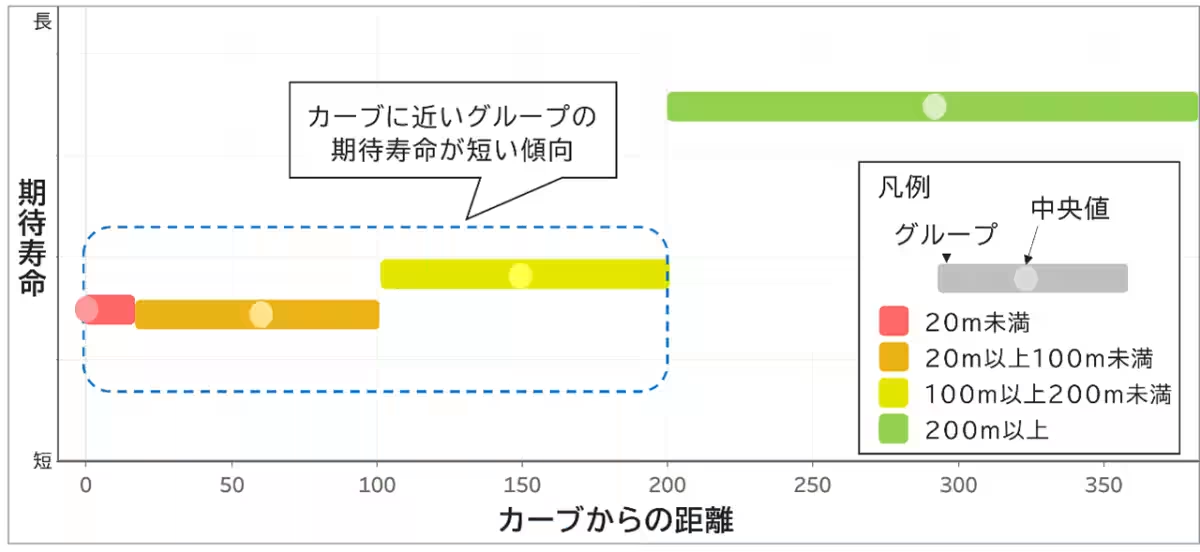
Leveraging historical inspection data held by Kyoto Prefecture, NTT Docomo Solutions conducted a thorough analysis to adapt their mixed Markov deterioration prediction hazard model, initially developed for the roads and bridges sectors, to sewer conditions. Through this analysis, the researchers identified areas prone to more rapid deterioration and analyzed factors affecting lifespan, resonating with managers’ experiential observations.
Key Outcomes:
- - Estimated zones vulnerable to faster deterioration based on historical inspection data.
- - Provided insights into future health trends of sewer lines through expected lifespan calculations.
- - Suggested that curves in pipe routing could significantly influence deterioration rates, as evidenced through data analysis.
Conducting Further Validations
Moving forward, the insights gained from this project will require further validation to confirm the applicability of the methodologies involved in various real-world scenarios. NTT Docomo Solutions aims to continue partnerships to facilitate the enhancement of sewer infrastructure monitoring and maintenance, extending these innovative practices across municipal and management sectors.
Conclusion
The fusion of AI and robotic technologies marks a significant stride towards improving public safety and infrastructure resilience in wastewater management across Japan, particularly in Kyoto. This initiative exemplifies how collaboration and innovation can address critical challenges in aging infrastructure and set the stage for more efficient urban management practices in the face of ongoing structural challenges.
Topics Consumer Products & Retail)




【About Using Articles】
You can freely use the title and article content by linking to the page where the article is posted.
※ Images cannot be used.
【About Links】
Links are free to use.