



Tokyo Transit Expands Touch Payment Service with Major Card Companies
Expansion of Touch Payment Transit Service in Tokyo
Starting September 10, 2023, Tokyo's transit system, operated by the Tokyo Metropolitan Bureau of Transportation, will expand its pilot program for touch payment services. This initiative, leveraging the "stera transit" solution developed by Sumitomo Mitsui Card Company, aims to enhance the convenience and accessibility of public transport for both residents and tourists.
Initially launched in December 2022, the touch payment service was made available at 26 stations along the Toei Asakusa Line and Oedo Line. With the upcoming expansion, the service will be accessible at 55 stations, representing over half of the entire network's 106 stations. This enhancement not only promotes cashless transactions but also aims to facilitate easy access for foreign travelers who may not possess local transportation IC cards. The full rollout across all stations is projected within the fiscal year 2023.
How the Touch Payment System Works
Passengers can use any contactless payment card—credit, debit, or prepaid—or a smartphone with the appropriate digital wallet enabled. By simply tapping their card or device on designated readers when entering or exiting the stations, users can seamlessly enjoy their travels without the need for cash or tickets.
Utilizing Major Payment Brands
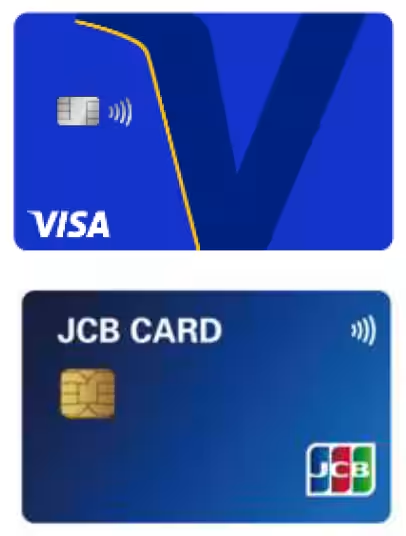
The service supports a variety of major payment brands including Visa, Mastercard, JCB, American Express, Diners Club, Discover, and UnionPay. This diverse range ensures that a broad segment of the public can access the service.
List of Expanded Stations
- - Toei Asakusa Line: 17 stations now include Shinjuku-nishiguchi, East Shinjuku, and the iconic Asakusa station among others.
- - Toei Oedo Line: The service expands significantly from 13 to 37 stations, adding bustling areas like Roppongi, Aoyama-itchome, and Shinjuku, further enhancing connectivity.
- - Toei Mita Line: Continues to serve the single station of Mita.
Partnering Companies and Their Roles
This initiative is a collaborative effort involving multiple organizations with distinct roles:
- - Tokyo Metropolitan Bureau of Transportation: Operates the railway and manages the installation of touch payment systems.
- - Sumitomo Mitsui Card Company: Provides the stera transit platform and aids in implementing cashless payment solutions.
- - JCB: Supports the introduction of cashless solutions and promotional activities for major card brands.
- - Nihon Signal and Omron Social Solutions: Responsible for developing the touch payment-compatible ticket gates.
- - QUADRAC: Offers a SaaS platform for payment and authentication systems for transportation operators.
Advantages of Touch Payment
The touch payment system harnesses internationally recognized security certification technologies, allowing for quick and secure transactions without the need for signatures or PINs—making the experience efficient and user-friendly. In addition to public transport, this payment method is increasingly adopted in various retail environments like convenience stores, restaurants, and supermarkets, illustrating the growing demand for cashless solutions in daily life.
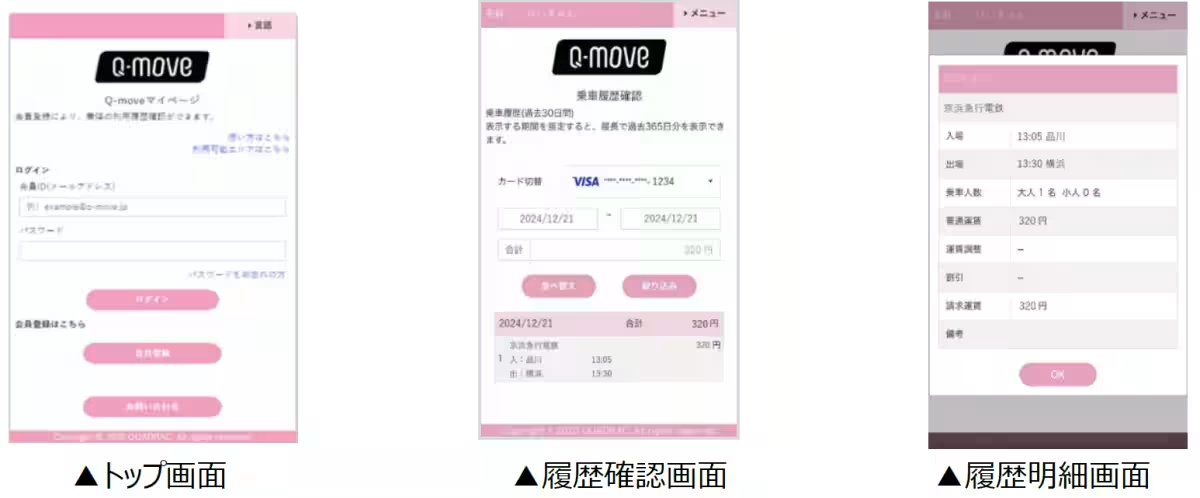
For users looking to track their transaction history, QUADRAC provides access via their Q-move website, enabling users to manage their transactions conveniently.
Looking Ahead
As the cashless trend continues to grow, the stera transit payment system promises to not only enhance everyday travel experiences in Tokyo but also contribute significantly to creating a finely-tuned landscape for future smart cities and mobility-as-a-service (MaaS) solutions. By 2024, users throughout Japan can expect to benefit from expanded cashless transit options, aligning with global trends in urban mobility.
This initiative marks an important step for Tokyo in accommodating both locals and international tourists, making public transportation not merely a means of travel, but a more integrated part of daily life.

Topics Other)
【About Using Articles】
You can freely use the title and article content by linking to the page where the article is posted.
※ Images cannot be used.
【About Links】
Links are free to use.