



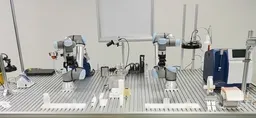
Meiji's Innovative Automation System for Raw Milk Quality Inspections Enhances Efficiency
Meiji's Revolutionary Automated System for Raw Milk Inspections
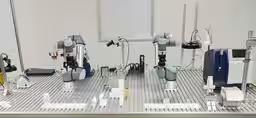
In response to the pressing societal issue of labor shortages, Meiji Co., Ltd. has taken a significant step forward by developing an automated system for quality inspections of raw milk, a crucial ingredient for milk and dairy products. This innovation, termed the "Raw Milk Quality Inspection Automation System," is set to be implemented in the company’s new factory in Hokkaido, scheduled for production to commence in March 2027.
Purpose of Implementation
Recent years have seen labor shortages become a critical issue in various industries, including those manufacturing milk and dairy products. The process of inspecting raw milk upon acceptance can be labor-intensive and time-consuming. With the new Hokkaido factory anticipated to handle the largest volume of raw milk intake for Meiji, there is an urgent need to enhance operational efficiency.
The primary goal of this new system is to improve production efficiency and establish a robust quality inspection regime that does not depend on the skill levels of individual workers. By automating tasks that previously required manual intervention, the company aims to maintain high-quality standards consistently. Furthermore, the accumulated data from inspections will eventually be utilized to visualize the condition of the raw milk and provide feedback to dairy farms, contributing to continuous improvement in raw milk quality.
Insights into the Automated System
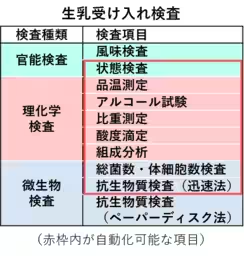
Quality is paramount when it comes to raw milk, as it directly affects the quality of end products. During the acceptance stage, inspections comprise a range of tests: sensory evaluations to assess flavors, physicochemical tests to analyze the component composition, and microbiological assessments. In total, ten distinct types of inspections are performed, making this one of the most comprehensive testing procedures within the manufacturing process.
For this initiative, Meiji has focused on automating eight of these test types that were deemed suitable for automation. The system has been designed to execute a series of inspections seamlessly. Notably, while the Hokkaido factory's system will slightly alter some automation methods for optimal operational efficiency, five specific test types will still be automated.
To ensure accuracy in inspections, the system will collect and analyze yearly data pertaining to variations in raw milk quality influenced by regional conditions, seasonal changes, and feed types. This data-driven approach aims to achieve consistent precision in quality assessments.
Another crucial aspect of the development process involved utilizing in-house resources. This choice not only ensures that the inspection know-how is accurately reflected but also helps in keeping development costs in check and fostering talent skilled in automation technology. Moreover, this structure allows for a quick adaptation to the needs of the implementation site and potential additions of new functionalities.
Expected Benefits of Implementation
The automation of raw milk quality inspections is projected to significantly reduce the annual labor hours required for these tasks by approximately 5,475 hours. Additionally, the new system promises a stable and accurate quality inspection process that does not rely on the varying skills or proficiency levels of individual workers, marking a major leap towards operational excellence.
By spearheading this technological advancement, Meiji aims not only to meet current market demands but also to pave the way toward a sustainable and efficient future for dairy production, ensuring that consumers continue to receive safe and high-quality products.
Topics Consumer Products & Retail)
【About Using Articles】
You can freely use the title and article content by linking to the page where the article is posted.
※ Images cannot be used.
【About Links】
Links are free to use.