



Transformations in Hometown Taxation: Upcoming Reforms and Their Impacts
Transformations in Hometown Taxation: Upcoming Reforms and Their Impacts
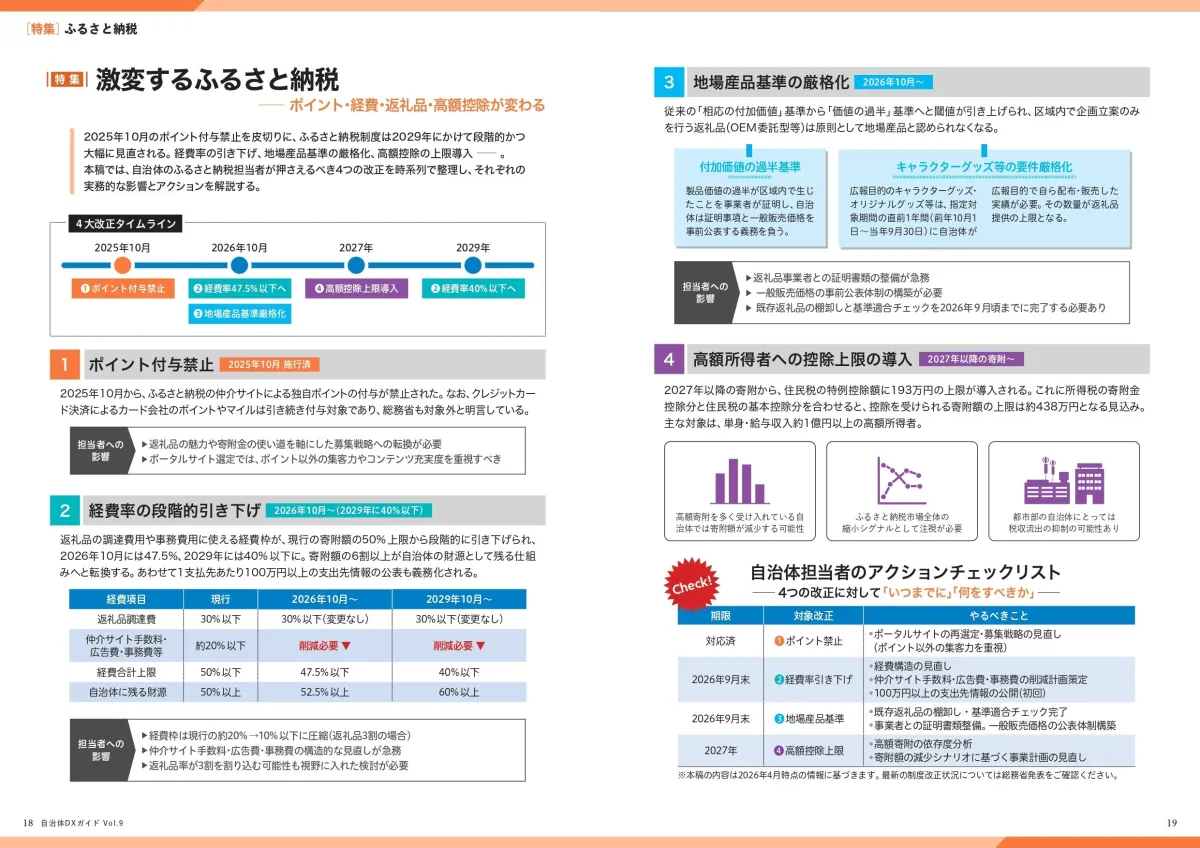
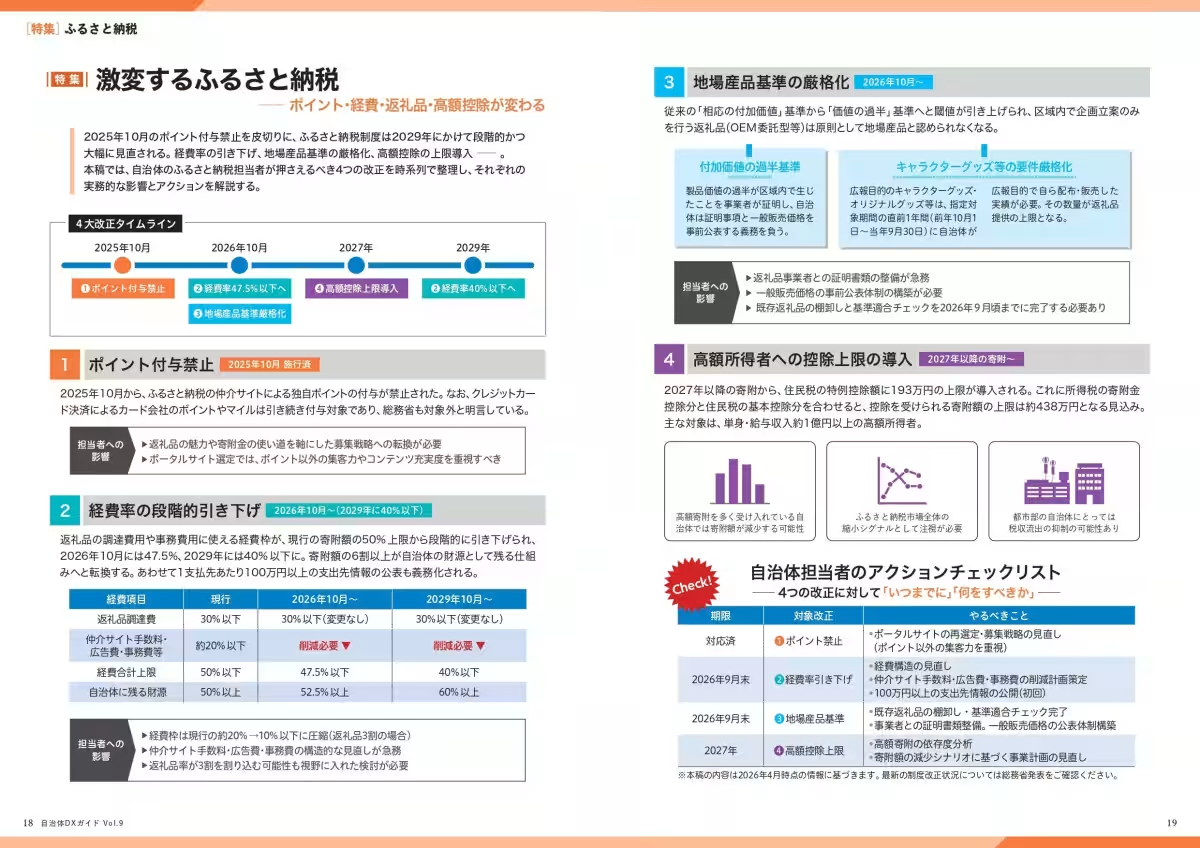
The General Association of Local Government Digital Transformation (GDX) has unveiled an insightful feature in its latest magazine, "Local Government DX Guide" Vol. 9, focusing on the dramatic changes coming to the hometown taxation system. Scheduled to come into effect between now and 2029, these significant reforms are detailed to assist local government officials in navigating their implications effectively.
Background: A Major Turning Point
The hometown taxation system, which has been in place since its inception, is entering a crucial phase of reform. The first notable change is the prohibition of point-based rewards for contributions, set to start in October 2025. Following this, there will be a series of extensive revisions scheduled to occur leading up to 2029, including a reduction in allowable administrative costs, stricter qualifications for local products, and the introduction of upper limits for high-income tax deductions. Local officials will need to grasp these changes and their potential impact on operations swiftly to align their strategies accordingly.
Overview of Major Reforms
The magazine feature categorizes four transformative reforms in the hometown taxation framework:
1. Ban on Point Rewards (Effective October 2025)
With this reform, platforms acting as intermediaries for contributions will no longer be able to offer their unique point systems. However, rewards from credit card transactions can still be accrued. This change necessitates a strategic pivot toward emphasizing the quality and utility of gifts offered to donors.
2. Gradual Reduction of Administrative Cost Limits (Starting October 2026)
The permissible administrative costs related to gift procurement will diminish from the current cap of 50% of the donation amount to 47.5% in 2026, and further down to 40% by 2029. This adjustment aims to ensure that more than 60% of the donation amount is retained as local government revenue, alongside a new requirement for the disclosure of expenditure details for payments exceeding 1 million yen.
3. Stricter Criteria for Local Products (Beginning October 2026)
In terms of product eligibility, the threshold will raise from a standard of "appropriate added value" to "more than half of the value" being generated locally. This means that rewards that are only planned within the region will generally no longer qualify as local products. Businesses will have to provide proof of local value creation, and local governments are obligated to announce both the proofs and standard retail prices ahead of time.
4. Introduction of Deduction Limits for High Earners (For Donations After 2027)
From 2027, a cap on the special deduction amount for local residents shall be set at 193,000 yen. Together with other basic deduction parts, the total deductible donated amount is expected to be approximately 4.38 million yen, primarily affecting high-income individuals earning around 100 million yen annually.
In addition to these reforms, the magazine includes a handy checklist for local officials, detailing what actions must be taken by when. This checklist covers reassessments of portal sites, strategies for recruiting donors, and evaluations of existing gift items to ensure compliance with new standards.
Online Seminar on July 15
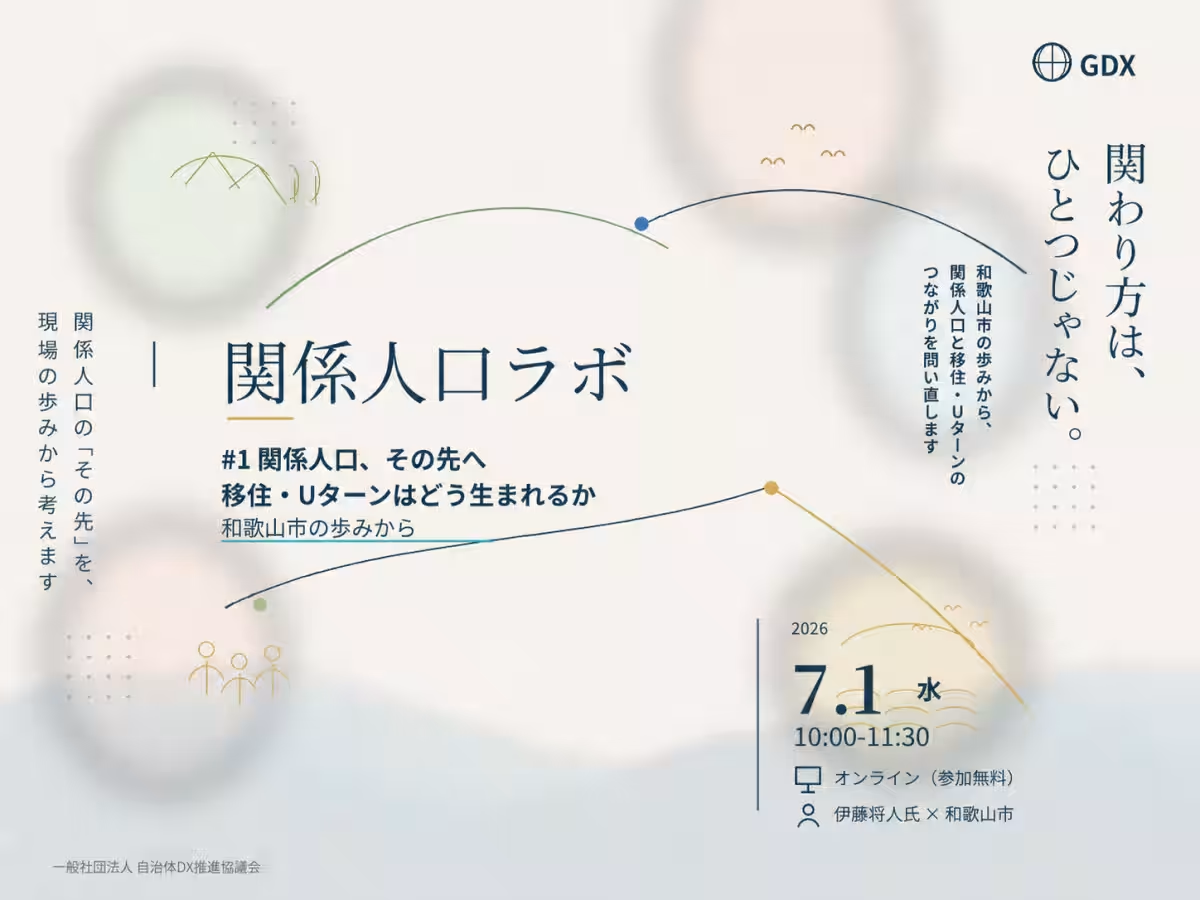
To further support local government officials, GDX will host an online seminar titled "Hometown Tax Condition Survey Report" on July 15, 2026. This seminar aims at sharing aggregated feedback from nationwide local government departments involved in hometown taxation practices, as well as showcasing beneficial initiatives from various organizations related to managing operations post-reform.
Program: Specific details will be provided closer to the seminar date through the GDX website and sign-up pages.
GDX's Commitment to Digital Transformation
The General Association of Local Government Digital Transformation (GDX) is dedicated to advancing the digital transformation of local governance, driving sustainable development within communities. By collaborating with municipalities, GDX aims to utilize digital technologies to address regional challenges and stimulate innovation, thereby fast-tracking regional revitalization through meaningful partnerships.
For more details regarding this release or seminar, please contact GDX Secretariat at:
- - Phone: 03-6683-0106
- - Email: [email protected]
- - Website: https://gdx.or.jp/


Topics Policy & Public Interest)
【About Using Articles】
You can freely use the title and article content by linking to the page where the article is posted.
※ Images cannot be used.
【About Links】
Links are free to use.