



Freelancing Trends in Manufacturing: Acceptance Criteria and Project-Based Approaches
The Growing Interest in Freelance Engineers
Introduction
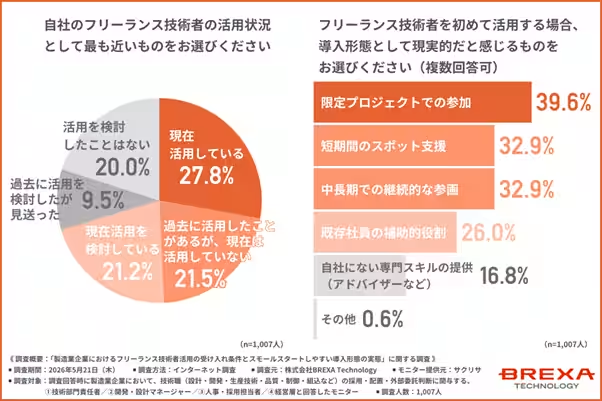
The manufacturing industry in Japan is currently facing a significant shortage of technical personnel, which has sparked interest in the utilization of freelance engineers. According to a survey conducted by BREXA Technology, which focused on key decision-makers within manufacturing companies, it was found that around 50% of the surveyed companies are either utilizing or considering the integration of freelance engineers into their workforce. This represents a shift in how companies view talent acquisition and resource management amidst ongoing labor shortages.
Survey Insights
Conducted in May 2026, the survey attracted responses from over 1,000 individuals involved in the hiring and allocation of technical positions. Approximately 27.8% of respondents currently utilize freelance engineers, while 21.2% are considering their use moving forward. Interestingly, a substantial 39.6% of companies expressed that they would prefer to start with limited projects when bringing freelancers into their operations. This suggests that a cautious approach is being favored as firms look to mitigate risks and develop robust acceptance frameworks.
Key Considerations for Integration
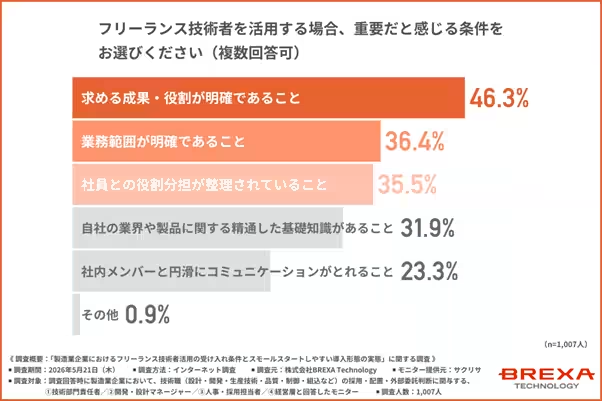
When evaluating how to effectively integrate freelance talent, the survey highlighted several conditions that companies deem essential. The most crucial factors include:
- - Clear definitions of roles and expected outcomes: 46.3% emphasized the need for clarity around the expected results and the roles of freelance engineers before entering into contracts.
- - Defined scope of work: 36.4% noted the importance of outlining the specific tasks assigned to freelancers.
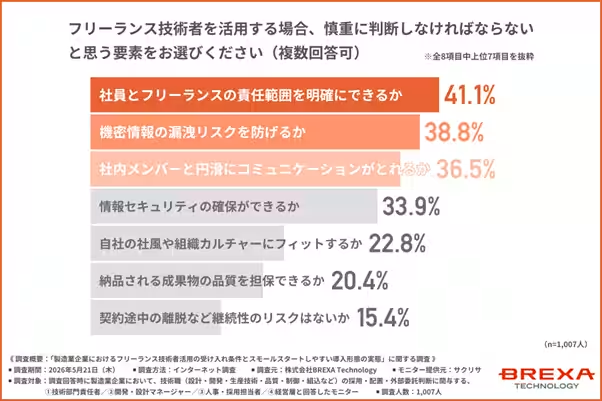
- - Role distribution between employees and freelancers: 35.5% of respondents indicated that clearly delineating responsibilities between full-time employees and freelancers is critical to avoid confusion.
With these guidelines in mind, companies are likely to find that establishing a clear framework can lead to smoother transitions and successful collaborations with freelance engineers.
Challenges and Considerations for Companies
Despite the positive outlook on incorporating freelance talent, challenges remain. Significant hurdles include:
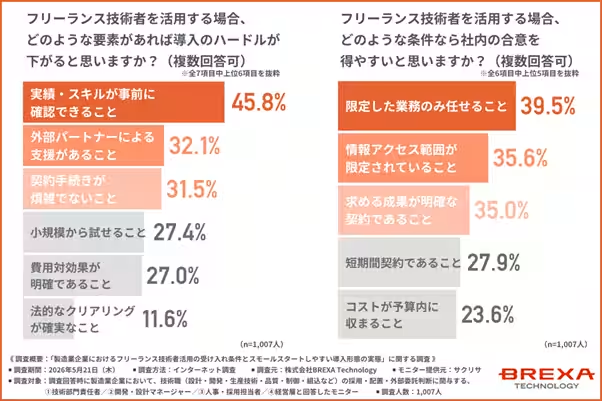
- - Verification of skills and past performance: Most companies expressed the need to ascertain the qualifications of freelance engineers before committing, underscoring the necessity for a vetting process.
- - Simplification of contract procedures: Streamlined contracting processes were cited as a way to facilitate easier integration, making it vital for companies to avoid cumbersome administrative work that could deter engagement.
- - Control over information access: Firms indicated that limiting information access for freelancers is critical to safeguard sensitive data while optimizing collaboration.
Preferred Areas for Freelance Engagement
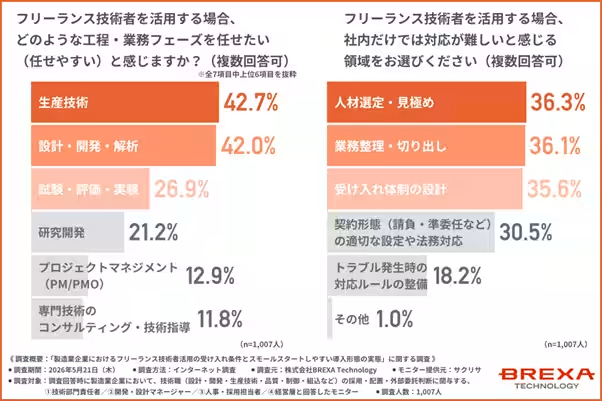
The survey further identified that firms are particularly interested in leveraging freelance engineers in two key areas:
1. Production Engineering (42.7%)
2. Design and Development (42.0%)
3. Testing and Evaluation (26.9%)
This preference showcases a need for specialized expertise in these domains, where immediate intervention from freelance engineers can help alleviate personnel shortages.
Conclusion
As the integration of freelance engineers into Japan's manufacturing sector continues to grow, companies must prioritize developing firm frameworks that facilitate effective collaboration. Organizations should be proactive in defining the roles, outcomes, and limits associated with freelance work and aim to mitigate risks through careful planning. External partners, like BREXA Technology, can play a pivotal role in this process by providing the necessary support in identifying and deploying freelance talent, as well as ensuring seamless integration into existing teams.
By addressing these challenges head-on and ensuring a structured approach to freelancing, manufacturing firms can position themselves to better navigate the evolving labor landscape while unlocking new avenues for innovation and productivity.


Topics Consumer Products & Retail)
【About Using Articles】
You can freely use the title and article content by linking to the page where the article is posted.
※ Images cannot be used.
【About Links】
Links are free to use.