



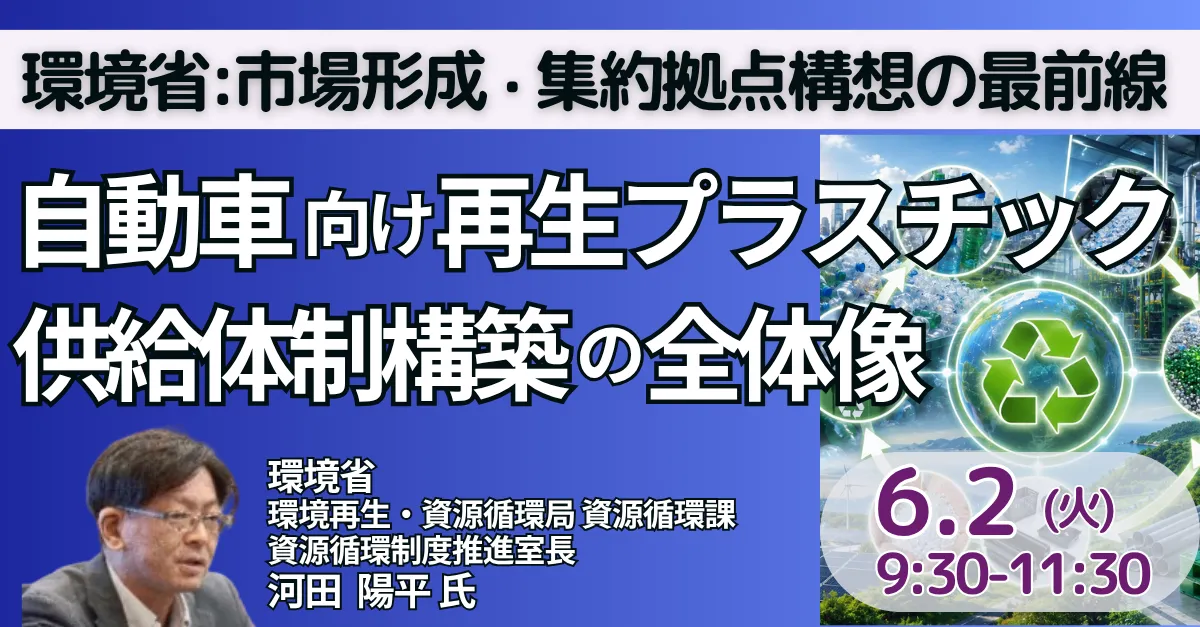
Exploring Strategies for Establishing a Circular Economy in Automotive Recycling: JPI Seminar Insights
Understanding the Future of Automotive Recycling
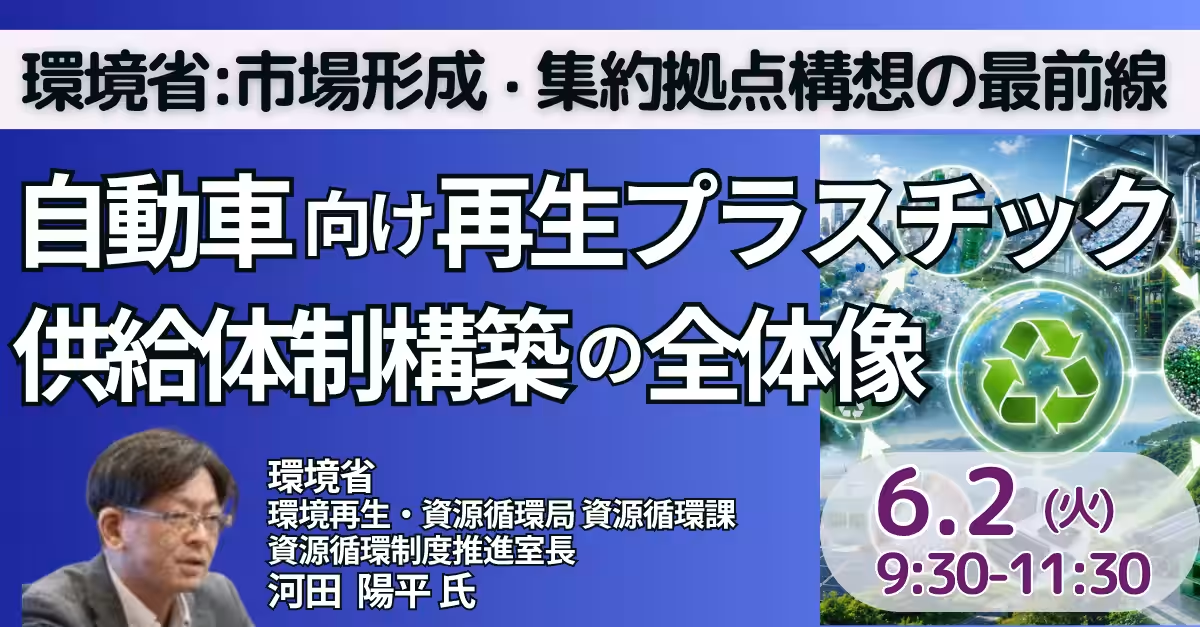
On June 2, the Japanese Planning Institute (JPI) will host a seminar that aims to outline the framework and strategies necessary for establishing a supply system for recycled plastics specifically designed for the automotive industry. Yohei Kawada, who is the head of the Resource Circulation Promotion Office at the Ministry of the Environment, will lead this important discussion.
Significance of the Seminar
As global environmental regulations tighten, particularly in Europe where proposals for mandatory minimum recycled content in automobiles have been introduced, the need for Japan's automotive industry to construct a robust recycled plastic market is more pressing than ever. The seminar will address how to bridge the gap between current production methods and the necessary changes to support sustainable practices in vehicle manufacturing.
What Attendees Will Learn
Participants will gain practical insights into:
- - The intricate designs of public-private partnerships necessary for establishing a recycled plastic market.
- - The concepts behind centralized locations that ensure a stable supply of materials for automotive recycling.
- - Actionable strategies to align current scenarios with desirable future outcomes based on gap analysis.
Target Audience
This seminar is tailored for professionals within various fields, including:
- - Automotive manufacturers and parts suppliers involved in procurement and environmental compliance.
- - Enterprises engaged in the production and recycling of recycled plastics.
- - Planning divisions related to resource circulation and circular economy initiatives.
- - Legal and corporate planning departments responsible for adhering to environmental regulations.
Seminar Overview
The JPI will detail efforts initiated by the ministry, particularly the establishment of a consortium launched in 2024 aimed at market development for recycled materials in vehicles. Participants will have the opportunity to discuss and inquire about the consortium’s approach to fostering collaboration among academia, industry, and government.
Program Highlights
1. Current state and future vision for recycled plastics in automotive applications.
2. Analysis of the existing market and a ‘business as usual’ (BAU) scenario.
3. Steps towards building a stable supply network of recycled plastics for the automotive sector.
4. Open question-and-answer session.
5. Networking opportunities for participants.
Attendees can expect to engage in direct conversations with the speaker, which is often challenging in typical business settings, alongside networking with others in diverse industries, paving the way for new collaborations and practical information exchange.
Participation Options
The seminar will be available in various formats:
- - In-Person Attendance: Exclusive to those present, with no access to archiving.
- - Live Streaming: Also excludes archive access.
- - Archived Access: Available post-event for those who register.
Fees
The participation cost is ¥37,930 (tax included) per individual, with a unique provision allowing one companion from the same organization to attend for free (registration required). Notably, representatives from local public organizations can register up to two members for only ¥11,000 (tax included), applicable for in-person or live streaming format.
For further details and registration, attendees can visit this link.
Post-Seminar Engagement
After the seminar, participants will have the chance to address questions to the speaker and establish lasting relationships within the network, aiding new business ideas and collaborations.
About JPI
For over fifty years, the Japanese Planning Institute has served as a vital knowledge conduit between the government, private sector, and academic institutions, offering exclusive seminars that provide actionable insights to senior managers and executives engaged in national projects and policies.

Topics Other)
【About Using Articles】
You can freely use the title and article content by linking to the page where the article is posted.
※ Images cannot be used.
【About Links】
Links are free to use.