




The Launch of a New Nursing and Multidisciplinary Collaboration Addition for Medical Care
A Turning Point in Japan's Healthcare System?
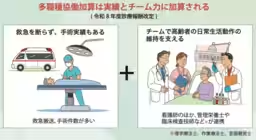
Japan’s healthcare landscape is undergoing significant transformation with the introduction of the Nursing and Multidisciplinary Collaboration Addition in fiscal year 2023. This new reimbursement mechanism aims to enhance the quality of care through the effective collaboration of various healthcare professionals.
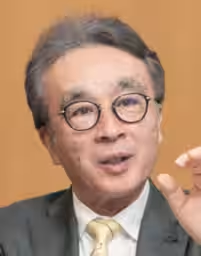
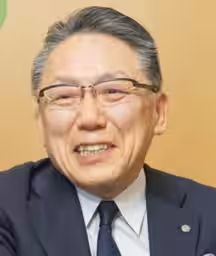
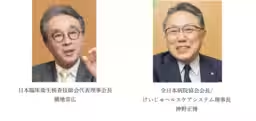
A recent dialogue between Masahiro Jinno, the Chairman of the Japan Hospital Association, and Tsunehiro Yokochi, President of the Japan Association of Medical Technologists (JAMT), highlighted the critical significance of this collaboration in the realm of patient care. Their insights were featured in the July issue of the monthly magazine “Wedge”. Doctors, nurses, and clinical technologists must work together more proactively to ensure patients receive comprehensive care tailored to their individual conditions.
Enhancing the Quality of Healthcare through Collaboration
The Nursing and Multidisciplinary Collaboration Addition has been designed to foster a teamwork-based approach in medical settings. By facilitating communication among various specialists, the quality of medical services can be improved. As Japan faces an aging population and a growing demand for diverse medical needs, it is crucial for healthcare professionals to collaborate effectively to optimize patient outcomes and expedite recovery times.
Experts argue that a multi-faceted approach pushes healthcare providers towards creating a structure capable of delivering prompt and efficient care. This addition not only aims to streamline patient management but also allows different professions to share their expertise, ultimately leading to a more holistic treatment plan tailored to the patient's needs.
The Financial Challenge Facing Hospitals
Despite the promising advancements brought by the new addition, the financial realities of hospital management in Japan paint a stormy picture. Approximately 70% of hospitals are operating at a deficit, a situation exacerbated by the fixed national reimbursement prices for medical services set by the government. This rigid pricing structure severely restricts hospitals from adjusting their fees in accordance with rising operational costs, such as salaries and medical supplies, triggering an acute financial strain across the healthcare sector.
Furthermore, despite the periodic alterations to reimbursement schemes occurring every two years, economic factors like inflation and increasing labor costs often go unaddressed, perpetuating the deficit woes within Japanese hospitals. Emergency and acute care facilities face even more pressing challenges due to the increasing costs of technology and pharmaceuticals, much of which is sourced from abroad. Consequently, the financial burden has raised questions on the sustainability of the current operational models in hospitals.
Empowering Patients through Clinical Technologists
In responding to these challenges, the role of clinical technologists emerges as a vital component in the patient care continuum. Within multi-disciplinary teams, these technologists not only contribute to the technical aspects of care but also play an instrumental role in empowering patients to manage their health. For instance, hospitals adopting the multidisciplinary cell approach have demonstrated a reduction in average hospitalization days from 13 to 11 days. This shift underscores the effectiveness of collaborative frameworks in enhancing patient recovery.
Clinical technologists help in interpreting laboratory data, guiding patients in self-management strategies, and promoting lifestyle modifications that foster better health outcomes. Their unique position enables them to bridge gaps between technical care and patient education, exemplifying the importance of their expertise in the evolving healthcare environment.
Conclusion
The establishment of the Nursing and Multidisciplinary Collaboration Addition heralds a new chapter in Japan's medical framework. With a pressing need for coordination amid the complexities of modern healthcare, this initiative encourages an integrated approach, aligning the skills of clinical professionals to better serve patients. This might be the beginning of a significant reformation aimed at addressing not just the individual sectoral pressures, but the healthcare system's sustainability as a whole.
More details can be found in the July edition of “Wedge” and on the JAMT website. Engaging different healthcare professionals is essential to ensuring the effective execution of these new measures and ultimately leads to improved patient care outcomes.
For more information about the Japan Association of Medical Technologists and their ongoing initiatives, please visit JAMT's official website.


Topics Health)
【About Using Articles】
You can freely use the title and article content by linking to the page where the article is posted.
※ Images cannot be used.
【About Links】
Links are free to use.