



Okayama University Hosts Engineering Experiment Workshop for Elementary Students in 2026
Okayama University Hosts Engineering Experiment Workshop for Elementary Students in 2026
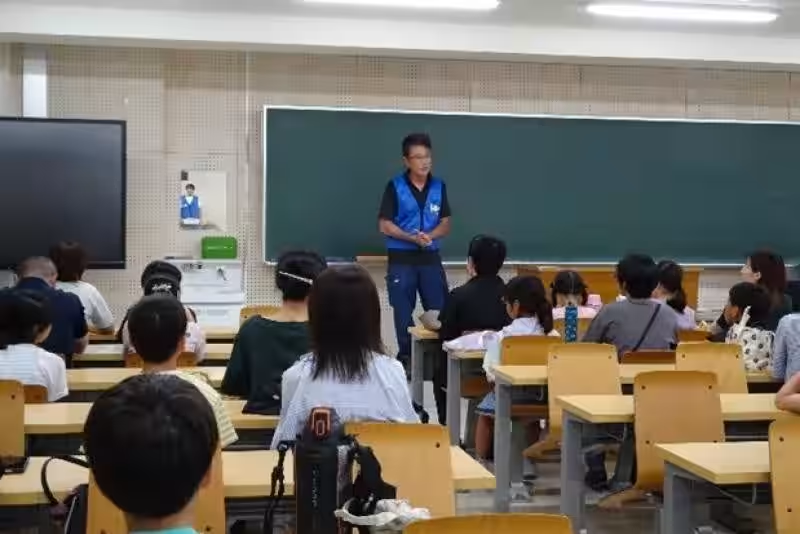
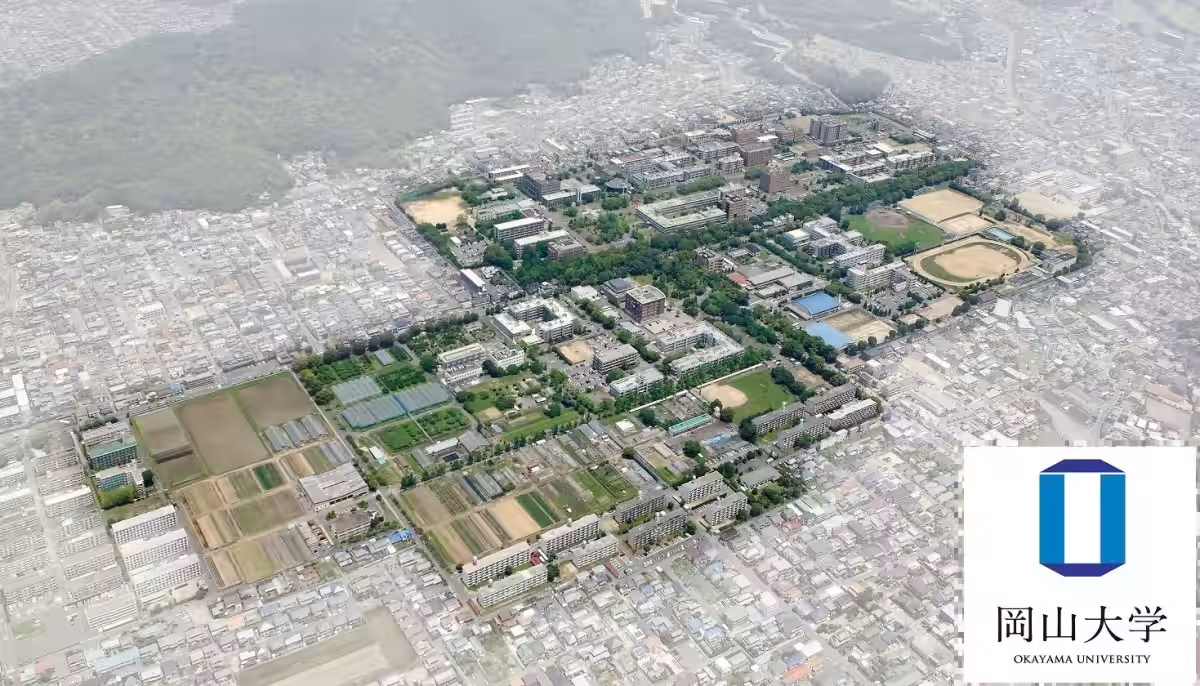
On September 2, 2026, Okayama University, located in Okayama City, will host the 17th edition of its engineering experiment workshop aimed at elementary school students, particularly targeting those in grades 4 to 6. This event, organized by the university's Comprehensive Technology Department, will take place on the Tsushima campus and promises exciting hands-on activities for budding engineers.
Overview of the Workshop
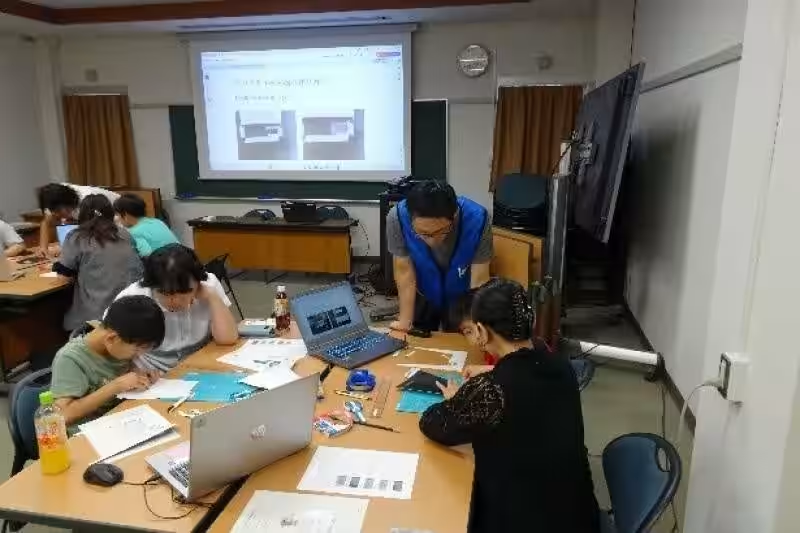
This year's workshop features three main themes: "Let’s Build a Spectrometer," "Create an Original Piggy Bank with a 3D Printer," and "Let’s Make an Eraser." Each theme has a maximum capacity of 10 participating students, and despite receiving 63 applications, a lottery system was used to select participants. Due to some absences, 27 students along with their families will engage in the hands-on activities on the day of the workshop.
Let’s Build a Spectrometer
In the first session, the workshop will offer kids the chance to explore the fascinating world of light. Guided by experienced technology staff, they will learn about the spectrum of light and how to construct their very own spectrometer. Participants will cut various parts from cards using scissors and cutting knives, adhere diffraction gratings, and a scale for measuring wavelengths, ultimately assembling their creations into a box-like structure. The children will have the chance to personalize their spectrometer by painting and decorating it, resulting in a unique device they can call their own. As a highlight, they will observe different types of white light sources, including natural sunlight, incandescent bulbs, fluorescent lights, and LED lights, witnessing firsthand how white light splits into a rainbow of colors.
Create an Original Piggy Bank with a 3D Printer
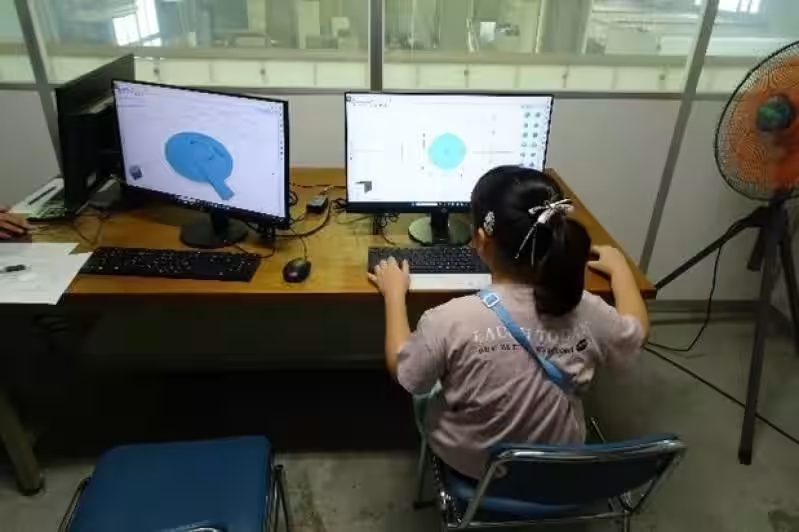
The second session focuses on the creative use of technology as participants design their piggy banks. With the guidance of technology staff and technical researchers, they will alternate between designing a lid and coloring the main body of their piggy bank. Utilizing simple modeling software, they will craft their original designs, applying colorful acrylic paints and markers for personalization. The enthusiastic questions from children and parents regarding the 3D printer during demonstrations reflect a keen interest in this innovative technology.
Let’s Make an Eraser
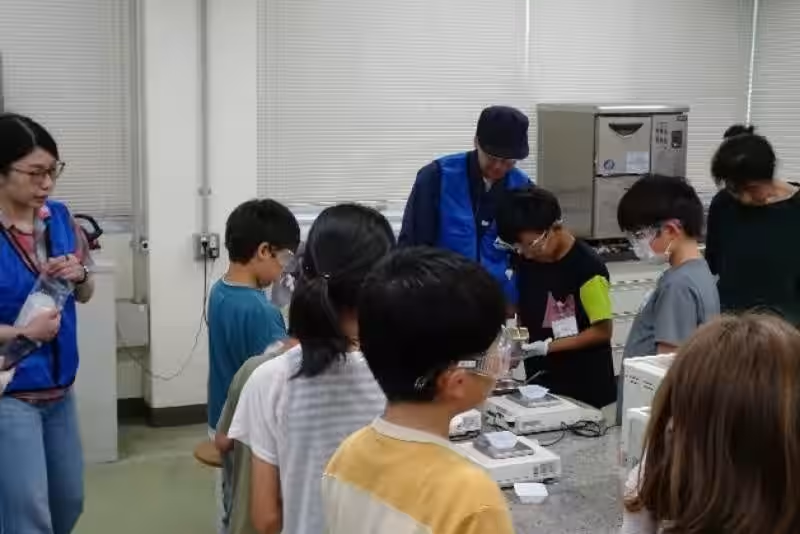
The final session, conducted with the support of Tako Uchihara, a lecturer in the Environmental Life Sciences domain at Okayama University, allows kids to make their erasers. Participants will learn to mix PVC, plasticizers, calcium carbonate, and fragrance, and then observe the fascinating process of vacuum degassing as bubbles form and the mixture expands. The final step involves pouring the mixture into unique silicone molds, heating them for 30 minutes at 150 degrees Celsius, and cooling them in ice water to create personalized erasers.
A Commitment to Science Education
According to Sato Norihito, the head of the Comprehensive Technology Department and Vice President of Okayama University, this year's workshop has been made possible through the efforts of many involved, and it serves to nurture excitement and curiosity for science among children. He emphasizes the importance of giving back to society through the knowledge and skills gained from such educational events. The department is committed to making science approachable and enjoyable for younger generations, focusing on themes that resonate with them.
Additionally, these community outreach efforts are not constrained to the university grounds; they extend beyond to various locations, reflecting the university's active role in promoting scientific literacy. Overall, Okayama University continuously strives to be a hub of innovative research and a partner to the community, fostering a spirit of collaboration and discovery among the next generation.
Expect more inspiring initiatives from Okayama University’s Comprehensive Technology Department as they look to contribute positively to society and promote scientific engagement in new and exciting ways.


Topics Other)


【About Using Articles】
You can freely use the title and article content by linking to the page where the article is posted.
※ Images cannot be used.
【About Links】
Links are free to use.