




Exploring the Dual Nature of Japanese IT Professionals: Hungry for Salary Yet Seeking Stability
Understanding the Contradictory Desires of Japanese IT Talent
In a revealing survey conducted by Randstad, a leading human resources service provider, insights into the Japanese IT job market have shed light on the conflicting priorities and desires of IT professionals in Japan. The survey, titled "Randstad Employer Brand Research 2026 (IT)," highlights a notable trend: while these professionals exhibit a significantly heightened focus on salary, they also have an enduring desire for job stability and social recognition. This duality presents a complex landscape for employers seeking to attract and retain top talent.
Salary Focus: The Driving Force for Japanese IT Professionals
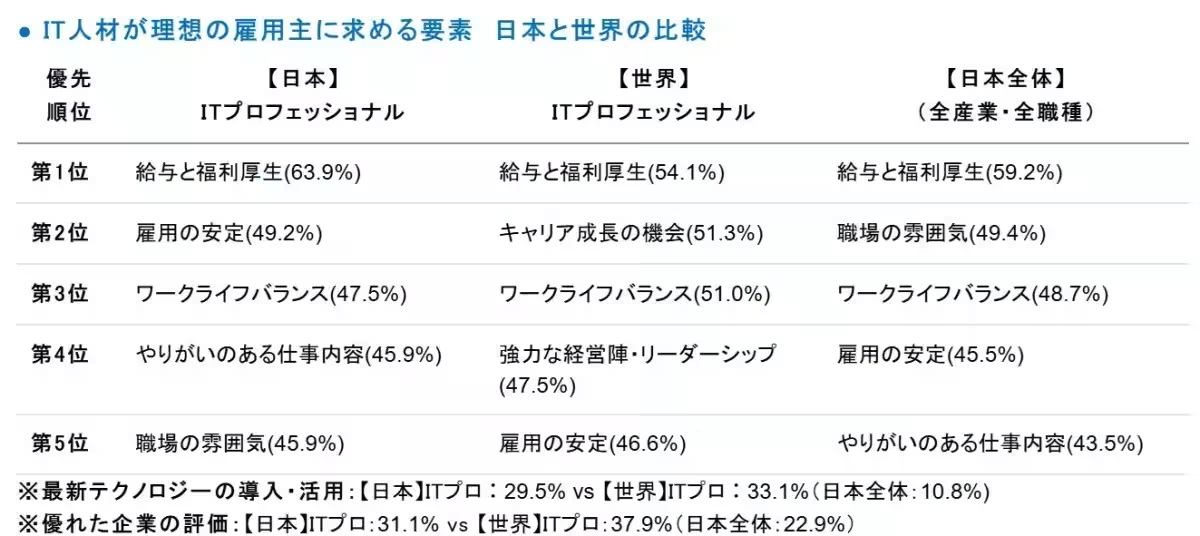
With a salary importance score of 63.9%, Japanese IT workers vastly surpass their global counterparts, who average 54.1%, as well as the national average of 59.2%. For many in this field, remuneration transcends mere livelihood; it has become a primary indicator of their market value. As awareness increases that "IT skills equal assets," companies that fail to offer competitive global compensation may find themselves losing candidates in an increasingly competitive market. This ambitious mindset among IT professionals serves as a vital force driving the stagnating Japanese economy forward.
The Shift in Priorities: Growth vs. Stability
Interestingly, the survey showcases a disconnect in priorities between Japanese IT professionals and their global counterparts. While the global IT workforce prioritizes career growth at 51.3%, Japanese professionals place job stability in a close second at 49.2%. The workplace atmosphere, once considered vital in Japan (ranked second at 49.4%), is now deprioritized by IT workers who ranked it fifth at 45.9%. This indicates a willingness to forsake traditional comfort zones for environments that nurture professional expertise. The ongoing struggle symbolizes a pressing instinct for defense among professionals in a society where skill-based evaluations are still evolving.
Modern Technology: An Essential Benefit
The embrace of cutting-edge technology is paramount for IT professionals. Their interest in the implementation and utilization of the latest technologies stands at 29.5%, a staggering 2.7 times higher than the general Japanese workforce's average of 10.8%. For engineers, who recognize that technological obsolescence equates to a loss of market value, a robust development environment is not just advantageous—it is essential. Furthermore, their pursuit of superior company evaluations, which exceeds the national average (31.1% vs. 22.9%), corroborates their preference for engaging in advanced projects that make an impact on society.
Strategic Recommendations for Employers
To address the intricate balance between the growth-oriented and stability-seeking mindset of Japan's IT talent, employers need to construct a "next-generation EVP (Employee Value Proposition)" that transcends traditional employment practices. Here are five strategic recommendations for attracting and retaining exceptional IT talent:
1. Enhance Competitive Compensation: Continuously align salary and incentive strategies with labor market realities to maintain competitiveness.
2. Visualize Career Paths: Clearly outline growth opportunities and advancement steps to meet IT professionals' expectations for career growth.
3. Implement Work-Life Balance: Establish flexible work arrangements, appropriate workload management, and daily support for well-being.
4. Blend Digital Hiring with Personal Interaction: Combine efficiency in hiring processes with meaningful, direct communication with candidates.
5. Tailor EVP Strategies: Create personalized value propositions that cater to varied generations and career stages rather than adopting a one-size-fits-all approach.
Conclusion
As the workforce landscape evolves, organizations must pivot from the traditional lifetime employment model towards skill-based stability, focusing on employee employability. The ability for professionals to choose their paths while having the assurance that their skills remain relevant is crucial. This autonomy fosters a compelling connection between professionals and organizations, establishing a resilient bond for the future.
Through these insights and recommendations, employers can better navigate the complexities of the Japanese IT job market, ensuring they not only attract but retain top-tier talent in a rapidly changing environment.


Topics Consumer Technology)
【About Using Articles】
You can freely use the title and article content by linking to the page where the article is posted.
※ Images cannot be used.
【About Links】
Links are free to use.