



Advanced Technology for Energy Networks: A New Era of Wind and Solar Power Development
Advanced Technology for Energy Networks
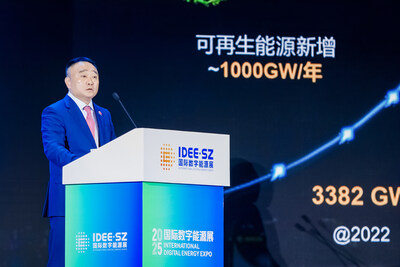
The third International Digital Energy Expo (IDEE) commenced today in Shenzhen, uniting industry leaders, organizations, and experts to discuss the future of digital energy. Among the highlights was a keynote speech by Zhou Jianjun, the Vice President of Huawei, focusing on technology that shapes energy networks capable of adapting to various scenarios. His presentation emphasized the critical growth of wind and solar energy as primary power sources and the imperative for carbon neutrality that has moved beyond mere consensus into actionable strategies.
As global reliance on wind and solar power increases, the pressure on existing energy networks intensifies, creating unique challenges due to the fluctuating nature of these renewable sources. Huawei's solutions aim to address these issues through technological innovation and expert knowledge, strengthening energy networks' resiliency and efficiency. The company advocates for a shift from merely monitoring energy systems to actively shaping them, positioning itself at the forefront of the energy sector's evolution.
To achieve this, Huawei has developed a robust infrastructure featuring high-capacity power supply devices, advanced digital control systems, and innovative algorithms, resulting in the implementation of six key network functionalities. These include short-circuit levels, virtual inertia support, and rapid frequency response, all designed to enhance the production, transmission, distribution, and use of energy. Such innovations promote the transition from energy storage systems (ESS) to integrated models of photovoltaic and storage solutions.
Globally, energy network creation technologies are being deployed commercially, setting standards for worldwide ecological transformations. In the Middle East, Huawei's systems contributed to building the largest renewable-powered microgrid, operational for two years amid harsh weather, ensuring energy supply reliability. In China, projects like the 30 MW PV combined with 6 MW/24 MWh ESS have altered energy output capacity and efficiency metrics considerably, achieving a boost from 1.5 MW to 12 MW output, setting new benchmarks in the process.
Moreover, the integrated photovoltaic and storage system launch in the Philippines is pivotal in addressing energy shortfalls. This project includes a 3.5 GW photovoltaic capacity alongside a 4.5 GWh storage system, empowered by Huawei's coordinated PV+ESS technology, ensuring stable output for up to 13 hours daily.
To further leverage the integration of key technologies, Huawei has innovated the first 'device-edge-cloud' solution, enabling intelligent management of power plants throughout their lifecycle. This framework minimizes maintenance needs while maximizing energy trading revenues. Enhanced artificial intelligence integration has significantly reduced deployment errors and improved operational efficiency, with reported increases of 10% in operational revenues.
As Huawei Digital Power advances its commitment to quality, it prioritizes the highest standards throughout the product lifecycle. Ongoing collaboration efforts with industry stakeholders aim to elevate market standards, optimize energy market mechanisms, and expand renewable energy's share in the global energy landscape. With carbon neutrality as a driving force, Huawei is dedicated to spearheading the digital transformation and intelligent technology evolution in the energy sector, leading toward an era of sustainable automation.
Topics Energy)
【About Using Articles】
You can freely use the title and article content by linking to the page where the article is posted.
※ Images cannot be used.
【About Links】
Links are free to use.