




Unlocking the Reasons for Customer Satisfaction in the Age of AI
Understanding Customer Satisfaction
In the age of big data and AI, businesses are inundated with metrics—purchase history tells us what products are being bought, while access logs reveal where customers drop off on a website. However, the more complex question of why a customer feels a certain way often remains shrouded in mystery. In this context, Mindshare has launched an official note titled Strategic Satisfaction Surveys, aiming to unveil the less visible but crucial indicators of satisfaction that lead to business growth.
The Birth of the Official Note
Launched on September 1, 2026, this official note aims to provide insights and tools for understanding satisfaction across various fronts, including customer satisfaction (CS), employee satisfaction (ES), and partner satisfaction (PS) surveys. With 35 years of expertise in marketing, Mindshare seeks to dissect the concept of satisfaction in a data-driven world, presenting a fresh perspective on why companies must prioritize this subject now more than ever.
Why Focus on Satisfaction Now?
Merely analyzing quantifiable data will tell you what was purchased or when a customer left your site, but it provides no context to the reasoning behind these actions.
Some crucial questions remain: Why do customers continue to choose a particular brand? What factors lead to cognitive dissonance, where a customer is not dissatisfied but still chooses to disengage? Why does a well-structured workplace still leave employees feeling stifled?
Ultimately, while behavioral data provides results, it often neglects to account for the expectations or experiences that shape an individual's feelings. Therefore, Mindshare posits that the elusive metric that can clarify these reasons is satisfaction. This emotional state is built upon a series of small experiences—pre-transaction expectations, situational context, personal interactions, and supportive responses when faced with challenges.
The Importance of Experiential Value
In recent years, businesses have become increasingly pressed to evaluate not just the value they offer but also the experiences they curate. This current landscape compels enterprises to critically assess what values they hold dear and which customer experiences they seek to uphold. By cultivating satisfaction, companies can create a compelling case for why they should be chosen amidst stiff competition.
Main Themes of the Official Note
1. The Textbook of Satisfaction: Why does customer satisfaction lead to repeat purchases and referrals? How does employee satisfaction influence customer satisfaction? What happens when partner satisfaction is overlooked? Marketing professionals will dissect the foundations of satisfaction in this series.
2. Designing Effective Surveys: Common pitfalls like only asking agreeable respondents, using outdated questions, or lacking clarity on how to use results can hinder effective satisfaction surveys. Mindshare will share insights to help business leaders design surveys that translate results into actionable insights.
3. Revisiting Satisfaction in the AI Era: With AI taking on more operational roles, how must businesses adapt their understanding of value? What experiences should organizations retain, and how can they craft an evolving framework for satisfaction? Marketers will evaluate the implications in today’s environment.
In future installments, Mindshare plans to illustrate practical case studies of strategic satisfaction surveys, share results from independent research conducted, and include interviews with representatives from companies working to improve their satisfaction levels.
Upcoming Articles
The initial publication list includes:
- - September 1: Introduction—Who are we and why focus on satisfaction now?
- - September 1: The Role of Satisfaction Surveys in AI—What behaviors data fails to reveal.
- - September 3: Five Common Mistakes in Satisfaction Surveys—Why some companies fail to enact change.
- - September 4: Understanding B2B Customer Satisfaction—What distinguishes repeat clients?
Target Audience
This note aims not just at satisfaction survey managers but also at anyone interested in reflecting on their organizational practices. Are you grappling with a lack of continuing business despite no significant complaints? Do you question whether your self-assessed strengths align with customer and employee feedback? This note promises to be a collaborative platform for exploring satisfaction in the workplace.
The Nature of Strategic Satisfaction Surveys
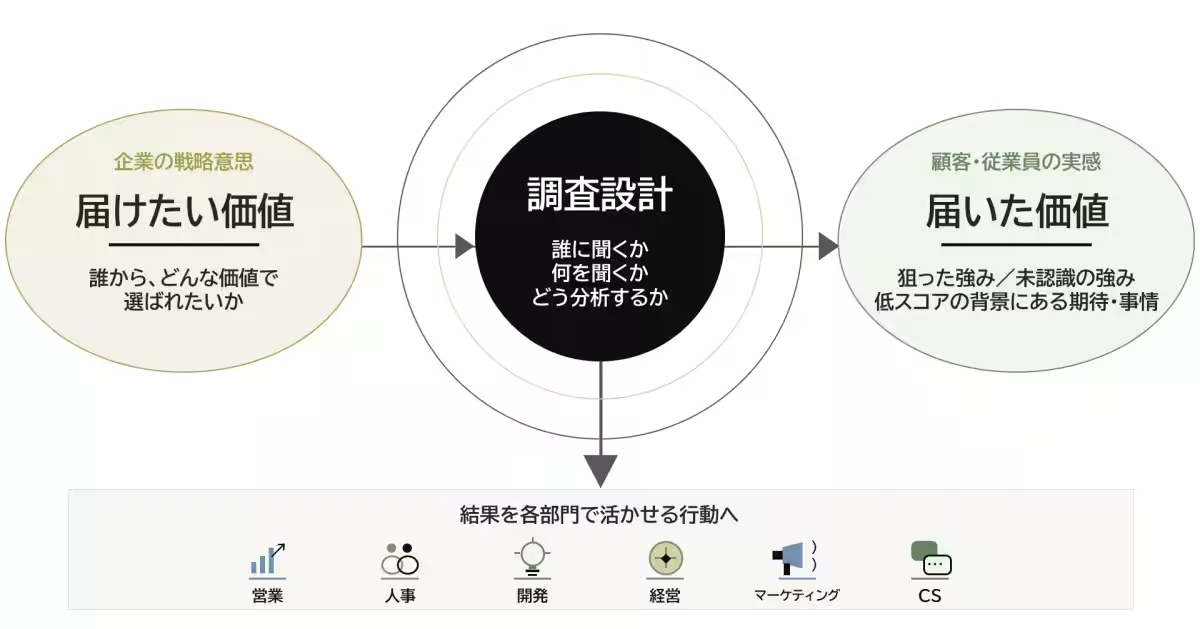
Mindshare’s strategic satisfaction surveys differ from standard models, which often solely report existing satisfaction levels. Our approach emphasizes designing surveys based on the company's objectives and business strategy to ensure results lead to actionable improvements. We consider the comprehensive cycle from collecting data to incorporating insights into various operational sectors—sales, HR, marketing, and beyond. Our marketing expertise allows us to accompany organizations from analysis through implementation, serving as a dedicated partner in enhancing satisfaction.






Topics Business Technology)
【About Using Articles】
You can freely use the title and article content by linking to the page where the article is posted.
※ Images cannot be used.
【About Links】
Links are free to use.