



New Discoveries in AGA: Hair-Related Molecule Reductions Found
New Discoveries in AGA: Hair-Related Molecule Reductions Found
Aderans Co., Ltd., a company dedicated to enhancing wellness across hair, beauty, health, and medical sectors, has made a significant breakthrough in understanding androgenetic alopecia (AGA), commonly known as male pattern baldness. Their research uncovered a notable decrease of the hair-related molecules WNTLESS (WLS) and WNT3 in the hair shaft of patients affected by AGA, particularly in the top part of the scalp.
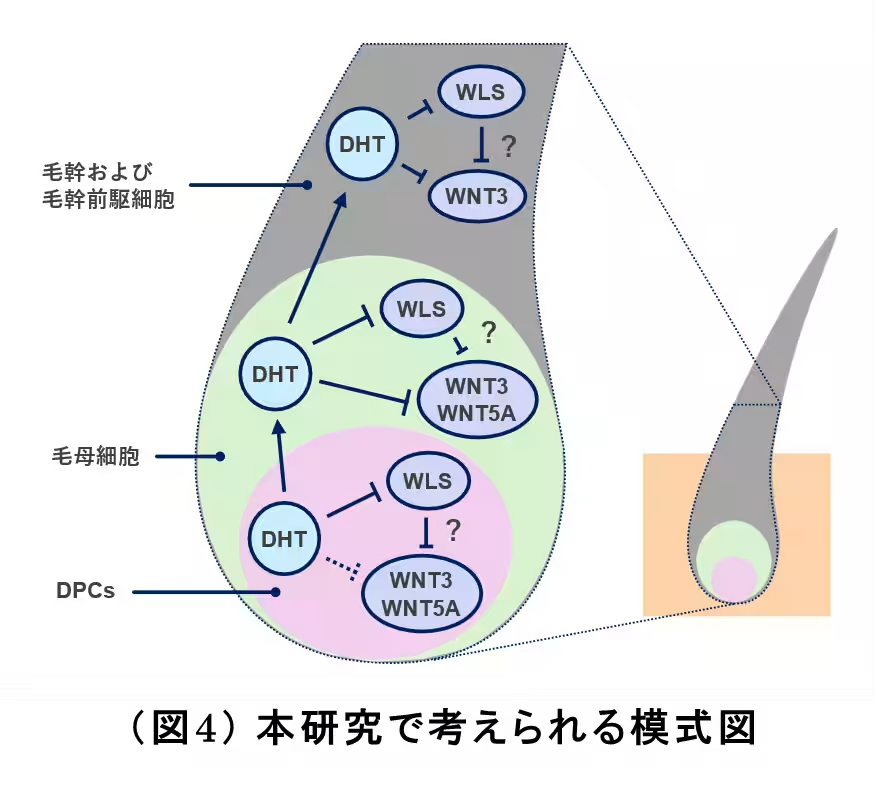
In a series of experiments, Aderans utilized both proteomic analysis and cultured cells to analyze the effects of dihydrotestosterone (DHT), a major contributor to AGA. Following the addition of DHT to cultured cells, a similar reduction in the expression of WLS and other WNT proteins was observed. These findings were shared during the 48th Annual Meeting of the Molecular Biology Society of Japan held from December 3 to 5 at the Yokohama International Peace Conference Center.
Understanding AGA: A Growing Concern
Androgenetic alopecia is a progressive condition characterized by hair loss at the hairline and crown, affecting over 50% of men aged over 50, and approximately 15% of postmenopausal women. The societal impact of AGA is profound, often leading to decreased self-esteem and quality of life. DHT, a derivative of testosterone, is believed to inhibit hair growth, shortening the growth phase of hair follicles and causing hair to thin and fall out prematurely.
Recent advancements in proteomic analysis have allowed researchers to capture a comprehensive view of proteins derived from biological samples. Given that hair shafts contain metabolites originating from newly synthesized proteins in hair matrix cells over extended periods, identifying these protein compositions allows researchers to understand the changes associated with AGA. Consequently, Aderans embarked on a study examining the impact of DHT on the hair shaft to elucidate new mechanisms underlying AGA.
Proteomic Analysis of Hair Shafts
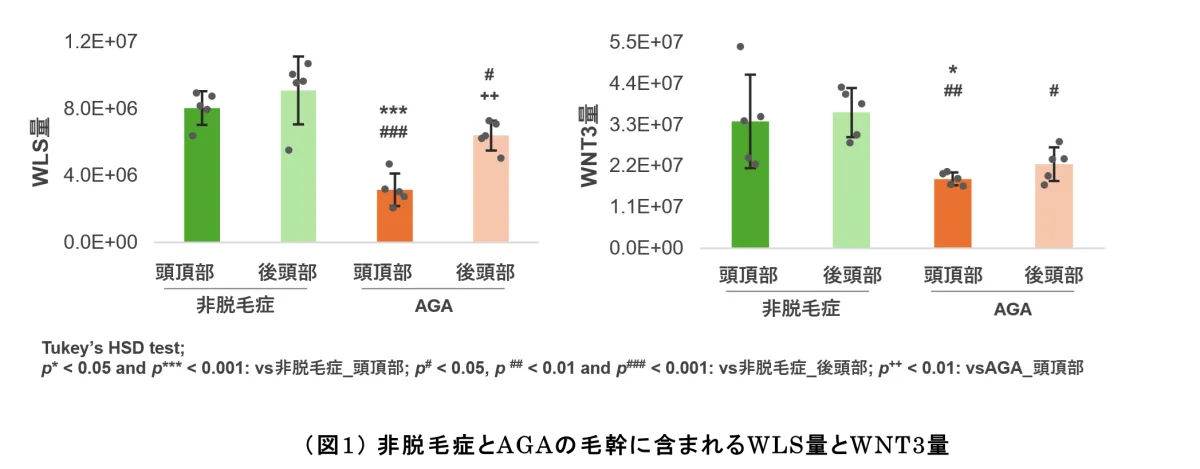
Aderans conducted a proteomic analysis on hair samples from five AGA patients and five non-balding individuals by collecting hair shafts from the crown and the back of the head. The results revealed the presence of 4,383 distinct proteins in the hair shafts. By statistically comparing the data between AGA patients and non-affected individuals, researchers narrowed down the significant changes to 286 proteins associated with AGA. Notably, concentrations of WLS and WNT3 were identified among those key proteins involved in the onset of AGA.
Significant Reductions in WLS and WNT3
Further analysis confirmed that both WLS and WNT3 protein levels were significantly lower in the hair shafts of individuals with AGA compared to non-balding subjects, particularly in areas where hair thinning was most pronounced.
Cultured Cells and DHT Findings
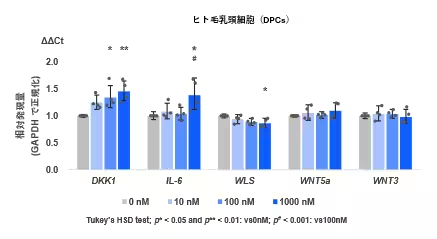
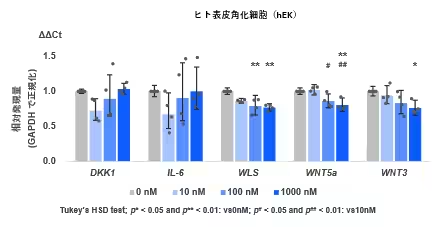
To delve deeper into molecular mechanisms, Aderans researchers evaluated the gene expression changes in human dermal papilla cells (DPCs) and human epidermal keratinocytes (hEKs) upon adding DHT in real-time PCR experiments. Results indicated a significant reduction in WLS levels in DPCs, while in hEKs, reductions were noted not only in WLS but also in WNT5a and WNT3. These experiments utilized DKK1 and IL-6 as positive controls, both of which increased in response to DHT.
Conclusion: Advancing Research on AGA
The combined outcomes of the proteomic analysis and cultured cell studies suggest that both DPCs and various other cells are affected by DHT. Moving forward, Aderans aims to assess changes at the gene level and evaluate the secretion of WNT proteins in cell cultures with added DHT. This research will provide a clearer picture of how reduced WLS expression contributes to decreased WNT secretion efficiency, thus facilitating the progression of AGA.
Aderans embraces the slogan, “Everything for a smile,” as they continue to expand their mission as a global wellness company, striving to spread joy and inspiration through their contributions to society.


Topics Health)
【About Using Articles】
You can freely use the title and article content by linking to the page where the article is posted.
※ Images cannot be used.
【About Links】
Links are free to use.