



Understanding the Decline in Oxygen Production Activity in Photosystem II Proteins
Investigating Photosystem II: A Key Player in Oxygen Production
Photosystem II (PSII) is an essential protein complex responsible for the light-dependent reactions of photosynthesis, particularly the splitting of water molecules and the release of oxygen. Recent collaborative research between Shizuoka University and Okayama University has shed light on crucial structural changes within PSII that may contribute to diminished oxygen production efficiency.
Research Highlights
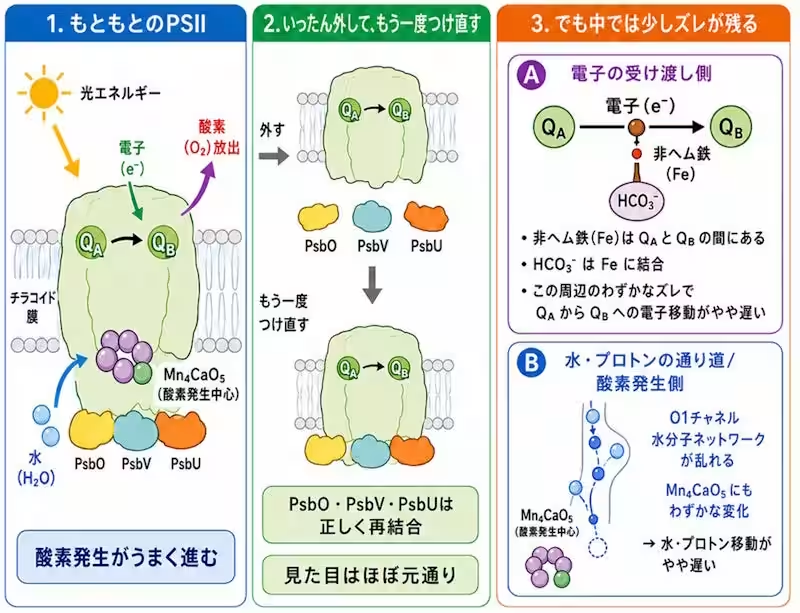
On July 16, 2026, the collaborative team led by Associate Professor Ryo Nagao from Shizuoka University and Assistant Professor Yoshiki Nakajima from Okayama University announced their findings. Their study focused on the structural reconstitution of PSII from the thermophilic cyanobacterium Thermosynechococcus vulcanus. They utilized X-ray crystallography to analyze and determine the high-resolution structure of PSII after removing and reattaching three types of extracellular protein subunits: PsbO, PsbV, and PsbU.
The initial results demonstrated that these proteins were successfully reattached to their correct positions on the PSII complex. However, the team also identified minor changes in the orientation of bicarbonate ions and the arrangement of surrounding water molecules, which play a significant role in water-splitting activities.
Particularly, within the so-called O1 channel, a pathway believed to be central to water transport during the oxygen-evolving process, they observed disruptions in the network of hydrogen bonds and the spatial configuration of water molecules. Such structural disturbances, even when the surface proteins are correctly aligned, could hinder the efficient production of oxygen through photosynthesis.
Implications of the Findings
This research uncovers important insights into how protein interactions influence the functionality of PSII. The findings indicate that while the external components are restored to their original placements, the internal arrangement of molecules is not fully reinstated, leading to a potential decrease in the oxygen-evolving activity of the system.
As a crucial component of the Earth's ecosystems, understanding the mechanisms behind PSII functionality is vital for enhancing photosynthetic efficiency, which could have implications for improving crop productivity and addressing global food challenges.
The results of this research were published on June 25, 2026, in the prestigious journal ACS Catalysis. The team is optimistic that their findings will pave the way for further exploration into the enhancement of photosynthetic systems and bioengineering approaches that leverage this understanding.
For those interested in the detailed findings, the full research can be accessed via the link provided in their announcement post.
Researcher Comments
Professor Ryo Nagao remarked, "Our study structurally demonstrates that despite the reattachment of the surface proteins in the correct orientation, minor discrepancies in the arrangement of internal water molecules and bicarbonate ions persist. These findings are paramount to enriching our comprehension of photosynthetic mechanisms."
This collaborative effort not only advances scientific knowledge about PSII but also underscores the ongoing commitment of both Shizuoka University and Okayama University to contribute to significant research that supports sustainability and innovation in the global landscape.
For inquiries about this research, please contact:
- - Ryo Nagao, Shizuoka University, +81 54-238-4251
- - Okayama University, +81 86-251-7292

Topics Health)
【About Using Articles】
You can freely use the title and article content by linking to the page where the article is posted.
※ Images cannot be used.
【About Links】
Links are free to use.