



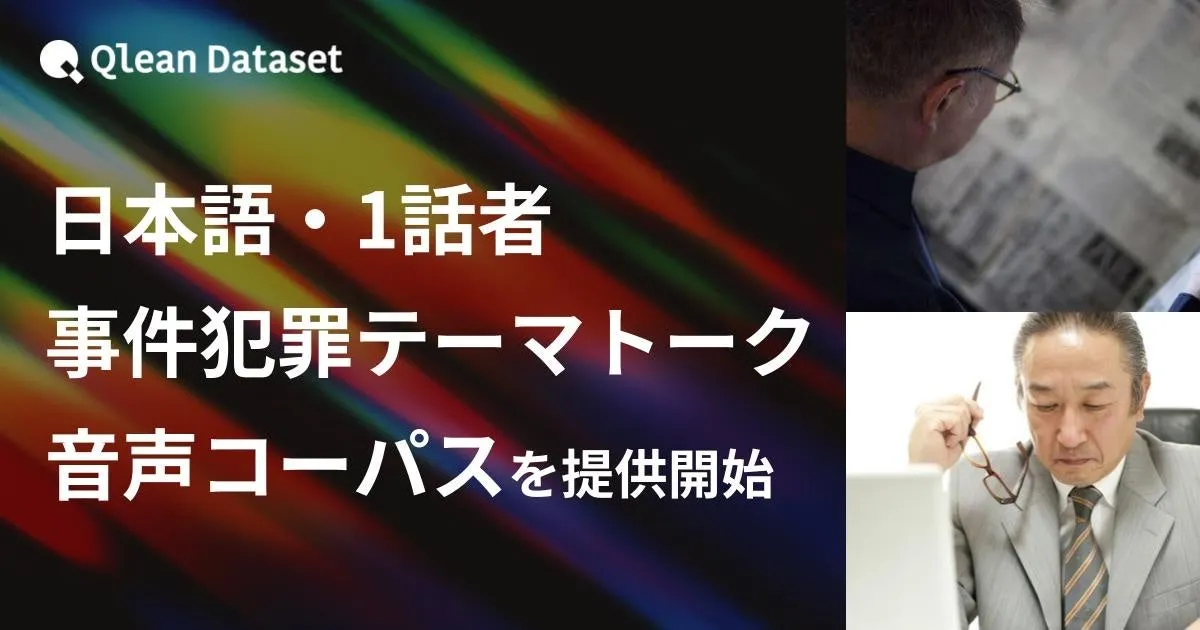
Visual Bank Launches Japanese Crime-Themed Speech Dataset for AI Research
Visual Bank's New Dataset for AI Development
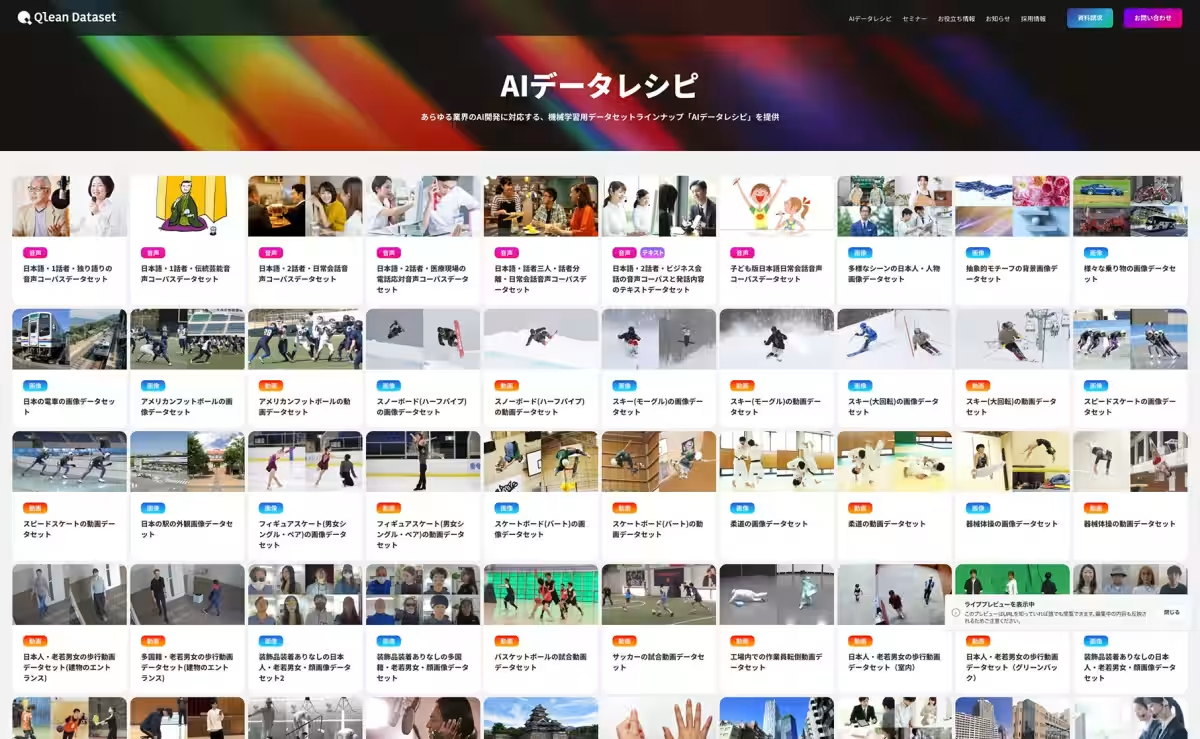
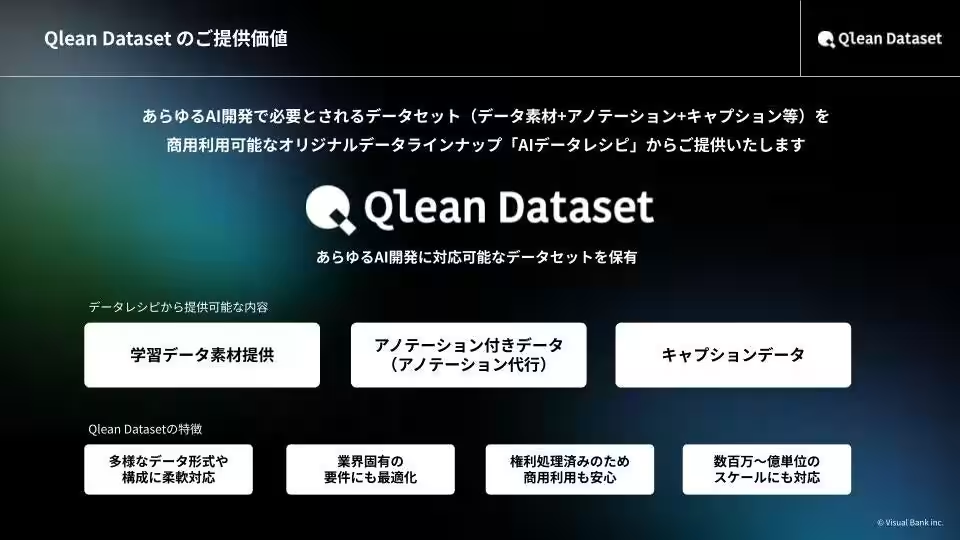
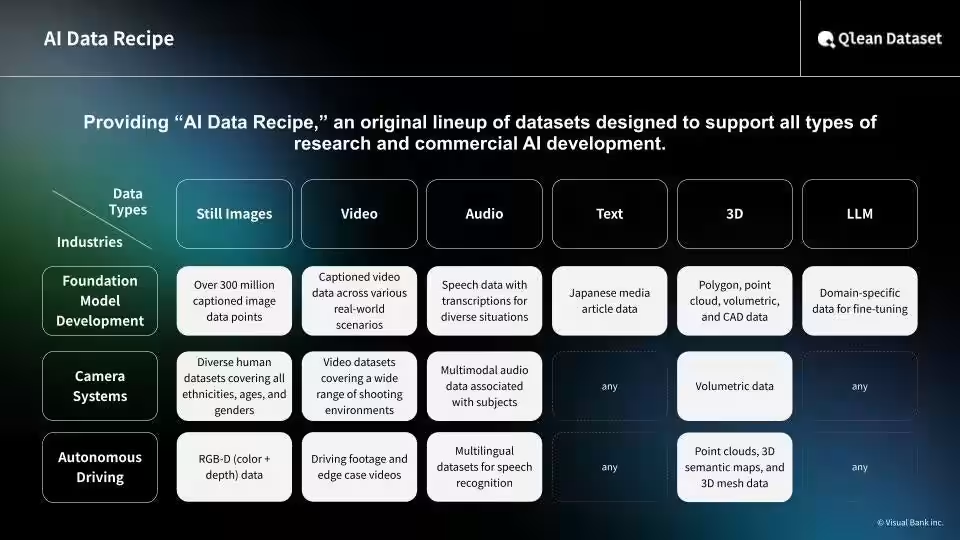
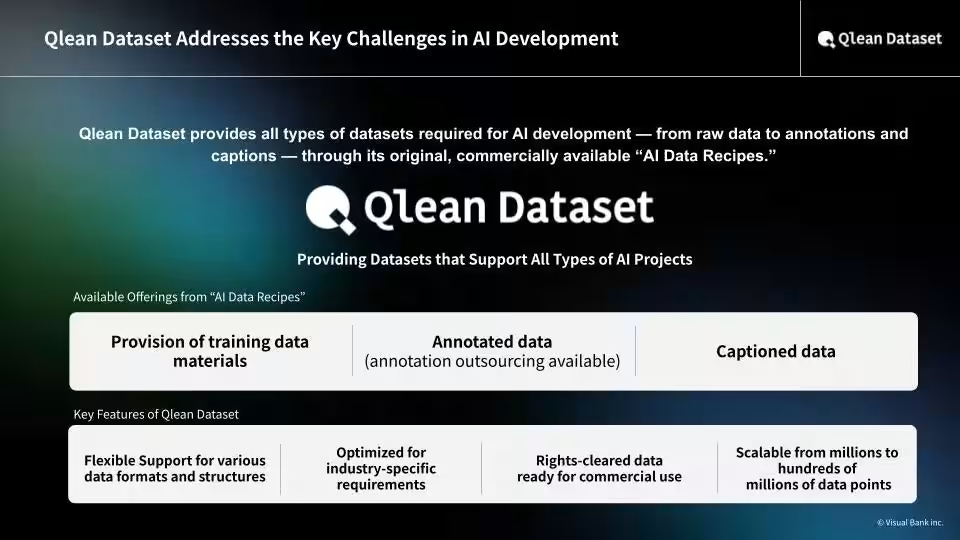
Visual Bank Inc., headquartered in Minato-ku, Tokyo, has made a significant stride in the field of AI training data solutions with the launch of the Japanese Single-Speaker Crime-Themed Monologue Speech Corpus. This dataset is part of their Qlean Dataset offering, developed through their subsidiary, Amana Images Inc. The purpose of this corpus is to support research and development in Automatic Speech Recognition (ASR), Natural Language Processing (NLP), and generative AI models.
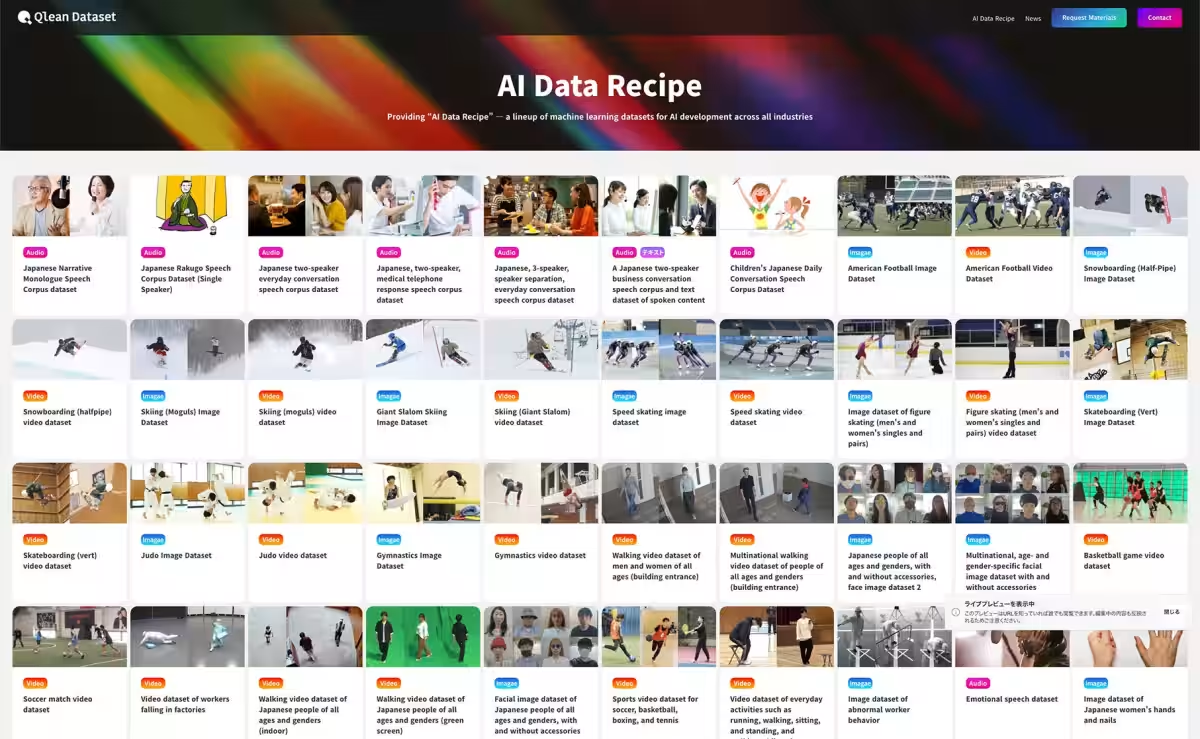
The newly released dataset includes a collection of voice recordings focused on incidents and crimes, captured from single speakers narrating long-form monologues. These recordings are structured to include various aspects of storytelling such as historical cases, legal discussions, and social issues related to crime, enabling a holistic approach to understanding contextual speech.
The dataset comprises approximately 350 hours of audio, where each audio piece ranges from 5 to 40 minutes. The voices of male and female speakers aged between 20s to 50s are included, and all recordings are provided in mp3 format at a sampling rate of 44.1 kHz. Importantly, these recordings are not based on written scripts, giving them a natural conversational flow, which is crucial for training AI models that require context comprehension and the ability to process extended audio inputs.
Applications of the Dataset
This collection boasts a wide array of uses within both academic and industrial settings. For academic research, it serves as an essential resource for evaluating Japanese ASR systems. Researchers can analyze how well these systems handle context-dependent narrative speech and transitions within the crime domain. Furthermore, the long-form nature of the recordings supports advanced NLP evaluations. For instance, they can facilitate studies on semantic extraction, discourse structure analysis, and summarization models.
On the industrial front, this dataset is invaluable for enhancing AI systems that rely on precise speech input. For example, organizations that develop call center technologies or domain-specific conversational agents can leverage the specialized vocabulary present in the dataset to improve their systems' recognition accuracy. Additionally, it serves to refine multimodal processes in generative AI, enhancing capabilities for tasks linking audio to text and semantic understanding.
Educational and Social Impact
Beyond commercial uses, the dataset holds great promise for educational contexts. Judicial and social education sectors can utilize this corpus to develop AI systems capable of understanding and generating explanatory content based on crime-related audio. Such initiatives would greatly aid educational efforts, providing rich, engaging material for both students and educators.
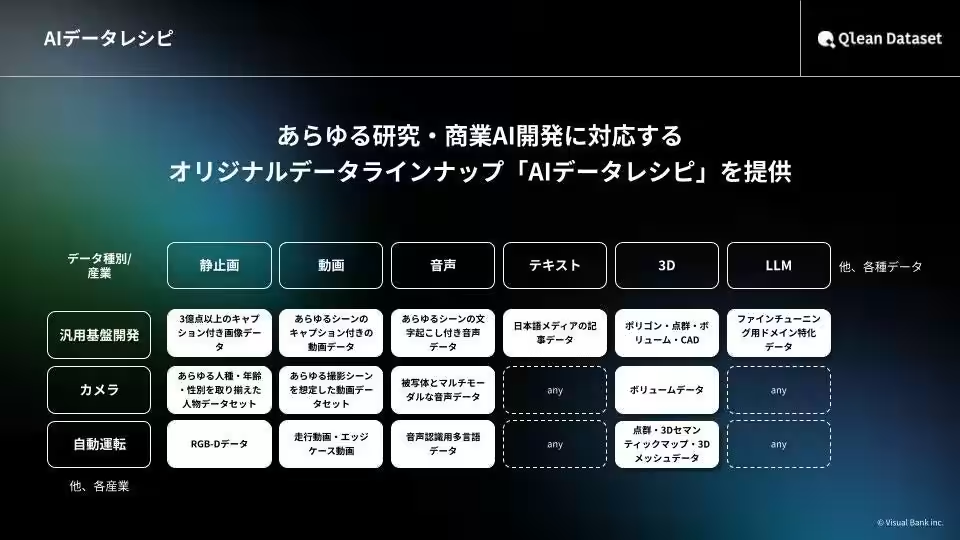
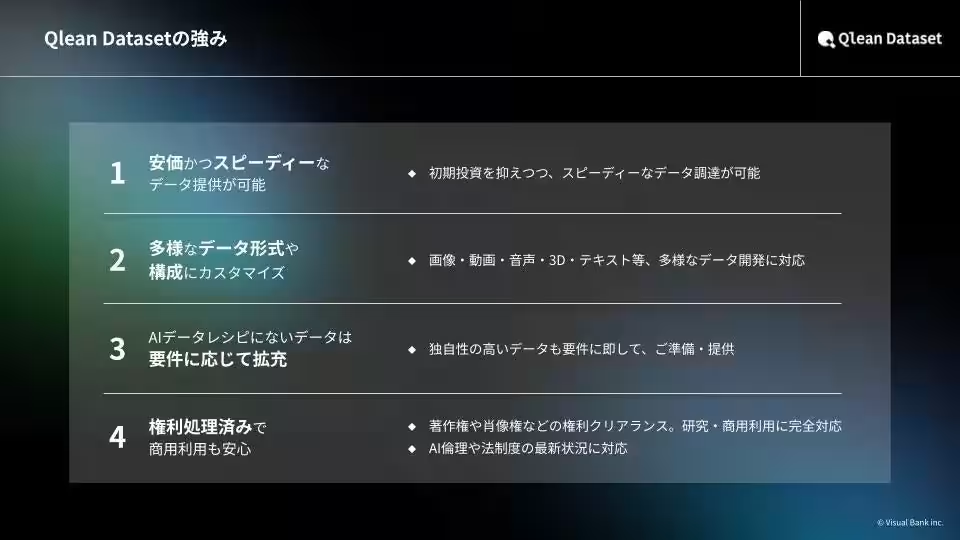
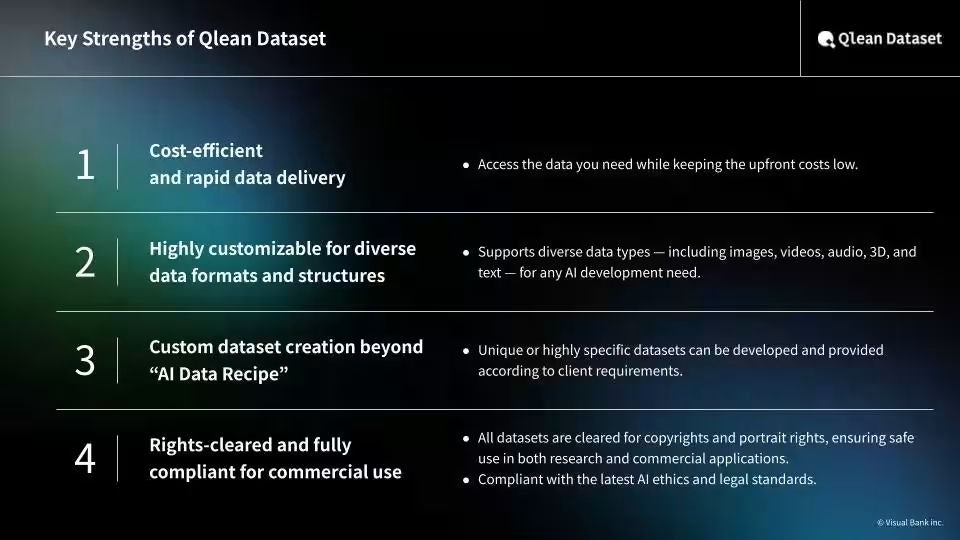
In summary, the Qlean Dataset by Visual Bank not only expands the available resources for AI training but also tackles challenges associated with context comprehension and semantic understanding in speech. Through partnerships with various data providers and continuous enhancement of their offerings, Visual Bank aims to streamline the data collection process while ensuring legal compliance, thereby fostering a safer, more efficient AI development landscape.
For more information on the Qlean Dataset, visit Qlean Dataset Site.

Topics Consumer Technology)
【About Using Articles】
You can freely use the title and article content by linking to the page where the article is posted.
※ Images cannot be used.
【About Links】
Links are free to use.