



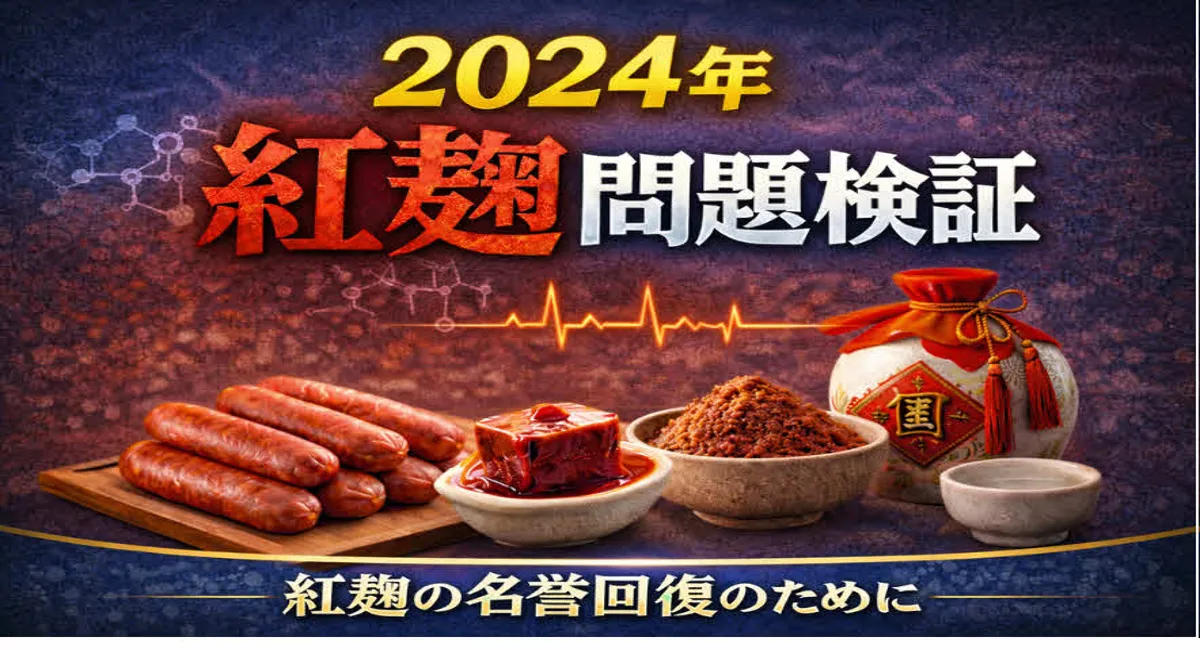
The Red Koji Incident: A Case of Misunderstanding in Microbiology and Food Safety
Understanding the Red Koji Incident
The Red Koji Incident has emerged as a troubling example of a disaster stemming from systemic misunderstandings in microbiology, food safety, and administrative processes. This tragedy is not merely a singular failure of a business entity; rather, it reflects a broader issue of accumulated ignorance across various sectors, culminating in a significant public safety concern.
In the course of our investigations over the past year, we directed numerous inquiries (over 80) to bodies including the Osaka City Health Department, the Ministry of Health, Labour and Welfare, the Consumer Affairs Agency, the Ministry of Agriculture, Forestry and Fisheries, the Cabinet Office, Chiba University, and the National Institute of Health Sciences (NIHS). Through these requests for information, a clearer picture of the incident began to emerge.
Key Findings of the Investigation
The investigation highlighted four crucial points:
1. There was insufficient awareness regarding the distinction between microbial species and strains.
2. The identification of a species was incorrectly equated with the presence of a strain that produces a specific toxin.
3. Administrative agencies failed to provide adequate scientific documentation to substantiate their decisions.
4. An interdependence among administrative bodies, research institutions, and businesses obscured independent verification of claims.
The lack of fundamental knowledge about microbiology has been identified as a key factor, linking Kobayashi Pharmaceutical and extending to the Ministry of Health and the Osaka City Health Department. Our inquiries have confirmed that there was a critical misunderstanding: confusing species with strains led to erroneous assumptions about identification and toxin production, which were treated as accepted facts without rigorous verification.
Initial Step in Confirming Ignorance
To definitively outline these misconceptions, we sent a formal inquiry to the responsible personnel at the Osaka City Health Department on August 1, 2026. The letter focused on a public announcement made by the city on May 29, 2024, concerning blue mold observed at the Osaka Factory, which was claimed to be Penicillium adametzioides producing puberulic acid.
However, scientifically, this claim cannot hold. Identifying a species does not imply that the specific strain produces puberulic acid—these are distinct facts, a confluence of which denotes a profound misunderstanding of microbiological principles. The characteristics regarding toxin production are determined at the strain level, not the species level, highlighting a problematic gap in the understanding of basic concepts in microbiology.
As we move forward, we plan to systematically confirm each of the previously mentioned points through continued inquiries, and we will publish updates as we progress further in our investigation.
Company Overview
- - Company Name: Kunsei Club Co., Ltd.
- - Location: 611-1 Maegata, Hayashima-cho, Tsukubo-gun, Okayama 701-0303, Japan
- - Representative: Masaki Mori (Pharmacist)
- - Business Activities: Production and sales of smoked foods (including Kurashiki sausages)
- - Contact: TEL: 086-483-0602, E-mail: [email protected]
- - More Information on Red Koji: kunsei.com
Topics Health)
【About Using Articles】
You can freely use the title and article content by linking to the page where the article is posted.
※ Images cannot be used.
【About Links】
Links are free to use.