




Recent Developments in the Inquiry Regarding Tokai University Research Ethics
Recent Developments in the Inquiry Regarding Tokai University Research Ethics
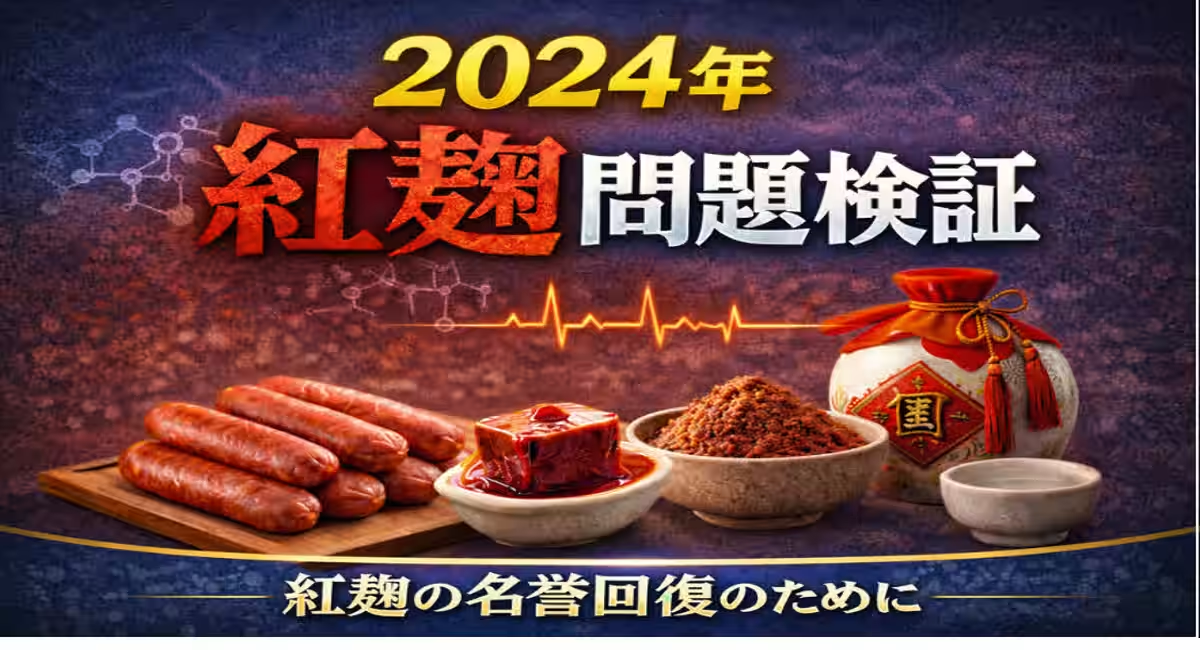
In a recent sequence of events, our company submitted a second inquiry to the Research Ethics Committee of Tokai University on August 28 regarding the assertion made in a research paper that puberulic acid is present in benikoji. This inquiry follows an initial submission made on March 10, where we questioned the credibility of the research conducted by Assistant Professor Yutaro Mori of Tokai University’s Nephrology Department, as detailed in the paper titled, "The pathophysiological mechanism of Beni-koji Choleste-Help/puberlulic acid-induced kidney injury," which was published in Kidney International Reports in January 2026.
The basis of our concern lies within the assertions made in the research that link the compound puberulic acid to kidney injuries. Our investigation, initiated through a request for disclosure of administrative documents, revealed a lack of analytical data or foundational documents that would support the paper's claims. This prompted our initial inquiry to the ethics committee.
New Findings
On July 29 and July 31, the Ministry of Health, Labour and Welfare confirmed, through two separate administrative disclosure decisions, that they do not possess any documents that scientifically verify the presence of puberulic acid in benikoji. These decisions categorically stated that no such evidence exists, raising further concerns regarding the research's integrity.
According to the documents, the Minister of Health emphasized that there were no factual bases developed or acquired during the administrative process to corroborate the claims made about the presence of puberulic acid in the studied product. This lack of evidence reinforces our concerns regarding the validity of the assertions made in the original research paper.
What We Are Seeking
In our follow-up inquiry, we are asking the university to re-evaluate the assertions made in the original research based on the newly surfaced facts. We are specifically requesting a review of the ethical standards applied in regard to the claims identified in the paper, especially considering the ministry's confirmation of non-existence for the necessary supporting documents. The deadline for responses was set for September 18.
Clarification on Key Points
While a thorough investigation has been conducted, we would like to clarify a few points:
- - We are not making any definitive claims regarding research misconduct by the authors.
- - We are not asserting that puberulic acid is absent from benikoji or outlining any legal correlations between the university's research and the ministry’s decisions.
- - The term “non-existence” refers strictly to the administrative clarification regarding document possession and is not a reflection of the general scientific community's knowledge.
Our investigation highlights the ongoing commitment to uphold scientific integrity and transparency within the research community. We encourage all parties involved to actively engage in promoting accurate information and maintaining rigorous standards of ethics in research.
Additional Information
For related inquiries and updates on the matter, further details will be provided through our official communications. We also opened a LINE official account to keep interested parties informed about the developments regarding the restoration of the benikoji culture.
For more information on our company and the details about benikoji, feel free to visit our site. This matter signifies the importance of ethical diligence and the necessity of accountability in the pursuit of scientific truths.
Contact Information:
- - Company Name: Kunsei Club
- - Representative: Masaki Mori, President and Pharmacist
- - Location: 611-1 Maebata, Hayashima-cho, Okayama Prefecture, 701-0331
- - Phone: 086-483-0602
- - Email: [email protected]
Stay tuned as we continue to pursue clarity and validation in scientific research.

Topics Other)
【About Using Articles】
You can freely use the title and article content by linking to the page where the article is posted.
※ Images cannot be used.
【About Links】
Links are free to use.