



The Consequences of Decision-Making in Organizations: A Survey Analysis
The Consequences of Decision-Making in Organizations: A Survey Analysis
The Japan Risk Communication Institute (RCIJ) conducted a significant survey involving 276 business professionals to investigate the prevalent issue of poor decision-making in corporate settings. As we approach the year 2026, when numerous high-profile corporate scandals have surfaced, questions regarding how capable individuals within successful organizations can make questionable judgments have become increasingly pertinent.
Key Findings from the Survey
RCIJ found that both organizational structure and individual decision-making play critical roles in the failures observed in businesses today. Here we summarize the key outcomes:
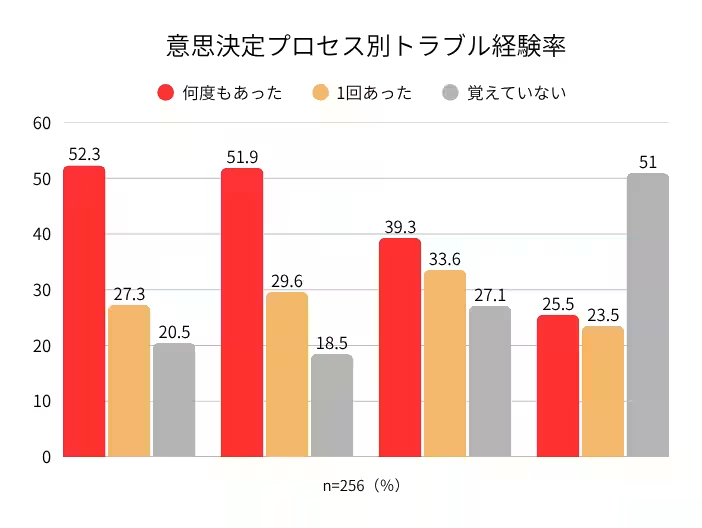
1. Recurring Fails in ‘Pre-Decided’ Organizations: It was found that 52.3% of respondents from organizations characterized by a 'pre-decided' decision-making process reported repeated failures. In contrast, 51% from 'top-down' organizations indicated they do not even remember their failures.
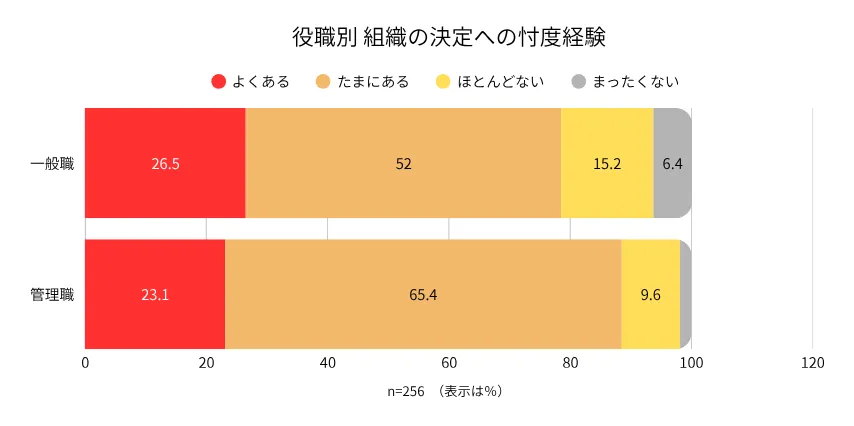
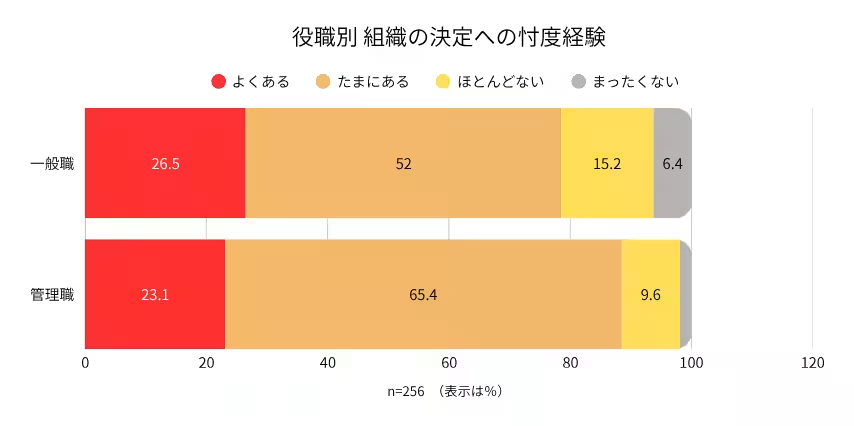
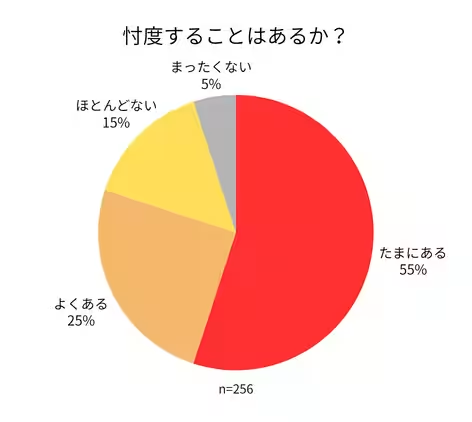
2. Common Experiences of Conformity: An overwhelming 94.5% of respondents admitted to experiencing pressure to conform. Among managers, the figure was even higher at 98.1%. This suggests a troubling culture where dissenting opinions are often sidelined.
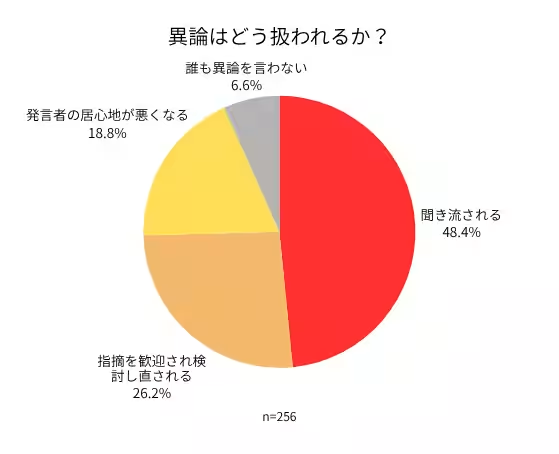
3. Dwindling Dissent: Nearly half of the respondents (about 50%) noted that any dissent voiced during meetings is often dismissed or ignored, illustrating a serious issue in how organizations handle internal criticisms.
In-depth Analysis of Decisions and Failures
In analyzing the link between decision-making processes and experiences of failure, the study revealed alarming trends. For organizations with a 'pre-decided' decision model, a significant 52.3% acknowledged having faced numerous failures. Conversely, in the top-down model, 51% reportedly forgot their past errors entirely, highlighting a worrisome lack of failure recognition that can lead to dysfunctions in learning and improvement.
The survey further dissected experiences within corporate structures. It revealed that a staggering 93.6% of general employees and an astounding 98.1% of managers have had experiences of conforming, prioritizing organizational cohesion over personal or professional integrity. The responses indicated a trend where managerial roles are entangled with an expectation of silence even when they perceive problems, suggesting a failure of leadership to foster an environment where mistakes can be acknowledged and learned from.
Recognition and Response of Dissenting Opinions
An analysis of how dissenting opinions are treated in organizational meetings showed a concerning trend. Approximately half of the respondents believed their concerns are heard but then subsequently disregarded or ignored. This signals a serious shortcoming in encouraging open dialogue and addressing potential problems effectively.
Expert Commentary: Insights from RCIJ Executive
In reflecting on the survey results, RCIJ's executive director, Haruko Osugi, noted the concerning trend among managers who reported higher rates of silence in the face of discomfort with decisions. She posited that this might not necessarily reflect weak will or a desire for self-preservation but rather a recognition that voicing a contrary opinion may lead to no effective change. This repetitive pattern could lead organizations towards a disastrous path of unresolved failures, paving the way for external crises.
Moving Forward with Awareness
Osugi emphasized that merely promoting 'psychological safety' in teams might not be sufficient. The need for structures that ensure dissenting opinions are actively sought and respected is crucial to rectify the inefficiencies prevalent in current organizational decision-making frameworks. Instead of simply facilitating opportunities for expression, monitoring the presence of dissenting voices can be a more practical approach to prevent collective folly.
Conclusion and Upcoming Webinar
In light of these findings, RCIJ will hold a free online seminar on April 23, 2026, titled "Is Your Company Also Experiencing Collective Folly? — Why Do Exceptional Organizations Miss the Mark?" This seminar will feature notable discussions on how mechanisms lead to collective poor judgment and the strategies to overcome them.
In conclusion, the findings of this survey underscore the critical need for organizations to re-evaluate their decision-making processes and cultivate a culture where transparency and feedback are prioritized to avert future scandals and failures.
Topics Business Technology)

【About Using Articles】
You can freely use the title and article content by linking to the page where the article is posted.
※ Images cannot be used.
【About Links】
Links are free to use.