




Introduction of JRE Earthquake Damage Assessment System Gragram in Takanawa Gateway City
Introduction of the Gragram System
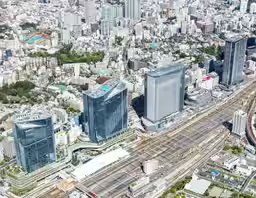
The JRE Earthquake Damage Assessment System, known as Gragram, developed collaboratively by Hakusan Industry and JR East Architectural Planning, aims to enhance safety in metropolitan infrastructure. Officially introduced to the newly built Takanawa Gateway City and the Oimachi Tracks, this system promises to change how buildings respond to seismic events, ensuring rapid safety assessments and recovery options.
The Genesis of Gragram
Gragram is designed for comprehensive evaluation of building integrity following seismic events. By integrating various sensory technologies and structural insights, the system automatically estimates damage levels based on measurements of structural sway during earthquakes. It allows facility managers to quickly assess and respond to situations post-earthquake, significantly increasing community resilience.
Both Hakusan Industry, a veteran provider of damage assessment technologies, and JR East Architectural Planning, known for their collaborative urban development, have created Gragram to support not only the well-being of residents but also the functionality of essential infrastructure.
How Gragram Works
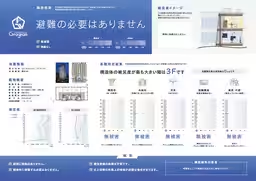
Gragram employs multiple sensors throughout a building to analyze structural performance during earthquakes. Immediately after a seismic event, the system generates alerts regarding evacuation procedures and assesses the usability of the structure.
Key Features:
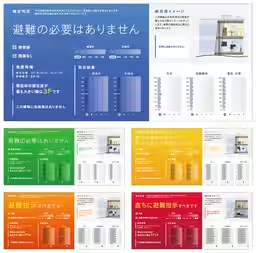
- - Immediate Assessment Display: Within moments of an earthquake, the ‘Immediate Assessment’ interface shows whether evacuation is necessary and rates five critical areas, including structural integrity and non-structural elements like ceilings and furniture. The system employs a color-coded display for quick comprehension of damage across different floors.
- - Diagnostic Report Generation: Following an event, Gragram automatically compiles a comprehensive Diagnostic Report, providing essential details on the building’s recovery capabilities and whether it can continue to serve as a disaster response hub.
This ability to provide real-time data is unparalleled, as it considers specific structural characteristics while also integrating knowledge from engineers dedicated to earthquake safety.
Commitment to Wider Adoption
The recent installation of Gragram not only boosts the resilience of Takanawa Gateway City and Oimachi Tracks but also highlights a strategic intention for future deployments in various facilities beyond the JR East Group. Hakusan Industry and JR East Architectural Planning are committed to a broader rollout of Gragram, looking to enhance safety across diverse environments.
Future Vision
With an impressive track record of over 400 installations from previous systems, Hakusan Industry has proven its capability in earthquake resilience technologies. They aim to integrate more advanced IoT solutions, further reinforcing Japan's preparedness against natural calamities. This ambition aligns with their mission to provide advanced technology for increased public safety and assurance.
Conclusion
The implementation of the Gragram system is a pivotal step in enhancing urban resilience in Japan, providing vital support in earthquake preparedness and response. Its adoption signifies a move towards smarter, safer cities and reinforces the collaborative efforts of leading industry players committed to disaster readiness. As cities evolve, so too must our strategies for managing the risks of natural disasters, and systems like Gragram lead the way in this transformation.




Topics Other)
【About Using Articles】
You can freely use the title and article content by linking to the page where the article is posted.
※ Images cannot be used.
【About Links】
Links are free to use.