



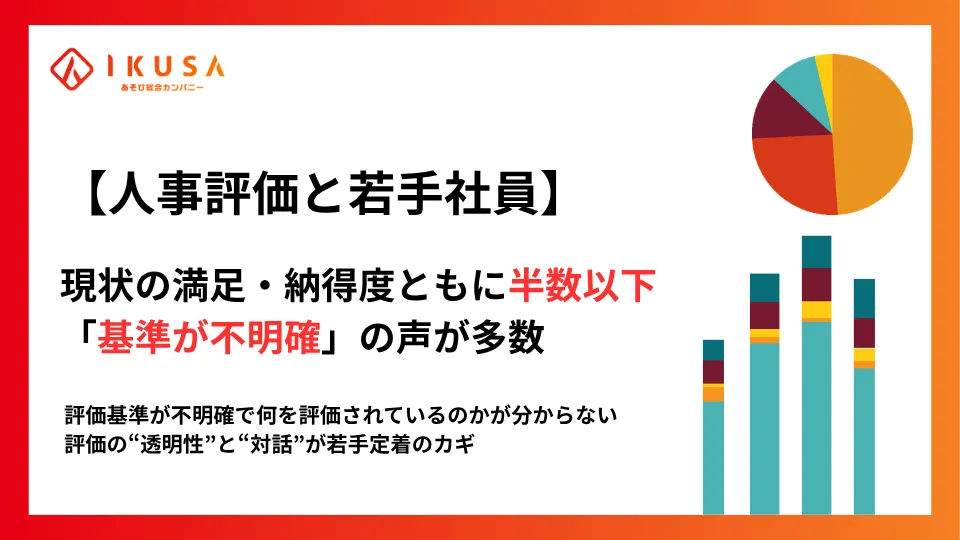
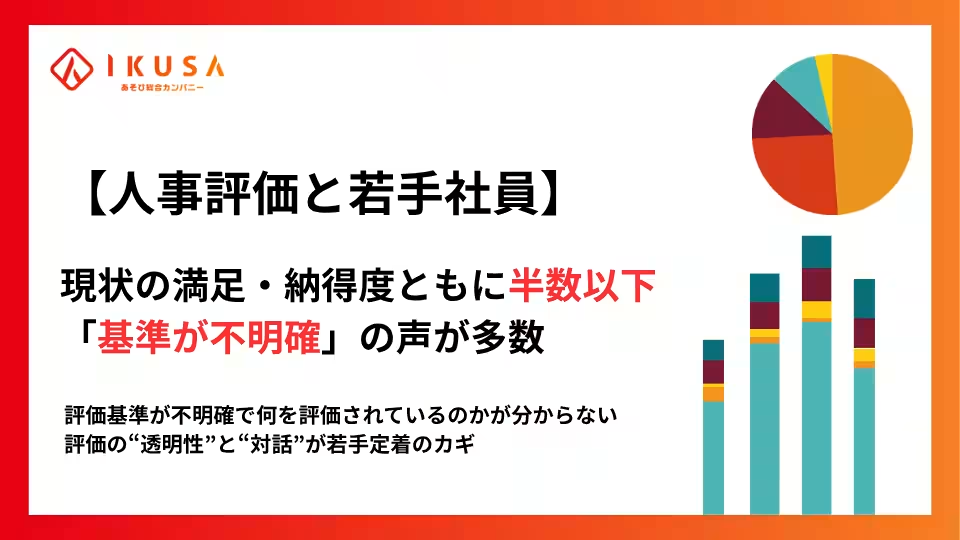
Young Employees Demand Transparency in Performance Evaluation Standards
Recent Survey on Young Employees' Views on Performance Evaluations
A recent study commissioned by IKUSA, a Tokyo-based company specializing in experiential training, has brought to light the dissatisfaction of young professionals regarding their performance evaluation systems. The survey, which included responses from 400 employees at the early stages of their careers, revealed essential insights into the effectiveness and transparency of current evaluation criteria.
Key Findings of the Survey
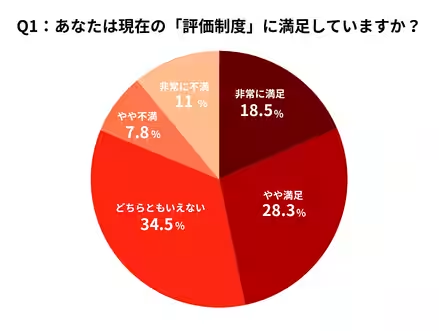
The survey found that only 46.8% of young employees expressed satisfaction with their current performance evaluation system. Moreover, a large portion, represented by 34.5%, remained ambivalent, indicating that dissatisfaction may stem from a lack of clarity around evaluation criteria. This suggests that many employees find the system rigid and possibly designed to meet compliance rather than foster genuine development.
Unclear Standards Lead to Frustration
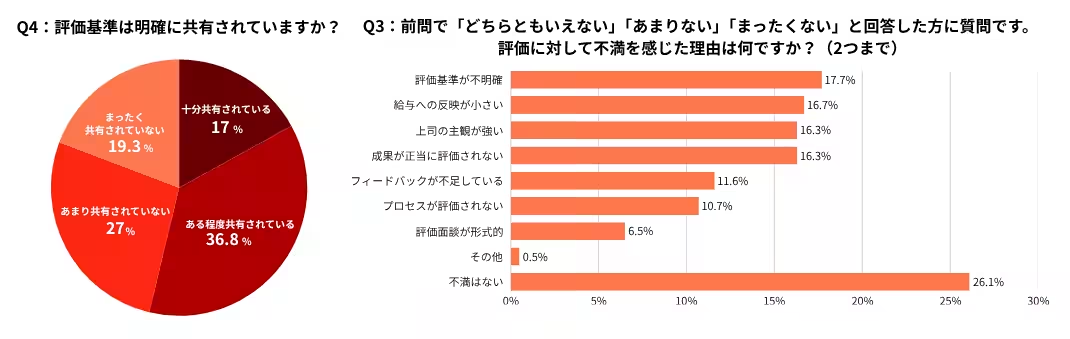
Perhaps one of the most significant takeaways from the survey is that nearly half, specifically 46.3%, of respondents feel that the evaluation criteria are not shared transparently. The most common source of dissatisfaction, cited by 17.7%, revolves around the unclear nature of what elements are assessed. This lack of clarity is detrimental, making it challenging for employees to feel confident in the feedback they receive or the results of their evaluations.
Ineffectiveness of Evaluation Meetings
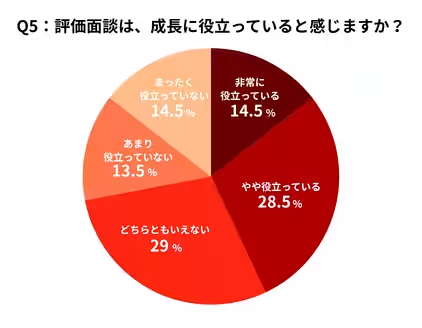
The survey also discovered that only 43% of participants believed that evaluation meetings contributed positively to their personal growth. The data indicates that many of these discussions are seen as one-sided notifications rather than constructive dialogues, undermining their intended purpose of facilitating growth and development within the organization.
Potential for Improvement Revealed
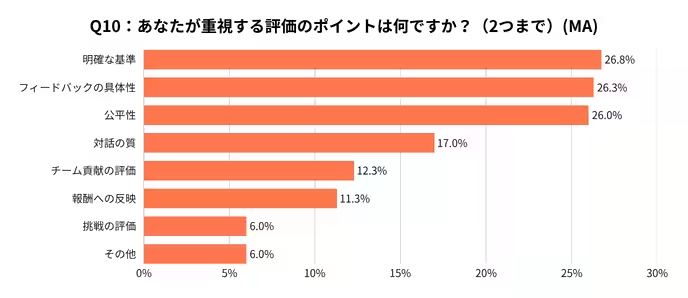
Conversely, a significant 59.8% of respondents expressed that if the evaluation systems were improved, they would be more inclined to remain with their companies. The aspects that young employees identified as crucial for enhancement included clear standards (26.8%), specific feedback (26.3%), and perceived fairness (26.0%). Moreover, the most favored model was a results-oriented approach that emphasizes team achievements (24.5%). These preferences highlight a strong desire for a more equitable and transparent system that values contributions over rigid hierarchies.
The Importance of Transparency and Dialogue
The analysis clearly illustrates that dissatisfaction with evaluation systems is deeply rooted in their lack of transparency. A failure to communicate clear standards can erode employee confidence and diminish their commitment to the organization. Moreover, the study revealed that 48.5% of respondents believe transparency issues impact psychological safety within the workplace. Thus, organizations are encouraged to establish clearer metrics and foster open dialogue between employees and management to build trusting relationships.
Building Relationships Through Team-Based Experiences
One effective tactic to enhance these relationships is through team-building activities that can facilitate mutual understanding among employees, transcending hierarchical boundaries. For instance, IKUSA has developed experiential events, including swordplay competitions, that not only promote teamwork but also help cultivate trust among colleagues.
In a recent follow-up survey of participants from these events, 88.8% reported feeling more positive about their company and team, and 91.6% indicated that they gained valuable insights into their colleagues' unique personalities. This level of understanding forms a solid foundation for open discussions surrounding evaluations and feedback, leading to a healthier work environment.
Conclusion: A Call to Action for Organizations
Ultimately, organizations must acknowledge that the nature of performance evaluations can significantly influence employee retention. By taking steps to clarify standards and improve communication, workplaces can ensure that feedback is effectively conveyed and received. IKUSA aims to support companies in this transformative journey by providing creative team-building experiences, enabling employees to see the value in both their contributions and the evaluations they receive.
About IKUSA
IKUSA Inc. operates under the mission of “finding problems and solving them through play.” With over 1,600 unique events annually, IKUSA focuses on various social issues, including team building, community activation, and disaster preparedness. Companies interested in making their evaluation processes more effective can turn to IKUSA for assistance in enhancing the overall work culture.
For more information, visit IKUSA's website.
Topics People & Culture)


【About Using Articles】
You can freely use the title and article content by linking to the page where the article is posted.
※ Images cannot be used.
【About Links】
Links are free to use.