



Recent Study Unveils Realities of Dual-Income Couples in Japan
Insight into Dual-Income Couples in Japan
In recent findings from a survey conducted by doda, a leading job-change service managed by Persol Career, the dynamics of dual-income couples were closely examined. This study targeted 15,000 working individuals aged 20 to 59, diving deep into their experiences and perceptions regarding shared professional responsibilities in the household.
Key Findings
The results revealed that 61.8% of respondents who are married are involved in dual-income arrangements, where both partners contribute to the household income. This figure signifies a robust presence of dual-income households within the survey's demographic.
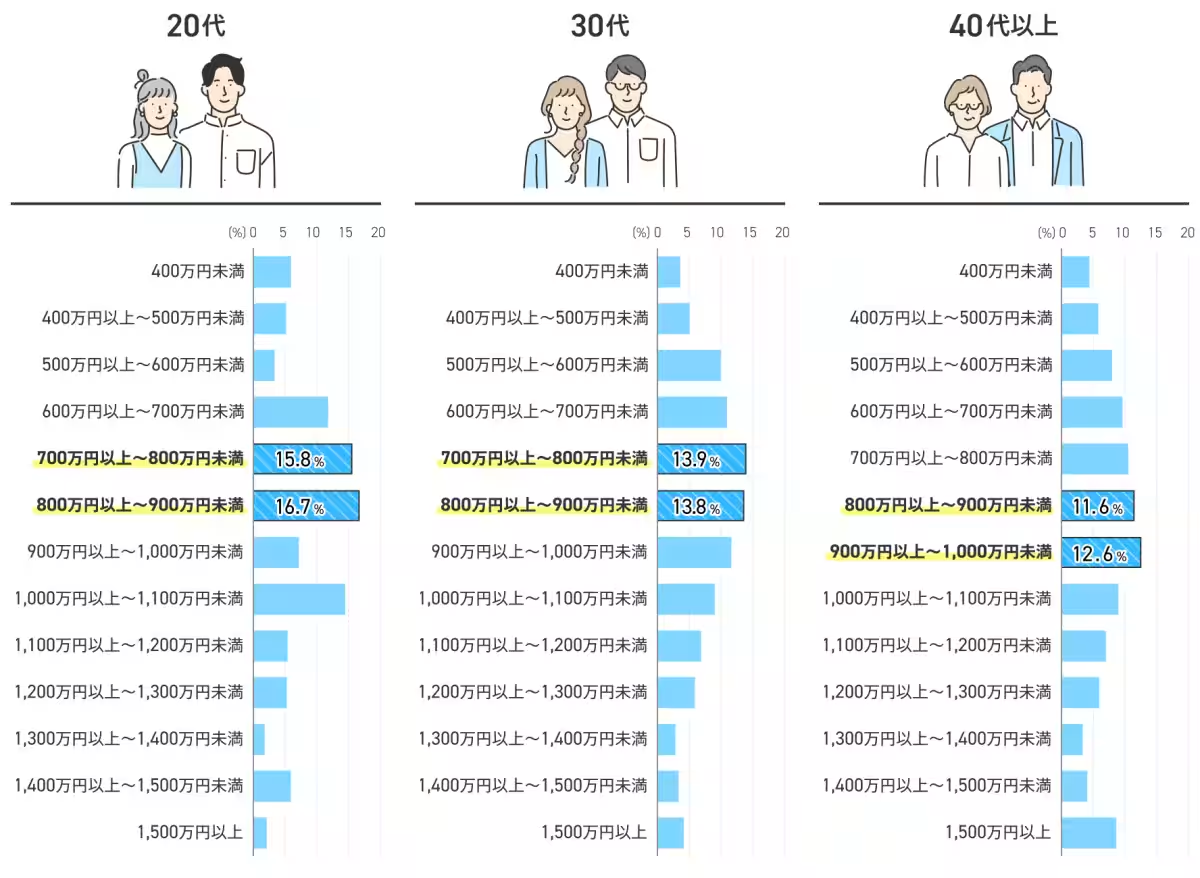
When analyzing household income levels, the most common range reported was between 8 to 9 million yen, accounting for 11.0% of the total responses. This indicates a trend towards higher income brackets for couples who work collaboratively.
As age increases, the prevalence of dual-income is notably affected. Among the younger demographic, 88.5% of those in their 20s report being in a dual-income partnership. However, this drops to 78.8% for those in their 30s and further decreases to 53.2% for individuals aged 40 and above.
Reasons for Career Changes
A significant focus of the survey was to understand why individuals were considering changing jobs while in a dual-income arrangement. The predominant reason given (by 33.4% of respondents) was low salaries or a lack of expected raises. Other notable reasons included dissatisfaction with company evaluation methods (19.8%) and adverse workplace environments (19.5%).
Interestingly, for those who reported being dual-income while also expecting or having young children, concerns about industry stability and shifts in family dynamics due to parenting responsibilities were frequently mentioned.
Supporting Career Transitions
The survey also explored partners' attitudes towards each other's career moves. A striking 90.0% affirmed their willingness to support their partner's job change. Yet, data indicated that concerns about potential salary declines often impacted the support sentiment, particularly among respondents in their 20s and 30s.
Impact of Income on Support
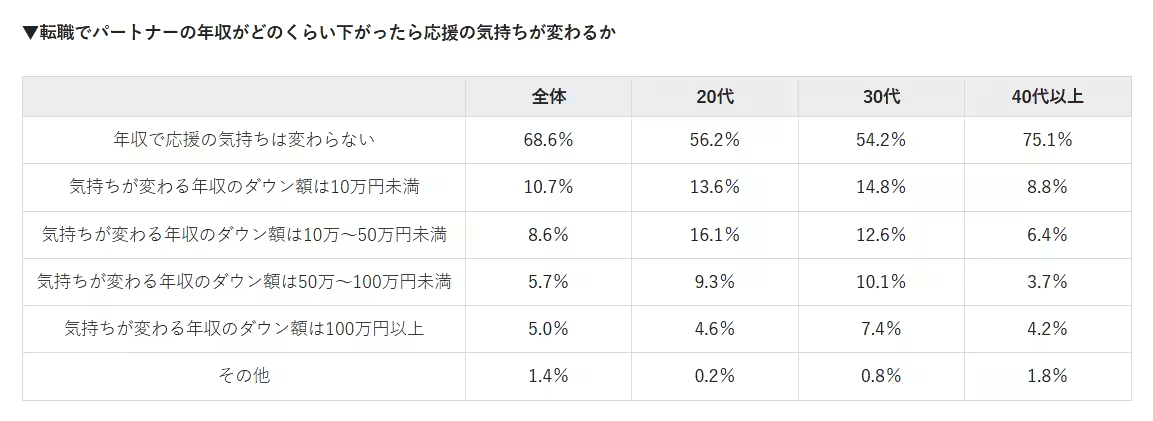
The question arose: how does a potential decrease in income influence support? The finding was surprising; 68.6% of those surveyed stated that support would remain unchanged, even if their partner’s income were to fall. However, this sentiment was less pronounced among younger respondents, suggesting that financial concerns weigh heavier on them compared to those in older age brackets.
The Role of Partner Opinions in Job Search
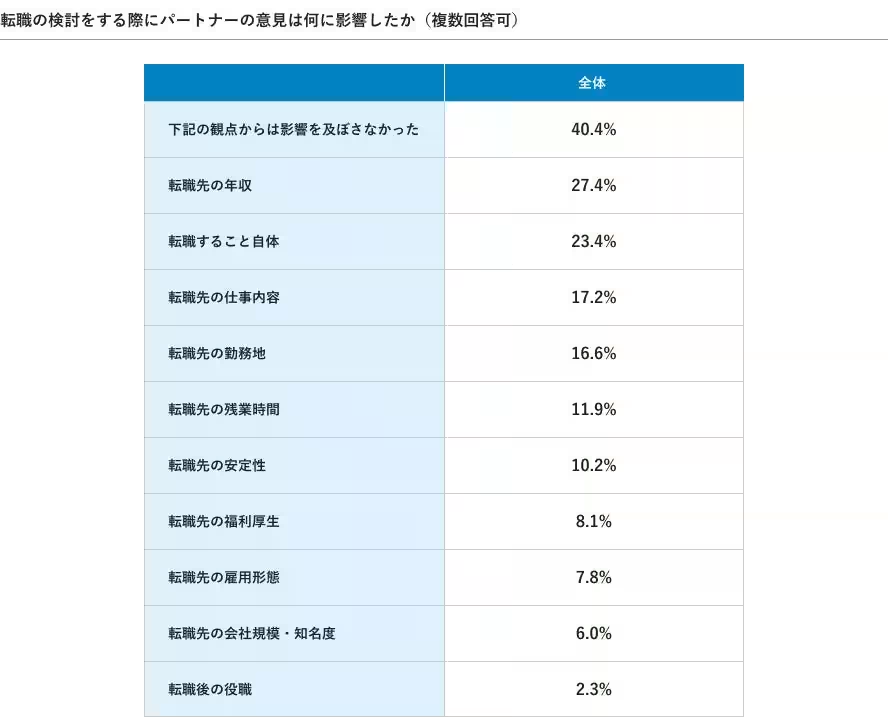
When pressed about what influences their job search decisions most, the survey respondents noted salary at the new position (27.4%) as the most impactful factor. This was followed by the act of switching jobs itself (23.4%) and the job responsibilities at the new role (17.2%). Interestingly, over 40% reported that certain aspects, including work-life balance and location, did not play a significant role in their decisions.
Conclusion
The doda survey indicates a growing normalization of dual-income households in Japan, a trend that aligns with data from the Ministry of Health, Labour and Welfare, showing an upward trajectory in dual-income families since the late 90s.
As more individuals navigate the landscape of shifting careers and life events simultaneously, the nature of dual-income relationships will likely continue to evolve. This emphasizes the importance of communication and mutual support between partners to foster understanding and adaptability in their respective career journeys.
For more detailed insights, the full report is available on doda's website.
- ---
Profile of the Editor
Takahumi Sakurai, the editor-in-chief of doda, has a long-standing background in helping individuals in their job searches and career education. With notable experience in the recruitment industry, his insights inform the analyses presented in this report.

Topics Business Technology)
【About Using Articles】
You can freely use the title and article content by linking to the page where the article is posted.
※ Images cannot be used.
【About Links】
Links are free to use.