



Leveraging DeepProtect for Enhanced Fraud Detection in Banking Operations
Enhancing Fraud Detection with DeepProtect Technology
In a groundbreaking initiative, the National Institute of Information and Communications Technology (NICT), in collaboration with Kobe University and EAGLYS Inc., has successfully conducted an experimental study on fraud detection in bank accounts utilizing their privacy-preserving federated learning technology, DeepProtect. This project, involving several banks, marks a significant progression in the fight against financial fraud.
Collaborative Experimentation with Banks
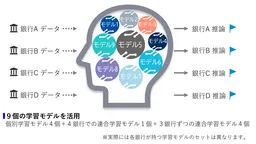
The collaborative effort included four banks—Resona Bank and three others—to investigate the efficacy of DeepProtect in identifying fraudulent accounts without the need for data sharing between institutions. This unique approach allows banks to build machine learning models that leverage individual bank data securely while maintaining confidentiality. The key innovation in this project was the application of ensemble learning, which employs a combination of individual and federated learning models to enhance detection accuracy.
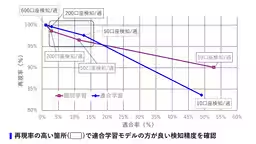
During the experiments, results showed a remarkable improvement in detection rates—up to approximately 10 percentage points greater than standard individual models, with a recall rate exceeding 95%. This high level of accuracy indicates that the ensemble method not only increases detection performance but also maintains consistency across varying data conditions.
The Responses to Evolving Financial Crimes
With the increasing complexity of financial crime techniques, banks have been compelled to adopt measures such as monitoring customer transactions through AI detection systems. However, individual institutions often struggle to amass sufficient training data due to privacy concerns. This situation necessitates a collaborative framework where multiple banks can engage in the collective development of AI solutions while safeguarding customer privacy.
Through DeepProtect, NICT has pioneered the development of a system that can identify fraudulent transactions automatically without compromising sensitive financial data. This project represents an essential advancement, allowing for the continuous incorporation of daily transaction data from the participating banks into the model for more precise detection.
Outcomes of the Fraud Detection Trials
In the experimental phase, banks provided anonymized data encompassing both legitimate and frozen accounts over a significant time frame. NICT's team processed this information to enable time series analysis and developed initial training models.
Subsequently, a federated learning approach was adopted, which initially led to a drop in accuracy due to inconsistent data formats across banks. However, the introduction of ensemble learning with DeepProtect harnessed the underutilized information from each bank’s distinct datasets, yielding a notable enhancement in detection capabilities.
The final analysis demonstrated that the combined federated learning models exhibited improved precision and robustness, effectively classifying previously ambiguous “gray accounts” that traditional methods failed to detect. This marks a critical evolution in fraud detection mechanisms that had long evaded traditional models.
Future Directions for Implementation
Building on the success of this experimentation, NICT is set to advance further by refining the DeepProtect technology. Their roadmap includes collaborating with Kobe University and EAGLYS to enhance detection precision and operationalize monitoring solutions within financial institutions. This involves a seamless integration of the system alongside existing Anti-Money Laundering (AML) software, ensuring organizations can adapt without overhauling current operational processes.
The roles within this meaningful collaboration are well defined; NICT oversees the project management and technical provision of DeepProtect, while Kobe University drives the experimental setup and performance evaluation. EAGLYS focuses on facilitating continuous learning and module development, providing robust support tools for operational efficacy.
Conclusion: A Step Toward Safer Banking Communities
As financial institutions continue to navigate the complexities of digital transactions, the integration of sophisticated, privacy-conscious technologies like DeepProtect not only bolsters fraud detection but also paves the way for safer banking environments. The successful trials illustrate the potential for collaborative innovations that balance transparency and privacy, ultimately leading to enhanced consumer trust and safety in financial dealings.
Topics Financial Services & Investing)
【About Using Articles】
You can freely use the title and article content by linking to the page where the article is posted.
※ Images cannot be used.
【About Links】
Links are free to use.