




Regenerasome and FastNeura Partner for Cognitive Function Study in Low-Oxygen Environments
Collaboration between Regenerasome and FastNeura
In a groundbreaking initiative, the Tokyo-based biotechnology firm, Regenerasome, has partnered with the neurotech startup FastNeura, rooted in the University of Tokyo, to investigate the effects of low-oxygen environments on cognitive functions. This joint study aims to utilize electroencephalogram (EEG) measurements to provide objective insights into how cognitive abilities are influenced under hypoxic conditions.
Understanding the Partnership
Regenerasome is a longevity tech venture dedicated to resolving challenges posed by aging through innovative biotechnological solutions. Recognizing the limitations of traditional single-target therapies, the company advocates a multi-domain approach, integrating diet, exercise, and medical interventions to evaluate their combined effects on health. Their research headquarters, the Takanawa Longevity Lab, is located at the Takanawa Gateway Link Scholars' Hub in Tokyo, where they conduct multifaceted research with Tohoku University focused on mitochondrial activation in low-oxygen settings.
The mission of Regenerasome is clear: to scientifically validate the cognitive impacts of hypoxic environments through the lens of EEG data. This innovative research is essential for developing future wellness programs aimed at enhancing cognitive functions in real-world situations.
FastNeura is a startup emerging from the University of Tokyo's medical school, specializing in bio-data and AI. They aim to facilitate cognitive enhancement through their neuromodulation platform, Sync, which employs multimodal biometric data analysis and closed-loop intervention technologies. Their team consists of AI engineers well-versed in neuroscience, excelling in non-invasive EEG recording and advanced AI development.
Research Methodology
The collaborative research will leverage FastNeura’s advanced biotechnological expertise. Participants will undergo cognitive tasks under three conditions while exposed to a low-oxygen environment—before exposure, during exposure, and after exposure. The tasks include an N-back task to stimulate working memory and cognitive engagement.
Measurement Setup
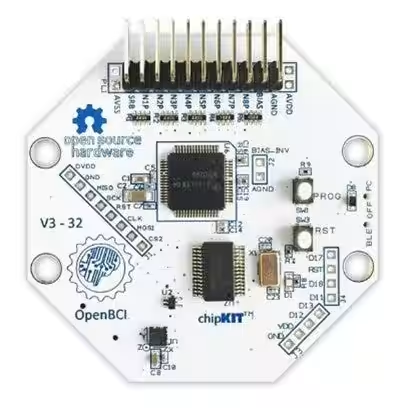
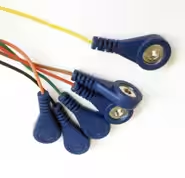
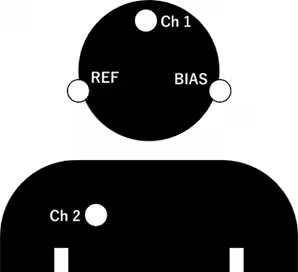
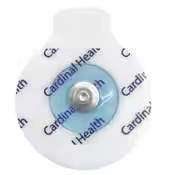
To facilitate this research, the team will utilize the Open BCI Cyton Board, which can measure EEG and other biometrics. This board connects to a PC via Bluetooth and features electrodes designed for accurate frontal and temporal EEG readings. The setup involves placing electrodes on the forehead and right collarbone while referencing electrodes are positioned on the mastoid processes of both ears, ensuring a stable and reliable measurement environment.
Future Prospects
Through this study, Regenerasome aims to scientifically establish the effects of low-oxygen on brain functions, with aspirations to apply findings in office wellness programs and cognitive enhancement initiatives. Moreover, the integration of Regenerasome’s nanoparticle technology, Vicell, for nasal and oral supplement delivery, alongside their epigenetic clock for aging assessment, is expected to expedite the development of personalized multi-domain intervention solutions.
By merging FastNeura’s EEG measurement and AI analysis capabilities with Regenerasome’s expertise in low-oxygen environments and longevity research, the initiative seeks to advance the societal implementation of next-generation brain function augmentation solutions based on solid scientific evidence.
About FastNeura
- - Location: Bunkyo, Tokyo, Japan
- - CEO: Naruhira Mizuguchi
- - Established: 2024
- - Business Focus: R&D of cognitive enhancement technologies powered by neurotech and AI
- - Website: fastneura.com
About Regenerasome
- - Location: Minato, Tokyo, Japan
- - CEO: Yentaroh Sakuma
- - Established: July 12, 2024
- - Business Focus: Addressing aging-related challenges through biotechnology for longevity
- - Website: regenesome.com


Topics Health)
【About Using Articles】
You can freely use the title and article content by linking to the page where the article is posted.
※ Images cannot be used.
【About Links】
Links are free to use.