


Exploring Joint Custody: Implications for Parenting After Divorce
Understanding Joint Custody in Japan
The legal landscape around divorced parenting in Japan is changing significantly with the introduction of joint custody, effective April 2026. This innovative approach allows both parents to share rights and responsibilities over their children post-divorce, a shift from the traditional single custody model that predominantly favored one parent.
Joint custody emerges amidst growing recognition of children's best interests, aiming to foster stable, supportive environments for kids facing parental separation. The Ministry of Justice explains that this amendment to custody laws is intended to ensure that children affected by divorce maintain meaningful relationships with both parents.
Key Differences Between Joint and Sole Custody
Historically, Japanese divorces typically resulted in one parent receiving full custody, often leading to complexities for the non-custodial parent regarding visitation and involvement in daily parenting decisions. The new joint custody framework allows for shared decision-making on key issues like education and living arrangements, theoretically empowering both parents while providing the child with a more balanced support system.
However, joint custody is not automatically applicable to all cases. Legal professionals emphasize that the decision to award joint or sole custody will depend on what is deemed best for the child's welfare. Factors such as parental cooperation, the child's age, and existing familial relationships will play critical roles in these decisions.
Discussion in Current Media
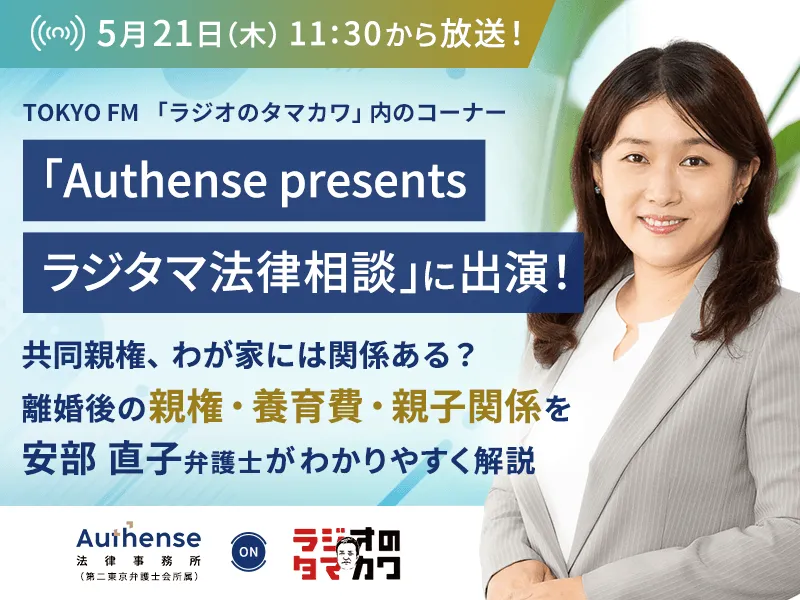
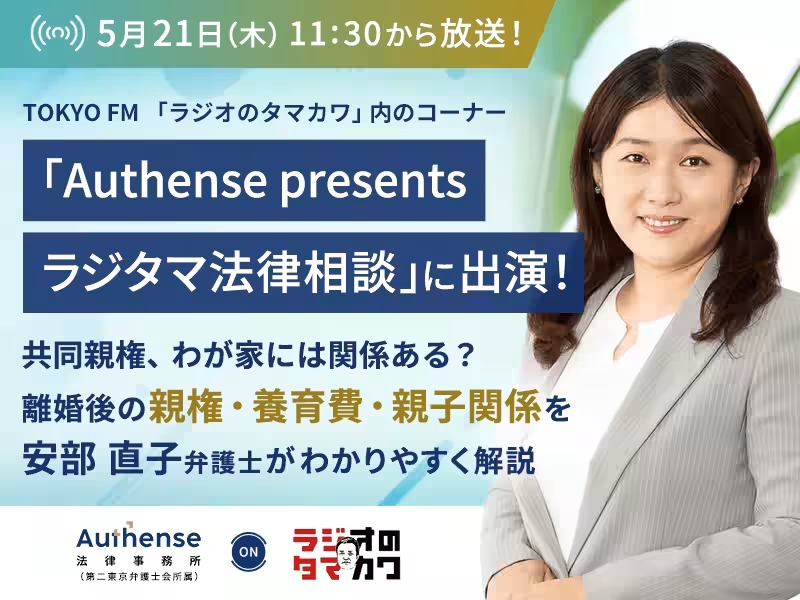
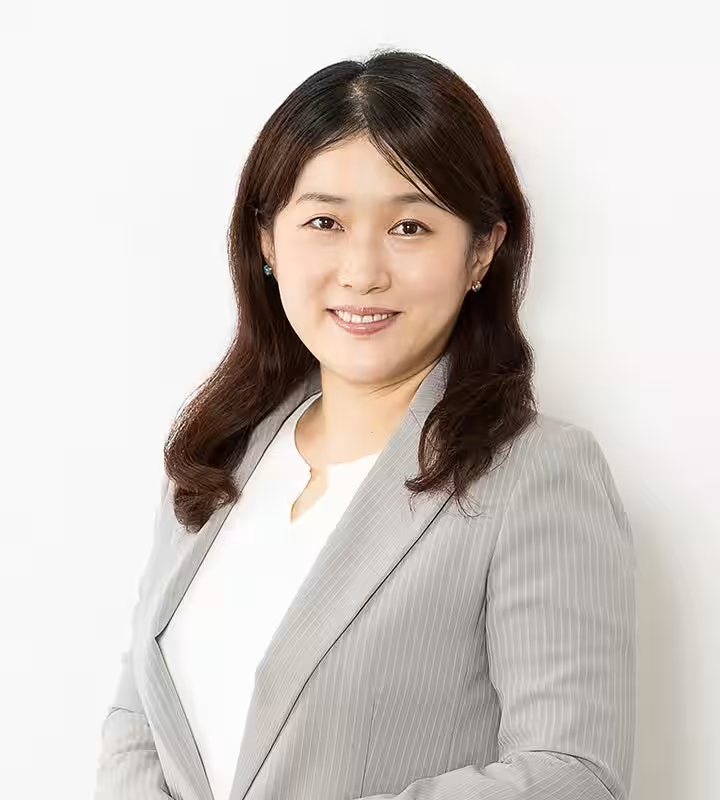
The Toky FM program 'Radio no Tamakawa', particularly its segment 'Authense presents Rajitama Legal Consultation', delves into the points of this new joint custody system. On May 21, 2026, famed host Toru Tamagawa will explore these topics in a dialogue featuring attorney Naoko Abe from Authense Law Firm. This episode marks the fifth installment of a series aimed at demystifying legal concepts for everyday listeners, focusing heavily on how recent reforms will affect family life.
The episode will take listeners through concrete discussions involving shared parenting responsibilities, particularly around significant milestones such as a child's schooling or residence changes post-separation. By fostering understanding and providing practical advice, the segment aims to empower parents to engage in productive dialogue regarding their shared future.
Moreover, the show intends to address audience questions and concerns about joint custody in its subsequent June episode, ensuring that listeners receive not just theoretical knowledge but actionable insights they can implement in their own familial situations.
Professional Insight on the Matter
Authense Law Firm, with its philosophy of focusing on human emotions, combines legal expertise with a deep understanding of the family dynamics at play during such transitions. With a team of specialists, including Naoko Abe, who brings broad experience in family law, they aim to facilitate smoother transitions for families adjusting to these legal changes.
With the landscape of divorce and child custody evolving, it is crucial for affected families to be informed about their rights and options. By tuning into programs that discuss these changes, parents can gain valuable knowledge on how to navigate these waters often fraught with emotional and legal challenges.
For more information, listeners can tune into 'Radio no Tamakawa', every Thursday at 11:30 AM where discussions like these aim to shed light on legal matters affecting daily lives.
Conclusion
The shift to joint custody does not only reflect changing societal norms but a progressive understanding of parenting post-divorce. By allowing both parents to take an active role in their children's lives, the expectation is that it will pave the way for healthier family dynamics and optimal benefits for children in such scenarios. As this legal framework evolves, Authense Law Firm remains committed to supporting individuals through these transformative changes.
Topics People & Culture)


【About Using Articles】
You can freely use the title and article content by linking to the page where the article is posted.
※ Images cannot be used.
【About Links】
Links are free to use.