



Yaraku Translation Unveils Industry-First Contextual AI Dictionary Feature
Yaraku Translation Introduces Pioneering AI Dictionary Feature
Yaraku Co., Ltd., based in Shibuya, Tokyo, has taken a significant step in the realm of translation tools by announcing the launch of an innovative AI dictionary feature on October 25, 2025. This feature is the first of its kind in the translation industry, enhancing the functionality of their translation assistance tool, Yaraku Translation.
What is the AI Dictionary?
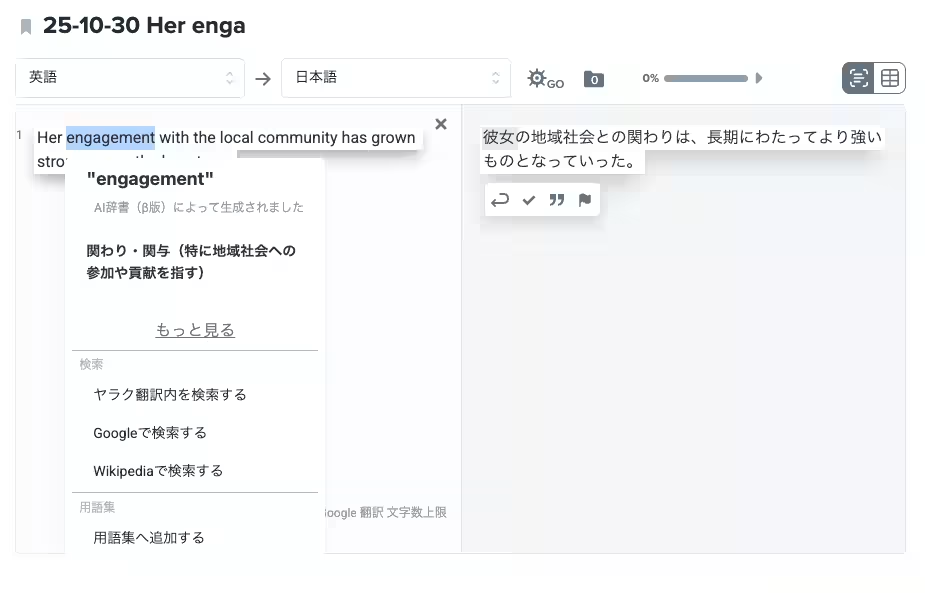
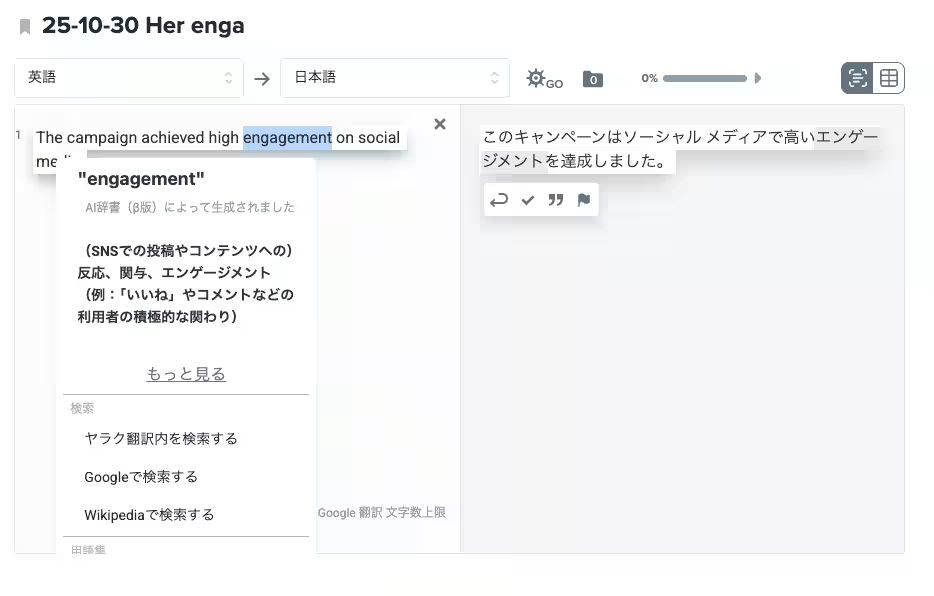
The newly introduced AI dictionary provides users the ability to highlight words and gain insights into their contextual meanings. Unlike traditional dictionaries, which often list multiple meanings, this advanced feature analyzes surrounding text to determine the most accurate interpretation of a word. In addition to offering definitions, it also includes synonyms, antonyms, and the etymology of the highlighted terms. This capability is particularly advantageous for translating business documents and media texts that frequently use homonyms.
The Challenges of Understanding Words in Context
When translating complex documents such as product manuals or contracts, verifying the meaning of specific terms can be quite labor-intensive. Many words possess multiple meanings depending on their context, such as “function,” “present,” and “significant.” Moreover, specialized jargon, proper nouns, and compound terms often lack clarity in existing dictionaries, necessitating extra research to uncover their precise meanings.
Existing dictionaries display all meanings of a word without considering the text's specific context, making it cumbersome for translators to find the relevant definition. In many cases, niche words and jargon are omitted entirely, forcing users to explore external resources like encyclopedias or specialized dictionaries.
The AI’s Ability to Comprehend Context
The AI dictionary integrates with large language models (LLM) to understand the context of words in real-time. It does not just list meanings; it interprets words based on surrounding statements, ensuring that translations reflect intended meaning. Not only can it handle general terms, but it also adapts to complex terms and proper nouns.
Example Analysis: The Word
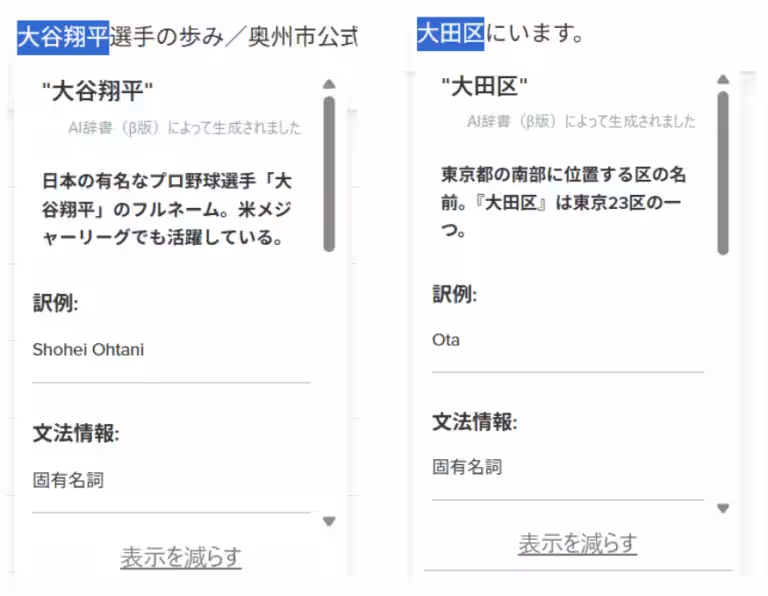

Topics Other)
【About Using Articles】
You can freely use the title and article content by linking to the page where the article is posted.
※ Images cannot be used.
【About Links】
Links are free to use.