



The Launch of the Security of Data Transfer Council: A New Era in Data Transmission Security
The Launch of the Security of Data Transfer Council: A New Era in Data Transmission Security
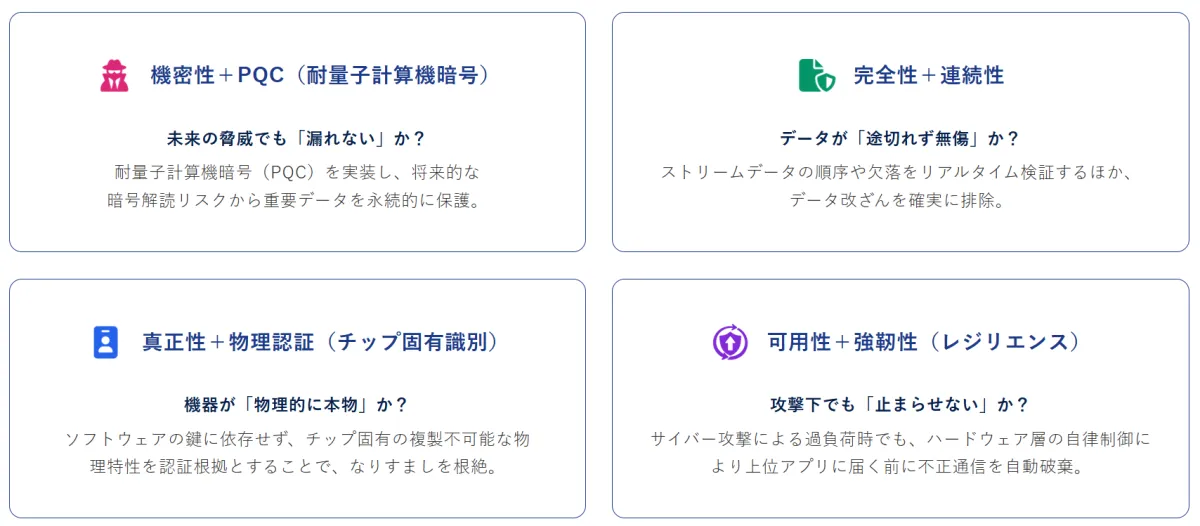
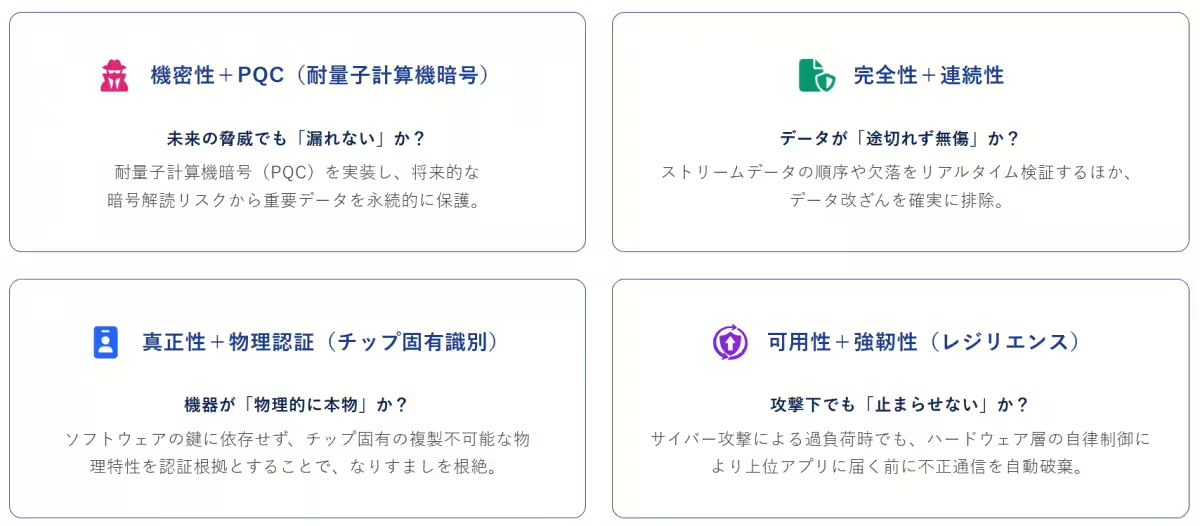
On August 3, 2026, the Security of Data Transfer Council (SDC), a newly established organization headquartered in Toshima, Tokyo, began its operations. Following its inaugural extraordinary general meeting on July 28, 2026, SDC aims to enhance the security of data transmission across various sectors including AI, smart mobility, and IoT devices. The council is focused on preserving the authenticity, integrity, and continuity of transmitted data, which are increasingly critical in today's advanced technological landscape.
Background of the Establishment
Recent advancements in AI, IoT, robotics, and smart mobility have led to the rapid implementation of numerous technologies in society, resulting in the real-time generation, transmission, and processing of vast amounts of data. As AI continues to evolve from mere information processing in cyberspace to recognizing, deciding, and controlling the physical world through cameras, sensors, robots, and industrial equipment, ensuring the trustworthiness of input data has become pivotal. The integrity and reliability of this data directly influence the accuracy, safety, and accountability of decision-making processes.
Currently, security measures primarily focus on protecting endpoints, servers, clouds, and network perimeters. Unfortunately, the overall verification of data authenticity and continuity from source to destination remains underdeveloped. This gap presents significant risks, particularly when video and sensor data, control commands, and authentication information are susceptible to tampering, impersonation, data contamination, or replay attacks. These vulnerabilities can lead to erroneous judgements and control actions by AI and autonomous systems, posing serious threats across critical sectors like manufacturing, mobility, healthcare, finance, and public infrastructure.
In response to these challenges, SDC was established to create a robust security foundation that guarantees data reliability from both hardware and software perspectives. The council aims to facilitate the implementation of
Topics Other)
【About Using Articles】
You can freely use the title and article content by linking to the page where the article is posted.
※ Images cannot be used.
【About Links】
Links are free to use.